The back-pass rule explained
A goalkeeper cannot pick up or handle the ball when a team-mate has deliberately kicked it to them. Do it and the referee gives the other side an indirect free kick from where the keeper touched it. The same ban covers a ball received straight from a team-mate's throw-in. A ball headed, chested or kneed back to the keeper is fine, they can handle that.
Team FootyMetrics
Updated Jul 2026 · 6 min read
- If a team-mate deliberately kicks the ball to their own keeper, the keeper has to play it with their feet. Handling it is an indirect free kick to the opposition.
- A ball that comes straight off a team-mate's throw-in is treated the same way: no hands for the keeper.
- A back-pass with the head, chest or knee is allowed, and the keeper can pick that up. A deliberate trick to get round the rule is itself an offence.
- A deflection or a miscued clearance is not deliberate, so the keeper can still handle it.
The name is a little misleading. It is not about which direction the ball travels. A defender playing a controlled ball straight forward to their keeper on the edge of the box is covered by the same rule as one knocking it back towards their own goal. What matters is that a team-mate deliberately kicked it and the keeper then used their hands.
What the back-pass rule actually says
Under IFAB’s Law 12, the goalkeeper handling laws sit in the list of indirect free kick offences. A keeper inside their own penalty area commits an offence if they touch the ball with the hand or arm, “unless the goalkeeper has clearly kicked or attempted to kick the ball to release it into play,” after “it has been deliberately kicked to the goalkeeper by a team-mate” or after “receiving it directly from a throw-in taken by a team-mate.” Break either and the referee awards an indirect free kick to the other side, taken from the spot where the keeper handled it.
The rule has been around since 1992. IFAB brought it in after the 1990 World Cup was criticised for defensive, time-wasting football, with defenders knocking the ball back for keepers to pick up and sit on. It forced keepers to play with their feet, and it is one reason the modern sweeper-keeper exists at all.
Kicked back means no hands. Headed back is fine
The law hangs on one word: kicked. A kick, in the Laws of the Game, means playing the ball with the foot. So a deliberate pass to the keeper with the foot triggers the handling ban, and a deliberate pass with any other part of the body does not.
That is why you see defenders head the ball back to their keeper under pressure and the keeper catch it with no problem. A header, a chest, a knee or a thigh does not count as a kick, so the keeper is free to handle it. It is a genuine get-out when a defender is being closed down and does not fancy trying to control the ball at their feet.
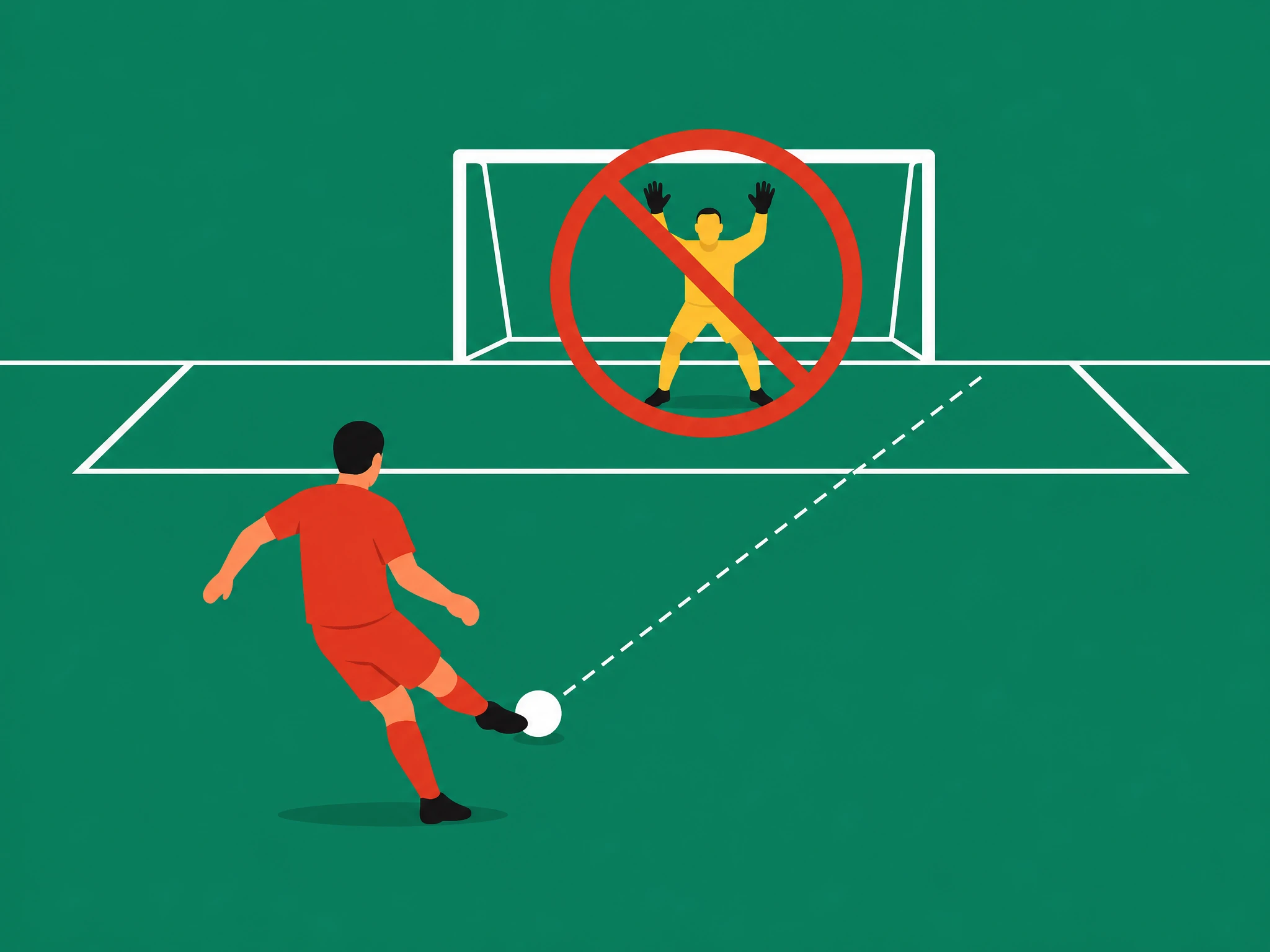
Deliberately kicked back by a team-mate. The keeper must use their feet.
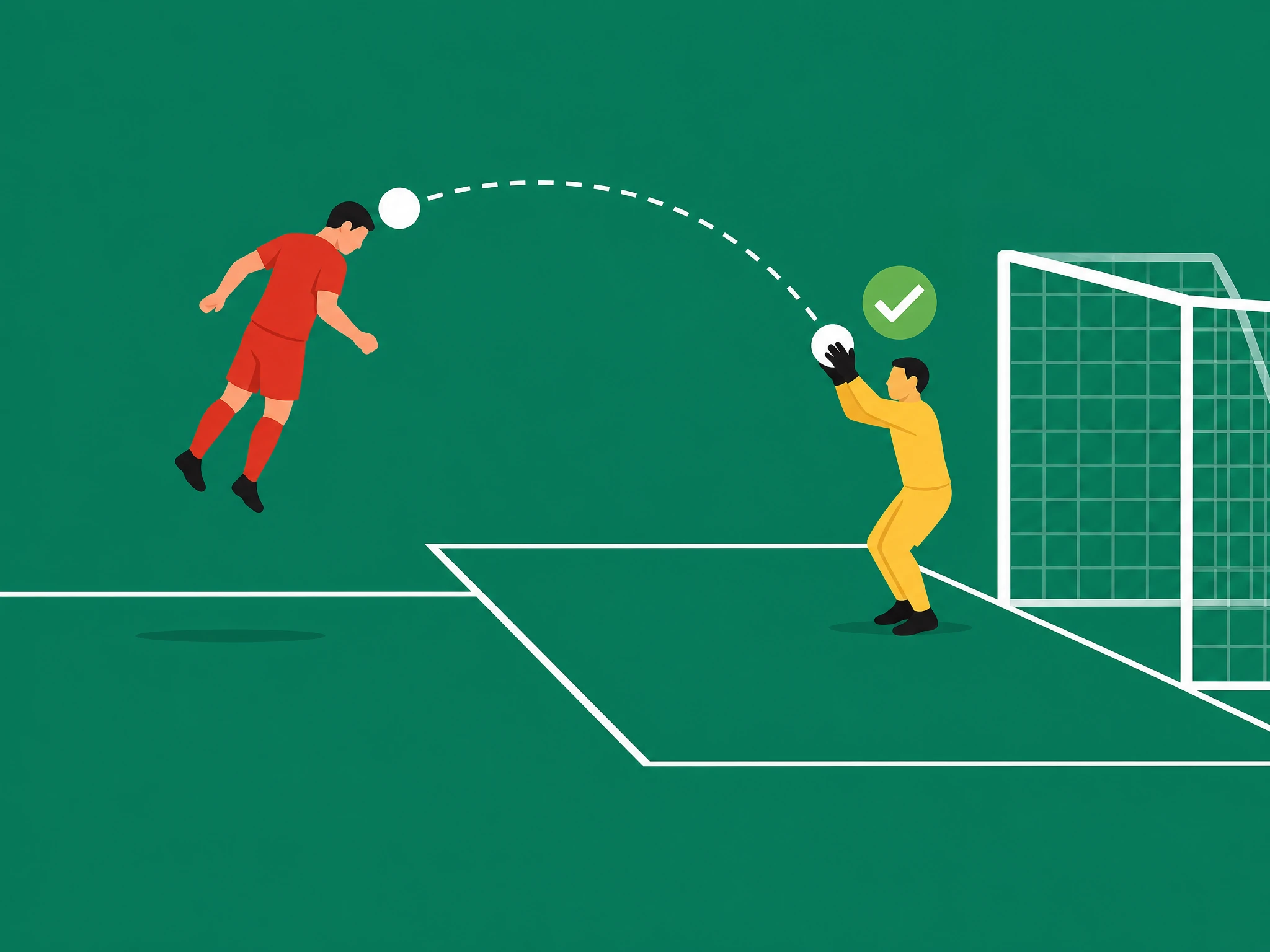
Headed back, not kicked. The keeper can handle it.
The deliberate trick loophole is closed
What counts as “deliberate”
The whole rule turns on the word deliberate, and it is where most of the on-pitch arguments come from. The team-mate has to have deliberately kicked the ball to the keeper. A ball that reaches the keeper by accident does not count.
A deflection is the clearest example. If a defender goes to clear the ball and it cannons off an opponent, or off their own shin at an odd angle, and loops back to the keeper, that is not a deliberate kick to the keeper. The keeper can pick it up. Same with a genuine miscue: a defender slicing an attempted clearance that happens to fall to their own keeper has not deliberately passed it back, so no offence.
The referee is judging intent, not the outcome. Did the defender mean to play the ball to their keeper with their foot? If yes, no hands. If the ball only got there through a deflection, a mishit or a ricochet, the keeper is allowed to handle it. This is a referee’s judgement call in the moment, and it is the part of the rule that gets debated most, because a scuffed clearance and a casual back-pass can look similar at full speed.
- A team-mate deliberately kicks the ball to the keeper with their foot.
- The keeper receives the ball directly from a team-mate's throw-in.
- A team-mate uses a deliberate trick, flicking it up to head it back.
- A team-mate deliberately heads, chests or knees the ball back.
- The ball reaches the keeper off a deflection or ricochet.
- A miscued or sliced clearance happens to fall to the keeper.
The indirect free kick, and the six-yard-box wall
When a keeper does break the handling rule, the restart is an indirect free kick. Indirect means it cannot go straight in: someone other than the taker has to touch it before a goal counts. It is taken from where the keeper handled the ball.
That location is what makes these free kicks so awkward. A back-pass is usually picked up close to goal, often inside the six-yard box, so the defending side ends up defending an indirect free kick from point-blank range. The whole team crams onto the goal line, sometimes the entire eleven, forming a wall of bodies across the goal because there is no other way to protect it from that distance. The attacking side plays a short touch to a team-mate, who then strikes it at a packed goalmouth. It is a rare, chaotic set-piece, and it exists only because the ball has to be touched by a second player before it can count.
If the offence happens further out, it is a more normal-looking indirect free kick, but the same rule applies: a touch first, then a shot. The same handling ban is why a goalkeeper handling the ball is treated differently from an outfield handball, since a keeper is allowed hands inside their own box under normal play.
What changed with the holding rule
For years, alongside the back-pass rule, keepers had a six-second limit on holding the ball, and breaking it was an indirect free kick. That is worth flagging because it changed. IFAB replaced the old six-second rule with an eight-second limit from the 2025/26 season, and the punishment is now a corner kick, not an indirect free kick. A keeper who controls the ball with the hands for more than eight seconds concedes a corner to the other side. The referee decides when the keeper has control, then counts down the last five seconds with a raised hand so everyone can see it. A first offence is a corner, a second gets a warning, a third a yellow card.
So there are two separate keeper offences that people sometimes muddle. Handling a deliberate back-pass or a team-mate’s throw-in is still an indirect free kick. Holding the ball too long is now a corner kick under the new eight-second rule. The awkward wall-on-the-line scenario only comes from the first one, the handling offence, since that is the one that still gives an indirect free kick close to goal.
See how referees apply the calls
Cards, penalties and free kick patterns broken down by official across the leagues we cover.
Back-pass rule FAQs
Can a goalkeeper pick up a back-pass?
No, not if a team-mate deliberately kicked it to them. The keeper has to play it with their feet, and handling it is an indirect free kick to the other side. If the ball was headed, chested or kneed back, or reached the keeper through a deflection or miscue, the keeper can handle it.
What is the punishment for a goalkeeper handling a back-pass?
An indirect free kick to the opposition, taken from where the keeper touched the ball with their hands. Indirect means a second player has to touch it before a goal can count.
Can a defender head the ball back to the goalkeeper to pick up?
Yes. The handling ban only applies to a ball deliberately kicked with the foot. A header, chest or knee back to the keeper is allowed, and the keeper can handle it. The one exception is a deliberate trick, like flicking the ball up to head it back, which is itself an indirect free kick and a booking.
Is a deflection a back-pass?
No. The rule needs a deliberate kick to the keeper. A ball that reaches the keeper off a deflection, a ricochet or a miscued clearance was not deliberately passed back, so the keeper is allowed to pick it up. The referee is judging whether the defender meant to play it to the keeper.
What is the six-second rule for goalkeepers?
It no longer exists. From the 2025/26 season IFAB replaced the six-second limit with an eight-second one, and the punishment changed from an indirect free kick to a corner kick. A keeper who holds the ball for more than eight seconds concedes a corner.
Why do teams put everyone on the goal line for an indirect free kick?
Because a back-pass is often handled close to goal, so the indirect free kick is taken from a few yards out. With no keeper able to gather it and only a short distance to defend, the side packs the goal line to block the shot after the first touch.