The handball rule explained
Handball is only an offence if a player deliberately touches the ball with their hand or arm, or their hand or arm has made their body unnaturally bigger for that specific situation. A goal is disallowed if the ball touches the scorer's own hand or arm immediately before it goes in, even by accident, but not if it only touched a team-mate's hand or arm earlier in the move.
Team FootyMetrics
Updated Jul 2026 · 6 min read
- Deliberate handball, moving the hand or arm towards the ball, is always an offence.
- Accidental contact is usually not an offence, unless the arm has made the body unnaturally bigger for that situation, or the ball goes in from it.
- A goal is disallowed if the ball touches the scorer's own hand or arm directly or immediately before it, even by accident. A team-mate's accidental touch earlier in the move no longer cancels the goal.
- A goalkeeper handling the ball with their hands inside their own penalty area is a different rule, not a handball offence.
Most of the confusion is not about deliberate handball, everyone recognises that, it is about the accidental contact people argue about every weekend: what “unnaturally bigger” actually means, and why a goal can be ruled out for an arm nobody meant to use.
What counts as handball
Under IFAB’s Law 12, the law covering fouls and misconduct, a direct free kick (or penalty, if it happens in the offending team’s own penalty area) is awarded for a handball offence, except for the goalkeeper handling the ball inside their own penalty area. The law sets out two ways a touch becomes an offence. A player commits a handball offence if they “deliberately touch the ball with their hand/arm, for example moving the hand/arm towards the ball,” or if they “touch the ball with their hand/arm when it has made their body unnaturally bigger.”
That second line causes most of the confusion, because it catches accidental contact too. IFAB defines it precisely: a player has made their body unnaturally bigger “when the position of their hand/arm is not a consequence of, or justifiable by, the player’s body movement for that specific situation.” The test is not whether the arm is away from the body. A goalkeeper diving full length, a player sprinting with pumping arms, or someone bracing an arm against the ground while falling all have arms away from the body, and none of that is automatically handball. The question a referee asks is whether the arm’s position is what the player’s own movement required at that moment, or whether it has gone beyond that and created a bigger surface for the ball to hit.
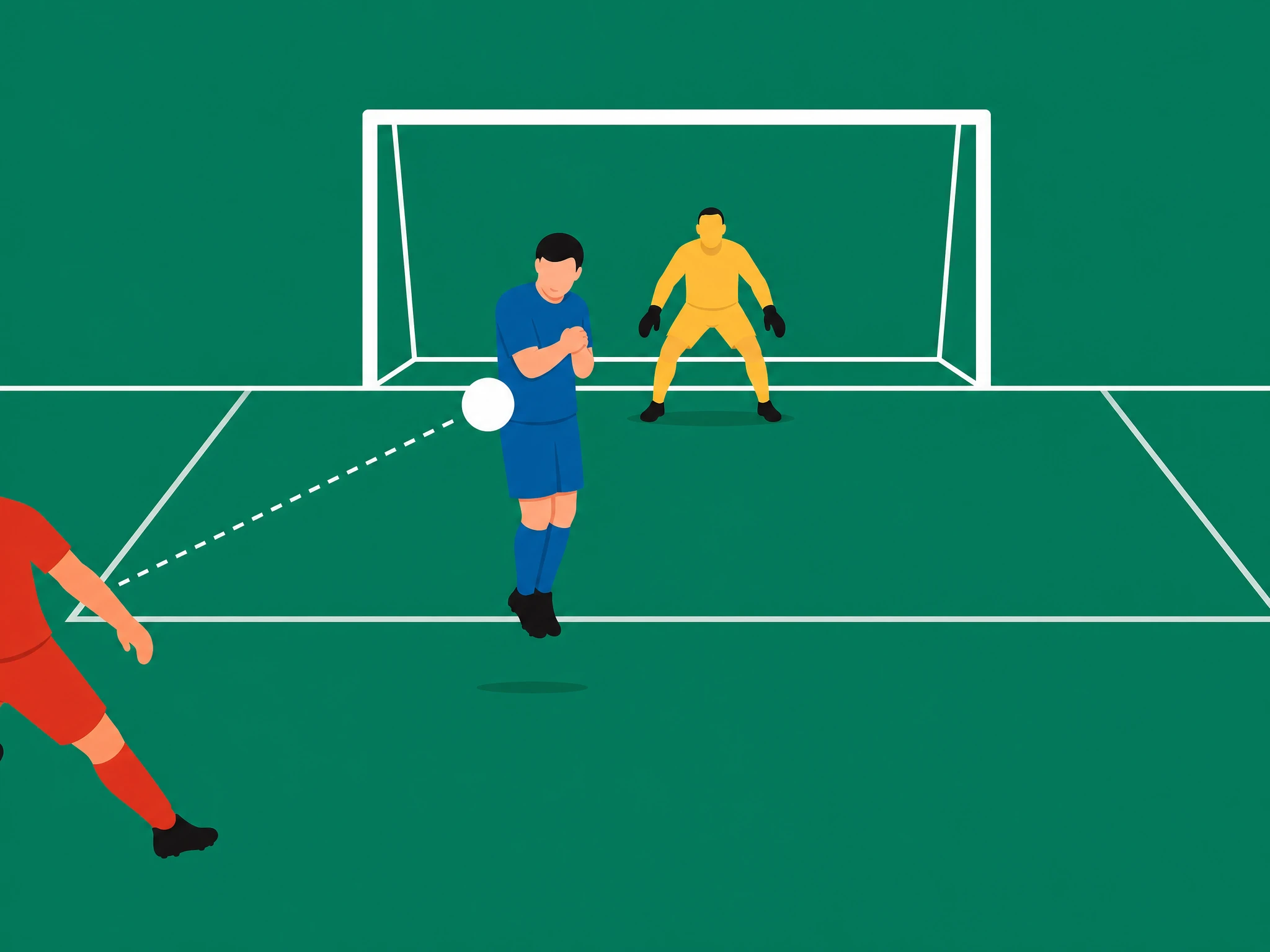
Arms tucked close to the body while jumping to block. Not unnaturally bigger.
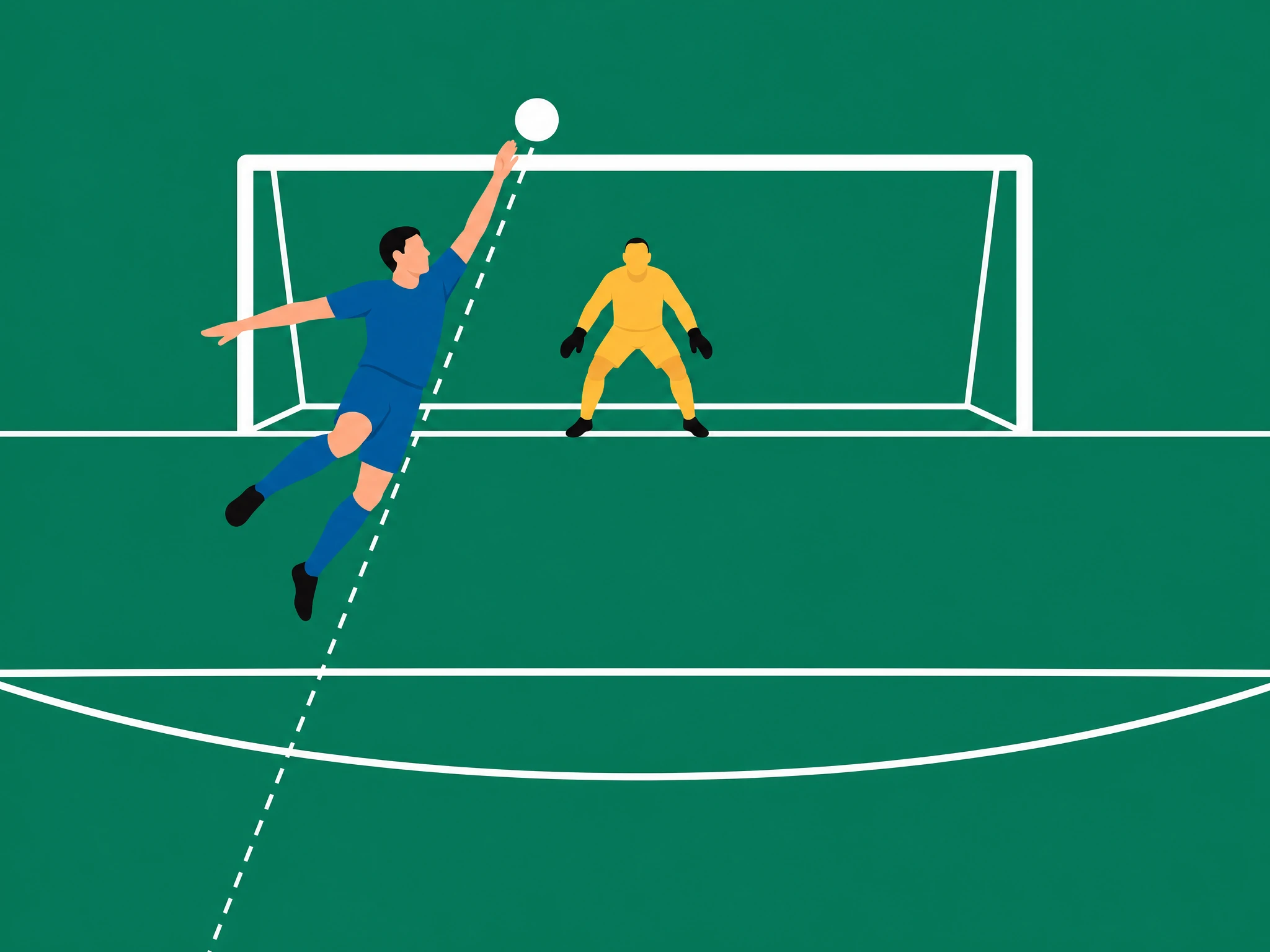
Arm thrown out sideways, beyond what the jump required. Unnaturally bigger.
Deliberate vs accidental, and why the split matters
Deliberate handball is always punished. If a player clearly moves a hand or arm towards the ball to control, block or direct it, intent is enough on its own, regardless of distance or an unnaturally bigger arm.
Accidental handball is different. Most accidental contact is not penalised at all. A ball that comes off a player’s own head, chest or thigh and then rebounds onto their hand or arm before they can react is not usually an offence, because there is no time to avoid it and no unnaturally bigger position involved. The same goes for a ball struck at a defender from very close range, or a ball that comes off a team-mate’s kick or header and catches an arm that was in a natural position. Referees weigh factors including the distance between the opponent and the ball, whether the contact was unexpected, and whether the hand or arm was in a position the player’s own movement required.
Accidental contact only gets punished in specific situations: when the arm has made the body unnaturally bigger for that phase of play, or when a goal follows from the contact under the scoring rule below. Outside those two triggers, accidental handball is simply part of the game.
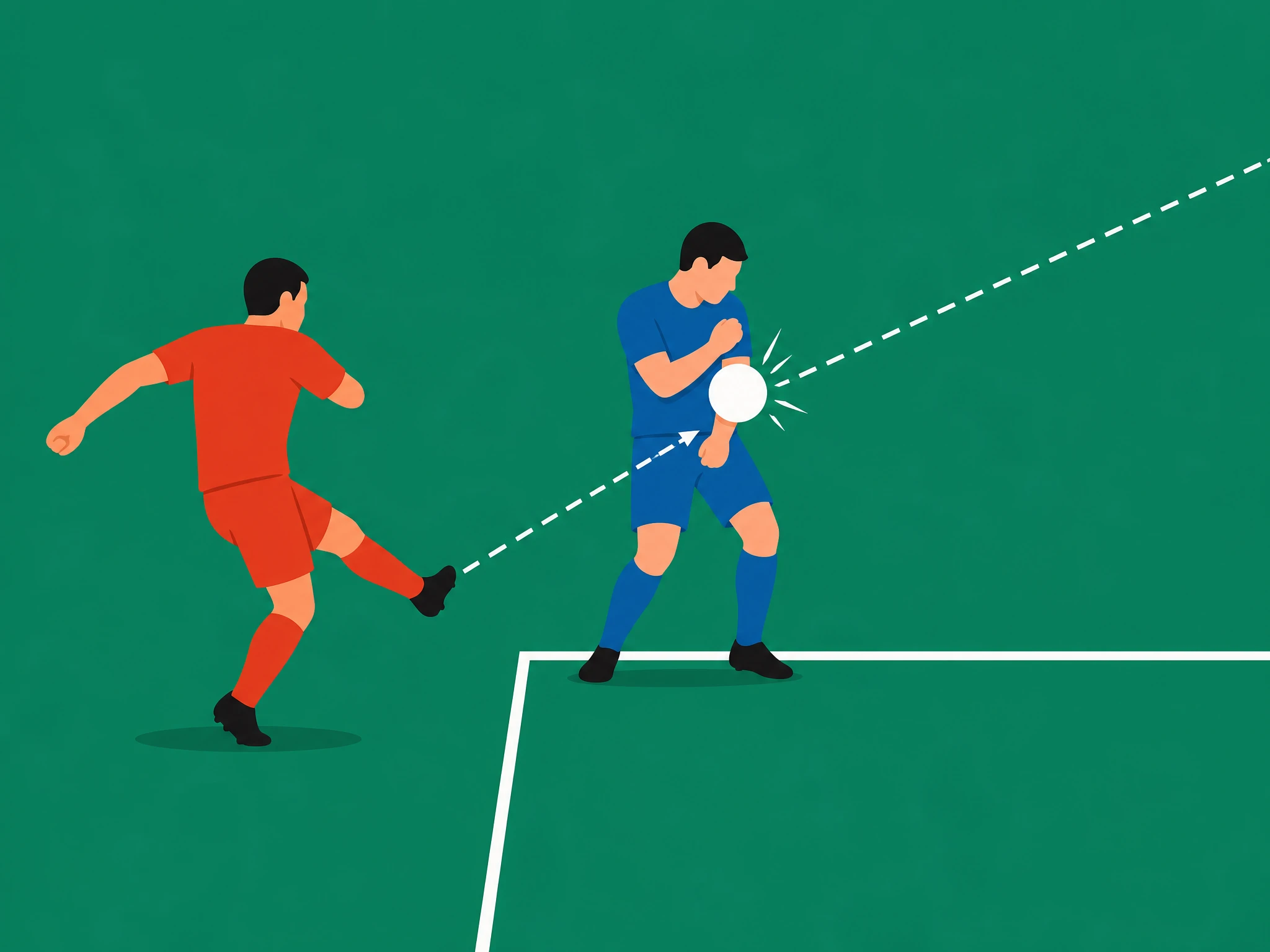
Ball comes off the chest first, then the arm. No time to react. Not a handball.
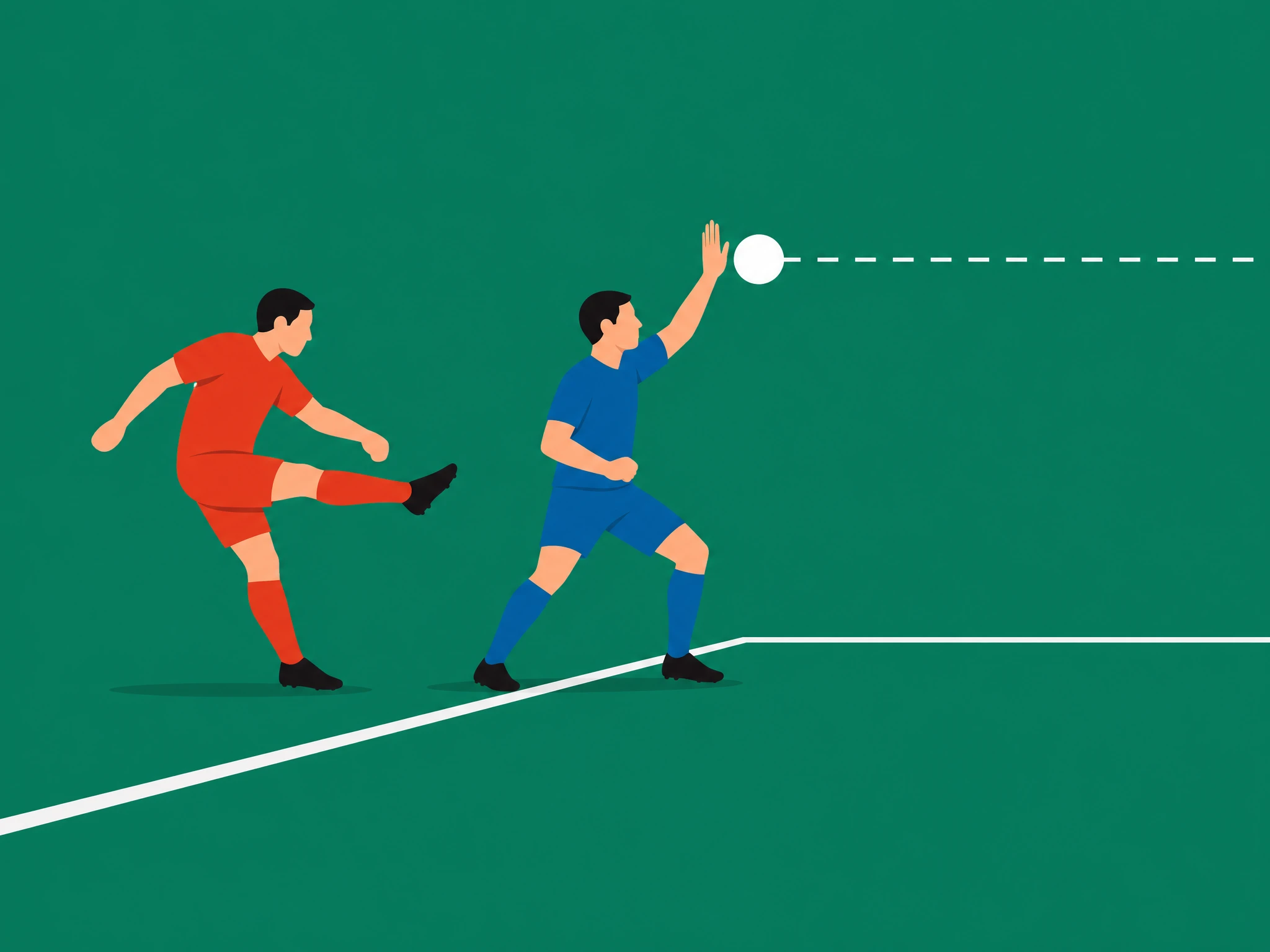
Arm deliberately moved to the ball to block it. A clear handball.
The goal-scoring exception
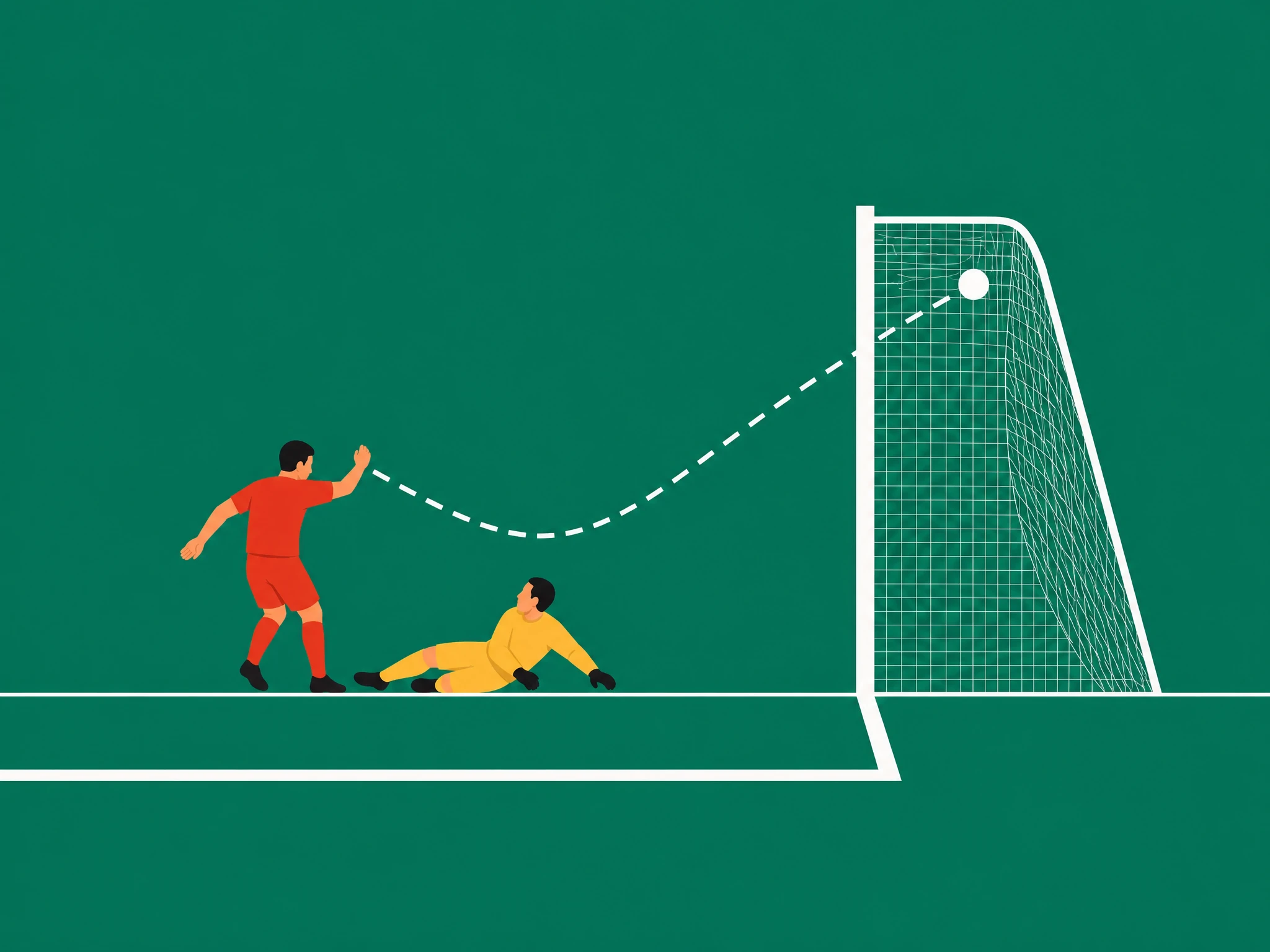
This is the part of the law that surprises people who last checked the rule a few years ago, and it is worth stating precisely, because IFAB changed it. The law says a player commits an offence if the ball goes in “directly from their hand/arm, even if accidental, including by the goalkeeper,” or “immediately after the ball has touched their hand/arm, even if accidental.” Either way, if the ball touches the scorer’s own hand or arm and a goal follows straight after, it is disallowed, deliberate or not.
Since IFAB’s 2021 clarification, that rule was narrowed for the rest of the move: “accidental handball that leads to a team-mate scoring a goal or having a goal-scoring opportunity will no longer be considered an offence.” Put plainly, if the ball strikes the scorer’s own arm, even by accident, right before the ball crosses the line, the goal is ruled out. If it strikes a team-mate’s arm by accident earlier in the buildup and that team-mate then passes to a player who scores cleanly, the goal stands, because the accidental contact did not come from the scorer’s own hand or arm at the moment of scoring.
The 2021 change to the goal-scoring exception
- Deliberately touching the ball with a hand or arm, including moving the hand or arm towards the ball.
- An accidental touch where the hand or arm has made the body unnaturally bigger for that situation.
- A goal that goes in directly off the scorer's own hand or arm, even by accident.
- A goal that goes in immediately after the ball touches the scorer's own hand or arm, even by accident.
- A ball that comes off a player's own head, chest or leg first, then hits their hand or arm before they can react.
- An arm braced against the ground to break a fall, hit by the ball in that natural position.
- A ball struck from very close range that a player has no realistic chance to avoid.
- A goalkeeper handling the ball with their hands inside their own penalty area under normal play.
The goalkeeper exception
Handball as an offence does not apply to a goalkeeper handling the ball with their hands inside their own penalty area under normal play, since goalkeepers are permitted to handle the ball there. Law 12 does restrict how a goalkeeper can handle it, for example after a deliberate kick from a team-mate or from a throw-in, which is an indirect free kick offence rather than a handball offence. A goalkeeper is still bound by the same handball rule as any outfield player once they are outside their own penalty area, or if they try to score with a hand or arm. A deliberate handball by an outfield player still counts as a foul conceded in the underlying match data, covered in how handball fouls are counted.
VAR and handball
Handball sits inside the goal and penalty categories that VAR is allowed to review. A check runs on every goal and every penalty decision as a matter of course, and a handball claim, whether in the buildup to a goal or as a possible penalty, is one of the things checked. Whether an arm’s position counts as unnaturally bigger is a judgement call, so it is held to the same clear and obvious error standard as other subjective decisions: the on-field call stands unless the review shows it was clearly wrong. Whether a goal directly followed contact with the scorer’s hand or arm is closer to a factual question, similar to whether the ball crossed the line, so it gets corrected if the check finds it was missed. The full VAR process, including the difference between a silent check and a full review, is covered in how does VAR work.
Handball FAQs
Is accidental handball always a foul?
No. Most accidental contact is not penalised. It only becomes an offence if the hand or arm has made the player's body unnaturally bigger for that situation, or if a goal follows directly or immediately from contact with the scorer's own hand or arm.
What does making the body unnaturally bigger actually mean?
It means the hand or arm's position goes beyond what the player's own movement in that moment required, not simply that the arm is away from the body. A natural jumping or falling position that happens to be hit by the ball is usually not enough on its own.
Can a goal be disallowed for a handball nobody meant?
Yes. If the ball touches the scorer's own hand or arm directly or immediately before the goal, even completely accidentally, the goal is ruled out. That specific rule does not depend on intent.
Does the same rule apply if a team-mate's arm is involved earlier in the move?
Not since IFAB's 2021 clarification. Accidental handball by a team-mate earlier in the buildup no longer cancels a goal on its own, as long as the scorer's own hand or arm was not involved right before the goal.
Is it handball if the goalkeeper picks up the ball in their own box?
No. A goalkeeper handling the ball with their hands inside their own penalty area under normal play is not a handball offence. Different restrictions apply to back-passes and throw-ins, but that's a separate rule from handball.
Is a penalty always given for a handball offence?
Only if it happens inside the offending team's own penalty area. A handball offence committed anywhere else on the pitch is a direct free kick, the same as most other fouls. It's the location of the offence that decides free kick or penalty, not anything different about the handball itself.