Fouls in betting: committed vs won
Fouls committed and fouls won are two separate stats and two separate markets. Fouls committed is credited to the player who gives away the free kick or penalty. Fouls won is credited to the player who was fouled. They are opposite sides of the same incident, but the two totals almost never match up over a season.
Team FootyMetrics
Updated Jul 2026 · 6 min read
- Fouls committed goes to the player who gives away the free kick or penalty. Fouls won is the mirror stat, credited to the player who was fouled.
- A tackle that concedes a foul is not logged as a tackle at all. It is recorded purely as a foul.
- A deliberate handball still counts as a foul conceded against the player who handles it, but the opponent does not get a fouls won credit for it.
- A foul in the penalty area is still one foul conceded event, the same one that produces the penalty, not a second foul stacked on top.
- Offside is not a foul. It has its own indirect free kick and its own stat, with no card and nothing logged as a foul.
That asymmetry between the two markets is exactly where a fouls prop catches people out, especially once handball gets involved. Handball is the one exclusion that explains why the numbers never tie out neatly, and it carries a tackle rule over from FootyMetrics’s own tackles page.
What is a foul conceded
Opta’s own wording is that a foul conceded is any infringement penalised as foul play by a referee that results in a free kick or penalty event. It is credited to the player who commits the offence, not the player it happens to. Two exclusions matter: offside is never logged as a foul conceded, since it is a separate offence with its own indirect free kick, and if the referee plays advantage and only cautions the player later, that does not add to the foul count either. A foul only exists in the data once a free kick or penalty is actually given at the moment of the offence.
This is the number most people mean when they say a player gives away a lot of fouls. It is a discipline stat, and it tracks closely with a player’s yellow card risk, since referees also caution for persistent fouling even when no single challenge was reckless enough on its own.
Fouls won is the mirror stat, and it isn't a perfect mirror
Fouls won, also called fouls drawn or fouls suffered depending on the source, is credited to the player on the other end of the same incident. Opta defines it as when a player wins a free kick or penalty for their team after being fouled by an opposing player. On paper that sounds like fouls committed and fouls won should always add up to the same total for a match. They do not, because of one specific carve-out in Opta’s own definition.
Opta explicitly lists exclusions from fouls won: there is no fouls won credit for handball, a dive, a back pass, an illegal restart, dissent, a goalkeeper six-second violation, or an obstruction where a free kick is conceded. A striker fouled by a defender’s mistimed tackle gets a fouls won credit. A striker who wins a penalty because a defender handles the ball does not get a fouls won credit for that handball, even though the defender is still charged with a foul conceded. That is the single biggest reason the two totals for a match will not tie out neatly.
- Any infringement penalised as foul play that results in a free kick or penalty, credited to the player who commits it.
- A deliberate handball, credited to the player who handles the ball.
- A foul that happens to be inside the penalty area, settled by the penalty award.
- Handball, a dive, a back pass, an illegal restart, dissent, a goalkeeper six-second violation or an obstruction free kick.
- Offside, since it is a separate offence and never logged as a foul on either side.
- Advantage played then only a later caution, with no free kick given at the time.
Does a tackle count if it concedes a foul
No. This was checked independently while building the tackles page, and the same definition applies here: a tackle only exists in the data as a legal, ground-level challenge where the ball is taken away from an opponent in controlled possession. The moment the referee blows for a foul, the event is recorded purely as a foul conceded, not as a tackle attempt of any kind. A defender who flies into five crunching, foul-giving challenges in a match and wins the ball back zero times in the stats sense finishes with five fouls and no tackles at all, even though every neutral watching would call every one of them a tackle.
The practical read for a fouls prop runs the other way to the tackles page’s own warning: a player with a high tackle count and a low foul count is winning challenges cleanly, while a player racking up fouls with few tackles is going to ground or into contact without coming away with the ball. See how tackles are counted for the full definition on the other side of this exact split.
Read fouls and tackles together
Handball fouls
A deliberate handball is still a foul, in the sense that it is penalised as foul play and results in a free kick or penalty, so it still counts as a foul conceded against the player who commits it. What it does not do is create a fouls won credit for the opponent, under the exclusion list above. A defender who concedes a penalty for handball picks up a foul conceded exactly like any other penalty-area foul, but the attacker who wins that penalty does not add to their fouls won total for it. Handball does not behave identically on both sides of the ledger, and it is worth being precise about that rather than assuming it does.
Fouls in the box: one event, not two
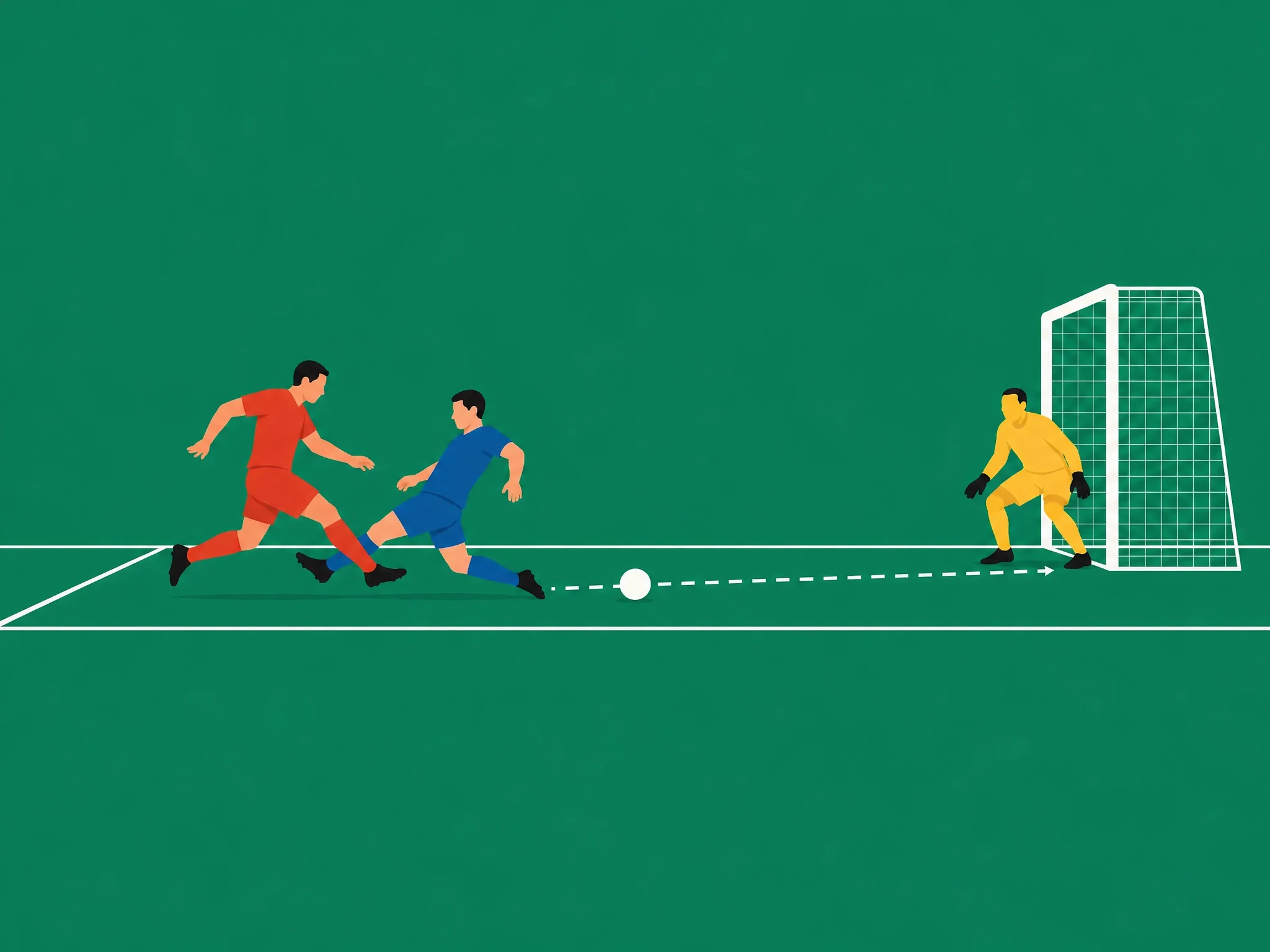
A foul that happens to occur inside the penalty area is still a single foul conceded event, the same one that produces the penalty award, not an extra foul stacked on top of it. Opta’s definition covers any infringement that results in a free kick or a penalty event, meaning the penalty is the outcome of that same foul, not a second incident. A defender who brings down an attacker in the box picks up one foul conceded and gives away one penalty. It does not double count as two separate fouls just because the consequence is bigger.
Offside is not a foul
Worth a clarifying line, since the two get lumped together sometimes: offside is a separate offence from a foul. It carries its own indirect free kick, no card is ever shown for it, and it is not logged as a foul conceded or a foul won for either player. See what is offside for the full two-part test of position and offence.
Settlement: stoppage time yes, extra time depends on the book
Fouls props generally settle on the same basic window most player stat markets use: the result after 90 minutes plus stoppage time, not the raw 90-minute mark. Sky Bet’s own market rules state player stat markets are settled on the result after 90 minutes play unless otherwise specified, and that this includes injury time but not extra time or a penalty shootout. FootyMetrics could not confirm a single rule that applies across every bookmaker for fouls specifically, so check the individual book’s own market rules for a cup tie before assuming extra time is included or excluded on that market.
Fouls as a betting stat
FootyMetrics tracks fouls committed and fouls won separately for every player, plus team fouls totals, across 115+ leagues, settled to the definitions above.
Player fouls trends
Check a player's fouls committed and fouls won history before backing a line, filtered by home, away and opponent.
Fouls won has its own trends page, and team totals work the same way on team fouls trends. The fouls in football guide covers the wider picture, including the three levels of seriousness and how a foul becomes a card, which this page does not repeat.
Fouls committed vs won FAQs
What is the difference between fouls committed and fouls won?
Fouls committed is credited to the player who gives away the free kick or penalty. Fouls won is credited to the player who was fouled. They describe the same incident from opposite sides, but the season totals do not mirror each other exactly, because of the fouls won exclusions such as handball.
Does a foul that concedes a penalty count as two fouls?
No. It is one foul conceded event. The penalty is the outcome of that same foul, not a second incident stacked on top of it.
Does a deliberate handball count as a foul?
Yes. It is penalised as foul play and results in a free kick or penalty, so it counts as a foul conceded against the player who handles the ball. It does not create a fouls won credit for the opponent, which is the one exclusion worth knowing before backing a fouls won line.
Does a tackle that concedes a foul still count as a tackle?
No. If the referee blows for a foul, the challenge is recorded purely as a foul conceded, not as a tackle attempt of any kind.
Is offside recorded as a foul?
No. Offside is a separate offence with its own indirect free kick and its own stat. It carries no card and is never logged as a foul conceded or a foul won.
Does a foul count when the referee plays advantage?
Not in the fouls conceded stat. Opta only logs a foul once a free kick or penalty is actually given at the moment of the offence, so advantage played with only a later caution adds nothing to the count.
Is fouls won the same as fouls drawn?
Yes. Fouls won, fouls drawn and fouls suffered are different names for the same stat depending on the source: the credit given to the player who wins a free kick or penalty after being fouled.
Do fouls props include stoppage time?
Generally yes for the settlement window most bookmakers publish, meaning 90 minutes plus stoppage time but not extra time or a shootout. That rule is set by each individual bookmaker rather than by Opta, so always check the specific book's own market rules for a cup tie.