What is offside in football?
Offside is a two-part test. A player is in an offside position if any part of their head, body or feet is nearer the opponents' goal line than both the ball and the second-last opponent, in the opponents' half. Being in that position is not against the rules. It only becomes offside once the player gets involved in play from there.
Team FootyMetrics
Updated Jul 2026 · 7 min read
- Offside position and offside offence are different things. Being in the position is legal. Getting involved in play from it is not.
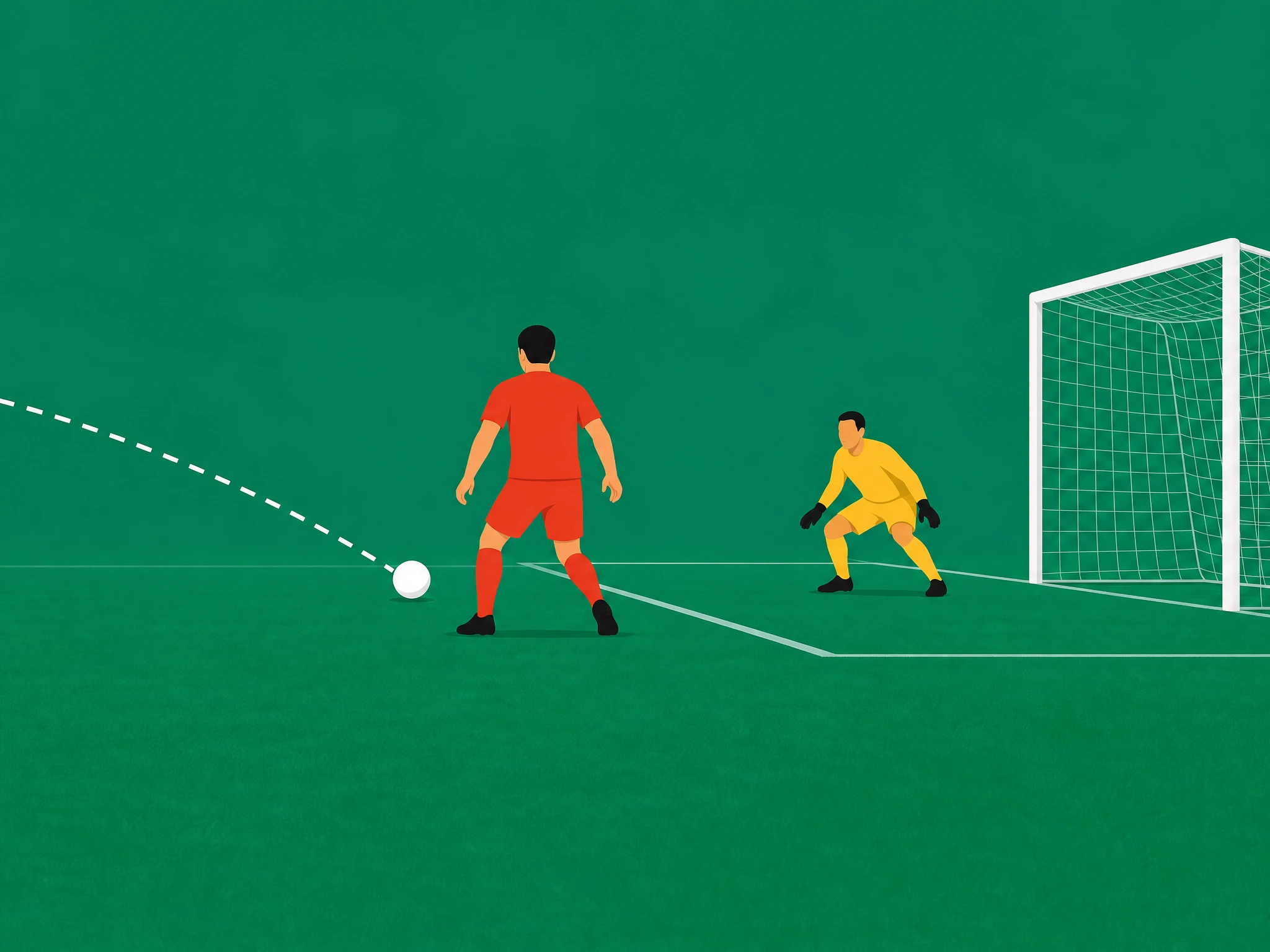
- You cannot be offside in your own half, or from receiving the ball directly from a throw-in, a goal kick or a corner. Once the ball is played a second time, normal offside rules are back on.
- Level with the second-last opponent, usually the last defender but sometimes the goalkeeper, is onside, not offside.
- You can be flagged without touching the ball, for example by clearly blocking a goalkeeper's view.
Most of the confusion around offside isn’t about the position itself, it’s about the second half of the test: what actually counts as getting involved. Here is the full rule, the exemptions that catch people out, and how VAR checks it now.
What is offside?
A player is in an offside position the moment the ball is played or touched by a team-mate, if any part of their head, body or feet is in the opponents' half and nearer to the opponents' goal line than both the ball and the second-last opponent. Under IFAB’s Law 11, being there is not against the rules: “it is not an offence to be in an offside position.” A player only breaks the rule if they then get involved in active play while in that position, by touching the ball, getting in an opponent’s way, or benefiting from a deflection. A striker can stand yards offside all game and never be flagged, as long as the ball never reaches them there.
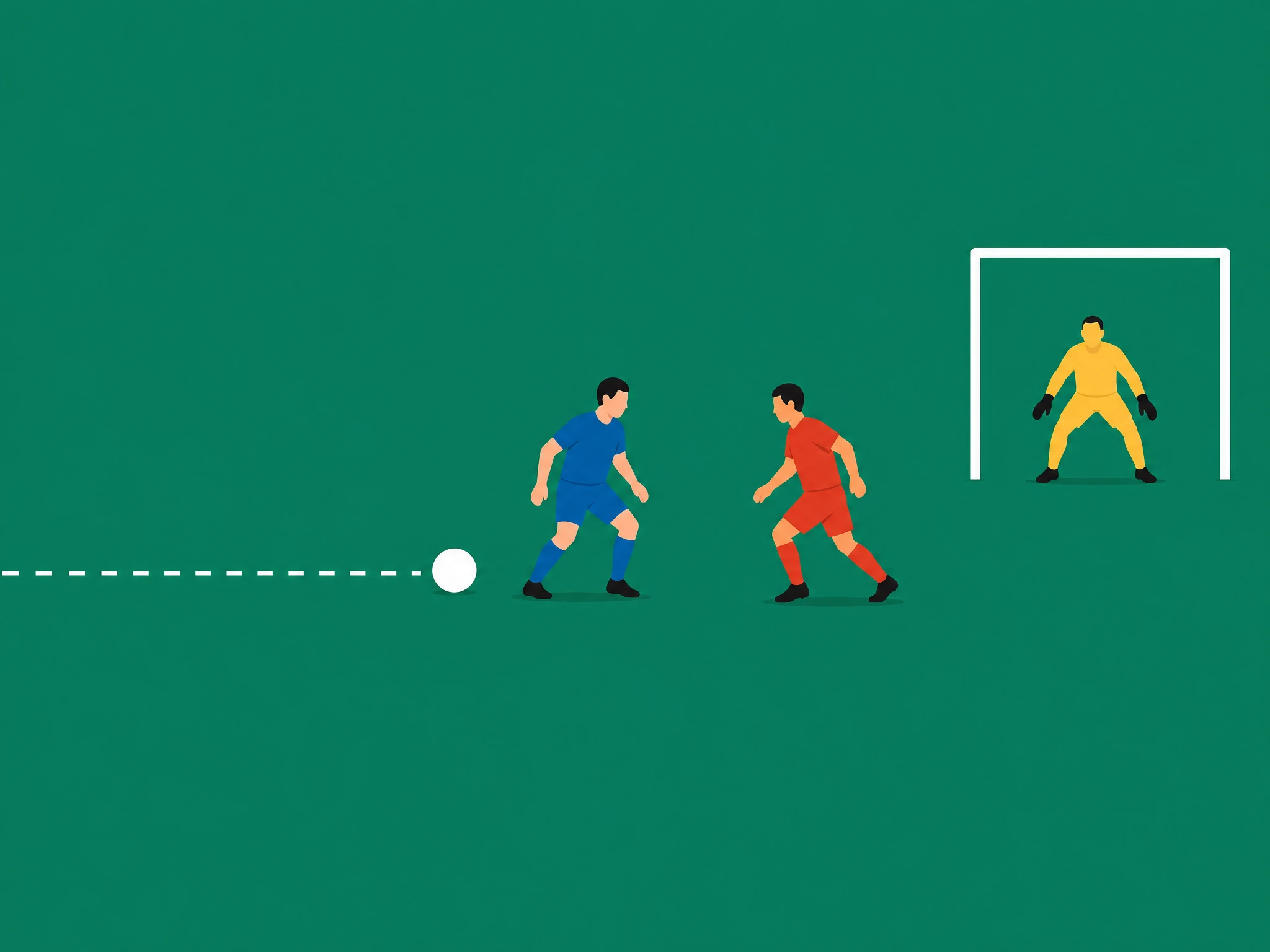
Level with the last defender when the pass is played. Onside.
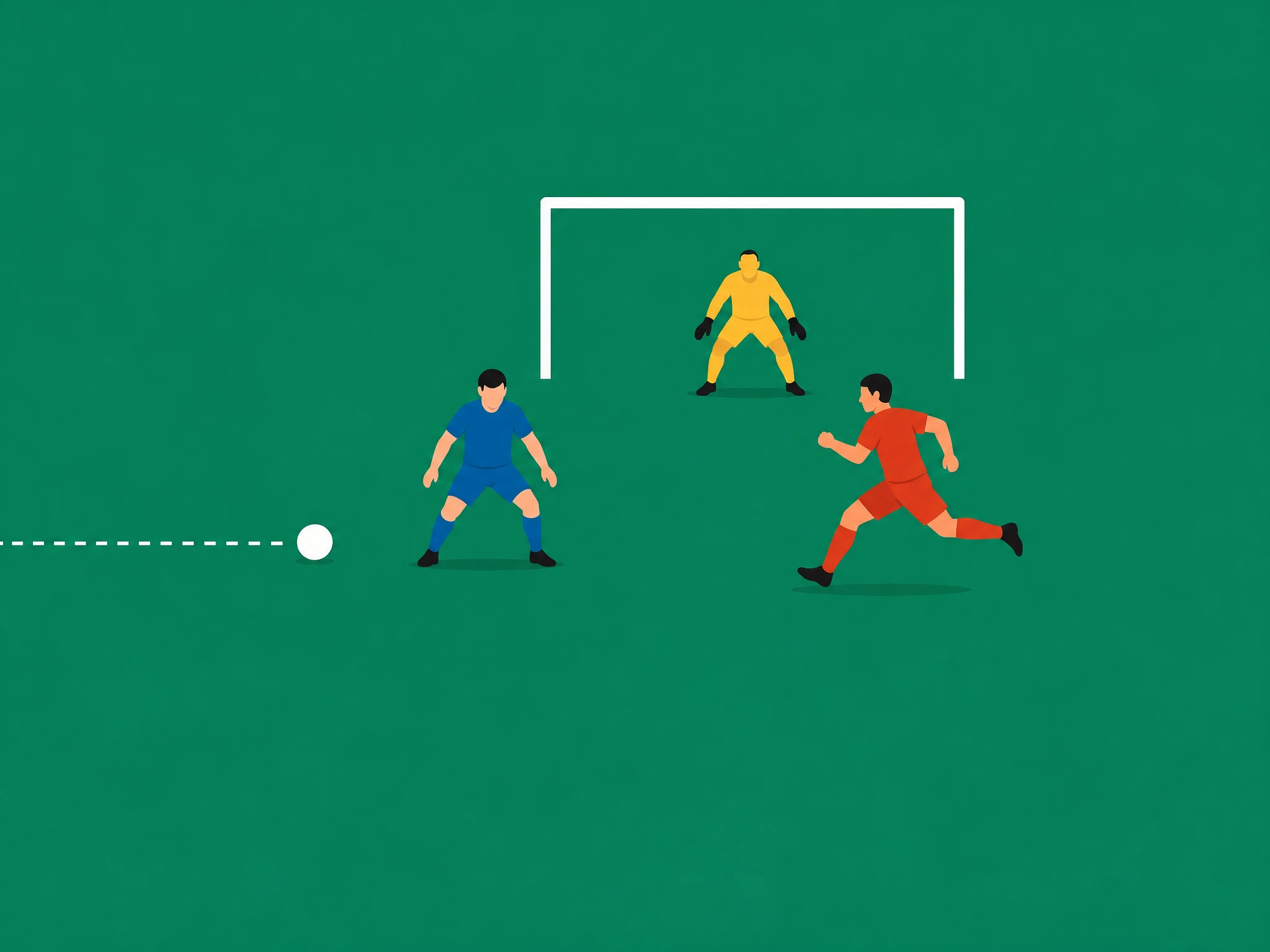
A stride ahead of the last defender when the pass is played. Offside position.
Offside position: where you have to be
Position is judged the instant a team-mate plays or touches the ball, not when the ball arrives. Two lines matter: the halfway line, and the second-last opponent.
- You cannot be offside in your own half. Only the attacking half counts.
- The line is set by the second-last opponent, which is usually the last outfield defender, but the goalkeeper counts as an opponent too. If the goalkeeper has been beaten to a more advanced spot than the last defender, the keeper is still counted among the last two opponents and can set the line.
- Level is onside. If an attacker’s furthest-forward point lines up exactly with the second-last opponent, they are not offside. Only strictly nearer to the goal line counts.
- Hands and arms do not count, for anyone, including goalkeepers. Only the head, body and feet decide the position.
The corner, throw-in and goal kick exemption
When a position becomes an offence
This is the part people get wrong, because most fans only know “interfering with play.” IFAB actually lists three separate ways an offside position turns into an offence.
- Playing or touching a ball passed or touched by a team-mate.
- Clearly obstructing an opponent's line of sight to the ball.
- Challenging an opponent for the ball, or clearly impacting their ability to play it.
- Playing the ball, or interfering with an opponent, after it rebounds off the post, bar, a match official or an opponent.
- A deliberate save by any opponent, including the goalkeeper.
- A deflection off a match official.
- A rebound off the woodwork that falls straight back to the offside player.
There is one important exception worth separating out. If the ball comes to an offside player because an opponent deliberately played it, including a deliberate handball, that does not count as gaining an advantage, so the offside is wiped out, unless the opponent’s action was a deliberate save. A save is stopping or trying to stop a ball that is going in or very close to goal, using any part of the body other than the hands and arms, unless it is the goalkeeper inside their own penalty area. So a defender’s deliberate clearance that falls to an offside player resets the phase. A goalkeeper’s deliberate save off the same shot does not, and the offside stands.
Edge cases people get wrong
- The goalkeeper can be the line, not always the last outfield defender. If the keeper is beaten to a more advanced spot, they are still counted as an opponent for the second-last line.
- Any part of the head, body or feet counts, even a toe or a shoulder. Millimetre-tight calls under semi-automated offside technology are real; a few centimetres of a boot is enough.
- You can be offside from a free kick. Only a throw-in, goal kick and corner kick carry the direct-receipt exemption. A free kick, direct or indirect, behaves like open play.
- An offside offence is always an indirect free kick, taken from where the offence happened, even if that is in the player’s own half.
How semi-automated offside technology checks it
Rolled out in competitions including the Premier League and, since the 2022 World Cup, every FIFA World Cup finals tournament, semi-automated offside technology (SAOT) has replaced the old manual VAR process of drawing crosshair lines by hand. The Premier League system uses up to 30 tracking cameras around the stadium, some running at 100 frames per second, twice a normal broadcast camera, tracking up to 10,000 data points per player across the body, including the shoulders, elbows, knees and feet, the same points that matter for the Law 11 test. FIFA's own World Cup version uses 12 dedicated tracking cameras under the stadium roof plus a sensor inside the match ball, sending ball-position data 500 times a second to pin down the exact moment it was played.
When a key moment happens, the system automatically finds the exact “kick point”, the frame the ball is played, and draws the offside line from the second-last opponent using those tracked points. That is faster and more consistent than a human operator lining up a single broadcast angle by hand.
What the technology cannot do is decide the offence itself. It flags position automatically, but a human VAR still has to confirm the kick point and the players involved, and separately judge whether the offside player interfered with an opponent or gained an advantage, since that is a judgement call the cameras cannot make. A tight offside call with computer-generated lines is only the position half of the test. The offence half is still a referee’s decision.
Offside as a stat
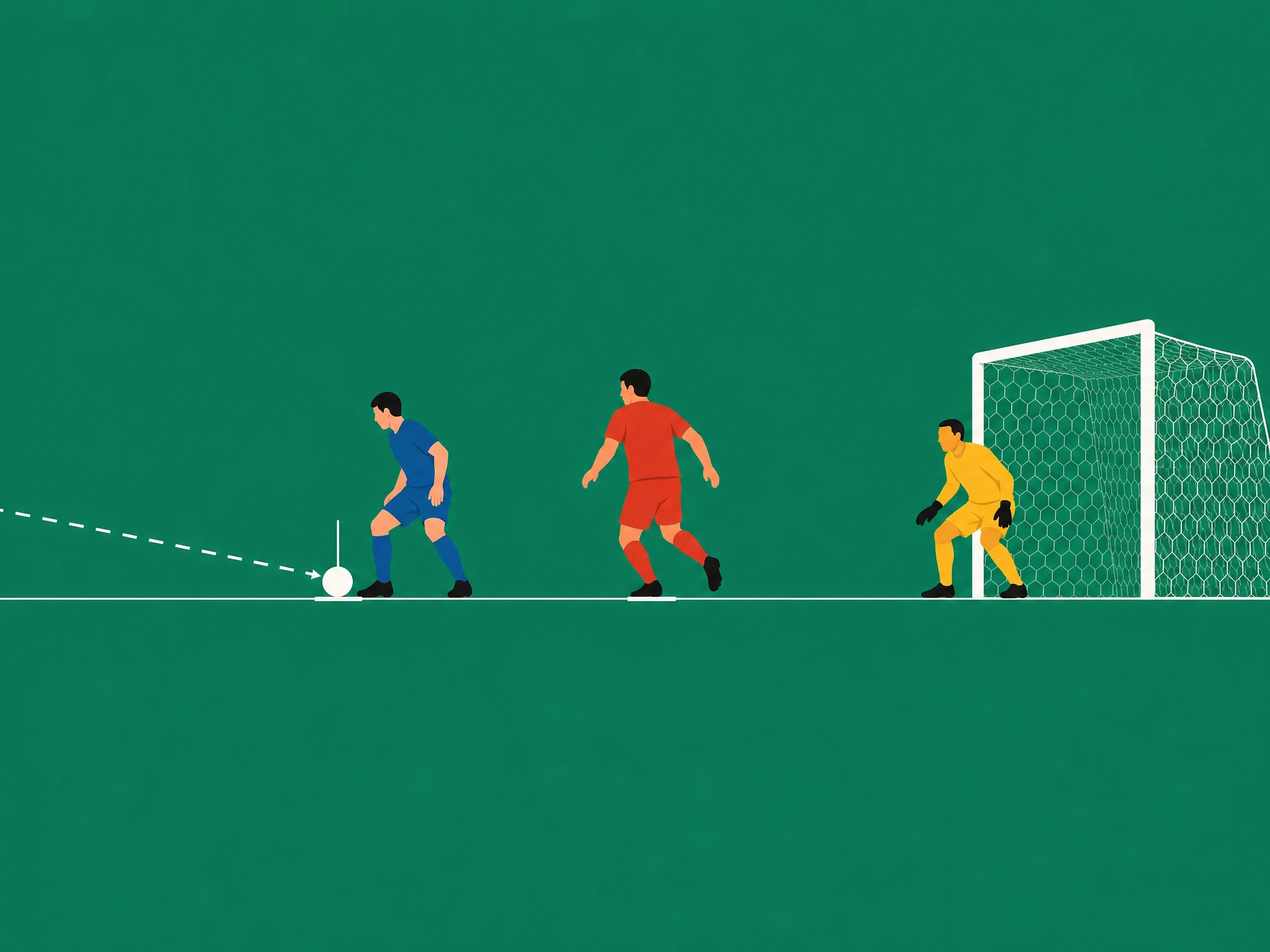
FootyMetrics tracks offsides for every player and team across 115+ leagues. It is one of the few stats where more is not automatically better or worse, since it depends on how often a team plays a high line and how sharply a striker times a run, rather than pure quality.
Player and team offside trends
See who gets caught offside most, and which defences push the highest line, across 115+ leagues.
Team totals work the same way on team offside trends, showing how often each side is caught out and how often their high line traps the opposition instead.
Offside FAQs
Can you be offside in your own half?
No. Offside position can only exist in the opponents' half. A player is never offside while in their own half of the pitch.
Can you be offside from a corner kick?
Not from the ball received directly off the corner itself, and the same goes for a throw-in and a goal kick. That exemption ends the moment the ball is played a second time, so a short corner that gets crossed in afterwards can produce a normal offside call.
Is being level with the last defender offside?
No, level is onside. A player is only offside if they are strictly nearer to the opponents' goal line than both the ball and the second-last opponent. Level with that line is not enough.
Does the goalkeeper count as the last defender for offside?
Yes. The goalkeeper is counted as an opponent like any outfield player. If the keeper has been beaten to a more advanced position than the last defender, the keeper still sets the offside line as one of the last two opponents.
Can you be given offside without touching the ball?
Yes. An offside position becomes an offence if the player interferes with an opponent, for example by clearly blocking the goalkeeper's line of sight or challenging for the ball, even with no touch on it.
What is semi-automated offside technology?
A camera and player-tracking system used by VAR that automatically finds the moment the ball is played and calculates the offside line from tracked body points. It speeds up the position check, but a human VAR still confirms the call and judges whether the player was actually involved in play.
Can a goalkeeper be caught offside?
Yes, in theory. The goalkeeper counts as an opponent like any outfield player, so if a keeper strays forward into the opponents' half and gets ahead of the second-last defender when the ball is played, they can be flagged offside like anyone else. It almost never happens in practice, because keepers rarely advance that far up the pitch.
Does an offside position reset after a deliberate save?
No. A deliberate save by any opponent, including the goalkeeper, does not wipe out an offside position. Only a deliberate non-save action, like a defender's clearance, resets the phase. If the ball comes back to the offside player off a save, the offside still stands.