How tackles are counted for betting
A tackle only counts when a player wins the ball from an opponent in a legal, ground-level challenge, and it has to be won cleanly or knocked safely out of play. A challenge that concedes a foul is not logged as a tackle at all, it is logged as a foul instead.
Team FootyMetrics
Updated Jul 2026 · 6 min read
- A tackle is a legal, ground-level challenge where the tackler takes the ball away from an opponent in controlled possession.
- Tackles and tackles won are two separate numbers. A tackle can be attempted and lost if the ball breaks to another opponent.
- A challenge that concedes a free kick is not a tackle at all. It is recorded purely as a foul, so it adds nothing to either total.
- Interceptions, blocks and clearances are separate defensive actions from a tackle, even though commentary lumps them all together.
That gap between the eye test and the stat sheet is exactly where tackles props catch people out. A hard night of defending doesn’t always show up as tackles, and the foul rule is usually the reason.
What counts as a tackle
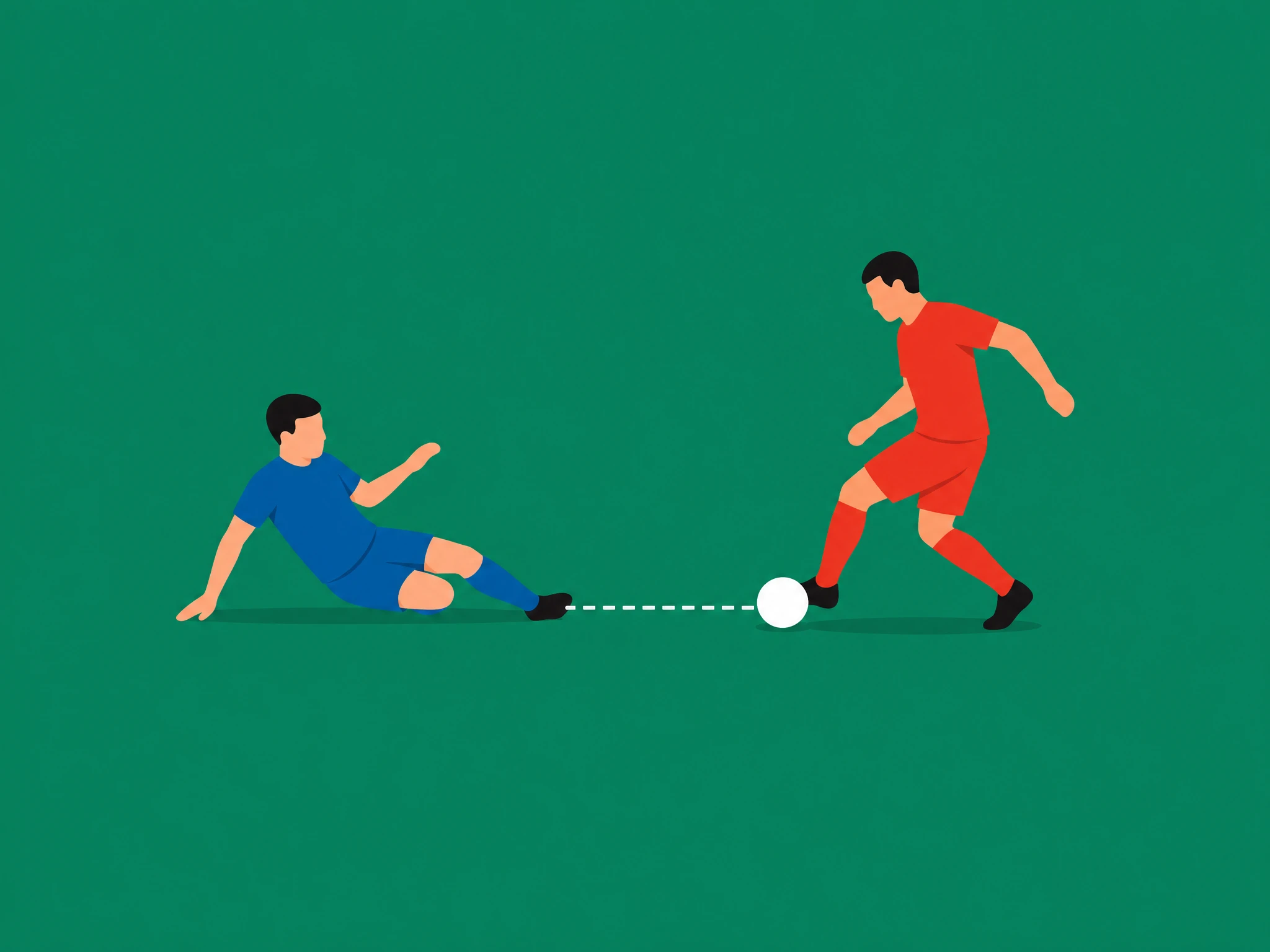
Opta’s definition is stricter than the word sounds on TV. Opta defines a tackle as a legal, ground-level challenge where the tackler connects with the ball and takes it away from an opponent who is in controlled possession of it. Two things have to be true: the challenge has to be clean, and the opponent has to actually have the ball under control, not just be near it. A player sliding in to smother a loose fifty-fifty ball is not making a tackle in the stats sense, because nobody was in controlled possession yet. That gets logged elsewhere, often as a clearance or an interception.
This is why a defender can look busy all match, throwing in challenges, blocking crosses, nicking loose balls, and still end up with few tackles. Most of that work falls into other categories.
Tackles won vs tackles attempted
Every tackle is logged with an outcome, and FootyMetrics tracks both numbers separately because they answer different questions.
- The tackler or a team-mate ends up with the ball because of the challenge.
- The ball is knocked safely out of play by the tackle.
- The ball is won away from the original opponent, but breaks straight to another opponent.
- Still counts toward total tackles, just not tackles won.
A high tackle count with a low won percentage usually means a player is committing to challenges but not coming away with clean possession. That is why tackles won is the more useful number for judging a defender, and why a tackles prop and a tackles-won prop can settle differently even from the same passage of play.
Why a foul does not count as a tackle
This is the biggest source of confusion, and the reason a player’s tackle count can look low compared with how much defending they actually did on the pitch. If a challenge is not clean, meaning the referee gives a foul, it is not recorded as a tackle attempt at all. It is recorded purely as a foul conceded, which Opta defines as any infringement penalised as foul play by the referee that results in a free kick or penalty. Fouls and tackles are separate categories in the data, so a game where a midfielder flies into five crunching, foul-giving challenges and wins the ball back zero times in the stats sense will show five fouls and no tackles, even though every neutral watching would call them tackles.
Read the fouls line alongside a tackles prop
Tackles vs interceptions, blocks and clearances
Commentary loosely calls most defensive actions a “tackle,” but the data splits them into distinct events, and mixing them up is the second most common mistake reading a defender’s numbers.
- Interception. The defender reads the pass and gets to the ball before the intended receiver, without a direct physical challenge on an opponent in possession.
- Block. The defender stops a shot or a pass with their body without it being a tackle on an opponent in possession.
- Clearance. The defender gets the ball away from a dangerous area, often under pressure, with no specific team-mate targeted.
- Tackle. Specifically a challenge on an opponent who already has the ball under control, where the tackler takes it away.
A centre-back who reads the game well and rarely needs to dive into a challenge can have a low tackle count and still defend excellently, because most of their work is interceptions and clearances. A tackle count on its own tells you how often a player had to physically win the ball back, not how good their overall defending was.
Tackles as a betting stat
FootyMetrics tracks tackles and tackles won separately for every player and team across 115+ leagues, settled the same way the definitions above work.
Player tackle trends
Check a player's tackle and tackles-won history before backing a line, filtered by home, away and opponent.
Team totals work the same way on team tackle trends. Fouls conceded is a related but separate stat and market, worth checking alongside a tackles prop; the fouls in football guide covers how that number is recorded and settled.
Tackles FAQs
What counts as a tackle in football stats?
A legal, ground-level challenge where the tackler takes the ball away from an opponent who was in controlled possession of it. Opta's own wording is that a tackle is defined when a player connects with the ball in a legal, ground level challenge and successfully takes the ball away from the opposition player.
Does a tackle that concedes a foul still count as a tackle?
No. If the referee gives a foul, the challenge is recorded purely as a foul conceded, not as a tackle attempt, so it does not add to a player's tackle count either way.
What is the difference between a tackle and a tackle won?
Every tackle is a challenge where the ball is taken away from the original opponent. It only counts as a tackle won if the tackler's own side ends up with the ball, or the ball goes safely out of play. If the ball breaks straight to another opponent instead, it is a tackle attempted but lost.
Does a tackle count as won if the ball goes out for a corner or throw-in?
Yes. A tackle that knocks the ball safely out of play counts as a tackle won, even though the opposition takes the restart. The won/lost split turns on whether the original opponent kept the ball, not on which side gets the throw-in.
Does winning a loose ball count as a tackle?
No. A tackle requires the opponent to be in controlled possession. A player sliding in to smother a fifty-fifty loose ball is not making a tackle in the stats sense, and that action is usually logged as a clearance or an interception instead.
Is an interception the same as a tackle?
No. An interception is reading and cutting out a pass before it reaches the intended player, with no direct challenge on an opponent in possession, so it is recorded as a separate defensive action from a tackle.
Why can a defender's tackle count look low even when they defended well?
Because interceptions, blocks and clearances are tracked as separate stats from tackles. A defender who reads the game well and cuts out danger early often needs fewer direct tackles in the first place.