Blocks explained: shot blocks vs cross blocks
A block is an outfield player's body stopping the ball before it does what it was going to do. A shot block stops an attempt that was goal-bound; a cross block clears a ball played into the box before it reaches its target. They're counted separately, and a blocked pass in open play usually isn't logged as a block at all.
Team FootyMetrics
Updated Jul 2026 · 6 min read
- A shot block is a defender's body stopping a shot that was going in. A cross block is a defender clearing a ball played into the box before it reaches its target. Different categories, both count toward a blocks total.
- If the last defender or the keeper blocks a shot on the line, that single event is both a shot on target for the attacker and a block for the defender. Same ball, two stats, two different players.
- A block by a covered defender, one with a team-mate or the keeper still behind them, is still a block. It just doesn't also register as a shot on target.
- A pass blocked in open play, no shot involved, generally isn't recorded as a block in the defensive-actions sense. It's more likely to show up as an interception or an incomplete pass.
Take a corner delivered into a six-yard box. The near-post defender gets across and heads it clear before the striker arrives. That's a cross block. A minute later, from a cleared corner the away side works a shooting chance from the edge of the box, and the same defender slides in to smother the shot with his body. That's a shot block. Same player, two different events, and a blocks prop settles on the combined total of both.
What counts as a shot block
A shot block is an outfield player's body stopping an attempt at goal that was on target, meaning it would have gone in if the defender hadn't got there. Opta's public event definitions describe a block along these lines: an outfield player stopping a shot with their body. If the shot was already going wide or over, there's nothing to block in the stat sense, even if a defender's leg happens to be in the way.
What is a shot on target already covers the last-man rule in full: if the last defender or the keeper stops a shot that was going in, on the line, with nobody else behind them, that shot counts as on target for the attacker. The same physical event, the same ball, the same split second, also gets logged as a block for the defender who made it. One action, two stats, credited to two different players. A striker's shot tally and a defender's block tally can both tick up from the exact same moment of play.
One block, two stats
Where it gets less obvious is when the block isn't made by the last man. Say a centre-back throws himself in front of a shot with the keeper and another defender both still goalside of him. That block still counts as a block. It just doesn't count as a shot on target for the attacker, because there was cover behind the blocker, so the shot wasn't the last thing standing between the ball and the goal. The attacker's shot is logged as blocked, not on target. The defender still gets the block either way. The last-man test only changes the attacker's shot-on-target column, not whether the defender's action is a block.
What counts as a cross block
A cross block is a separate category from a shot block. It's a defender stopping a ball played into the box, usually a cross or a cut-back, before it reaches the attacker it was aimed at. No shot has been taken. The defender is heading or kicking the ball away from danger, not stopping an effort on goal.
Picture a winger whipping a low ball across the six-yard box aimed at a striker arriving at the far post. A defender gets across first and clears it behind for a corner. Nobody shot at goal, so there's no shot on target anywhere in that sequence, but the defender's action still counts as a block, specifically a cross block, because the ball was travelling toward a genuine goalscoring situation before it was stopped.
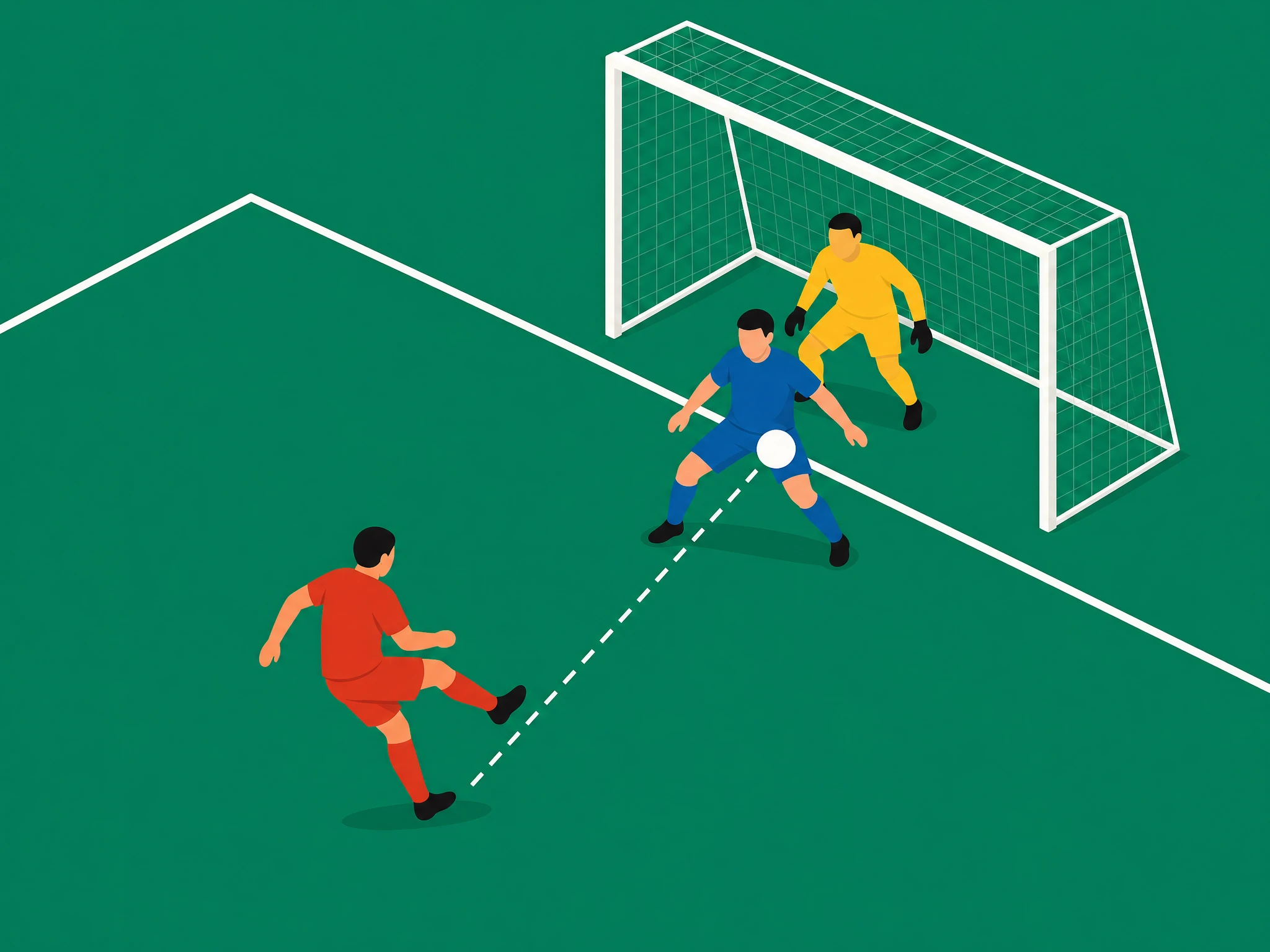
A defender's body stops a shot that was going in.
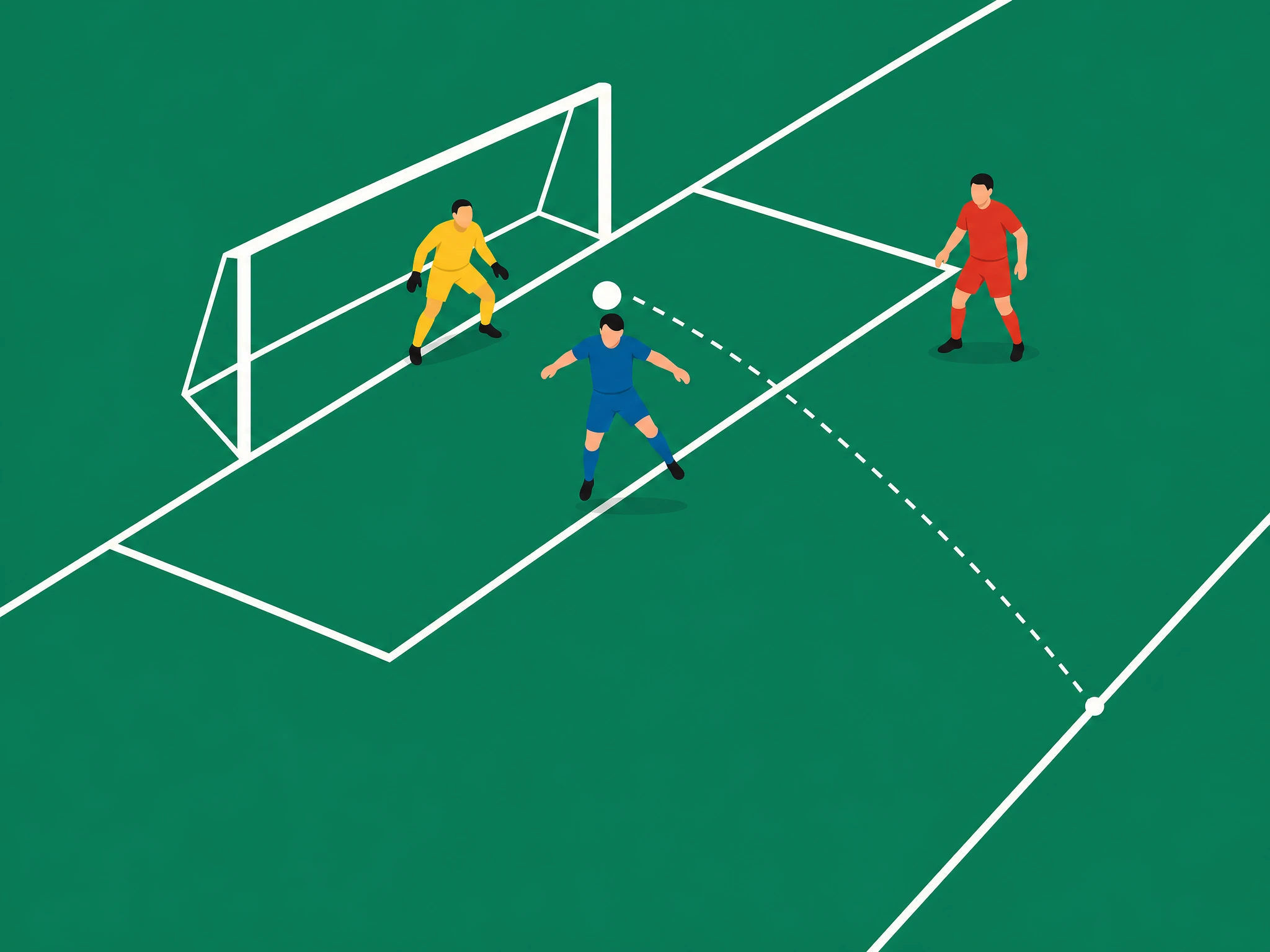
A defender heads a cross away before an attacker reaches it.
How corners are settled covers what happens next when a cross block sends the ball out for a corner, since that's the most common outcome of a defender reaching a delivery first. Cross blocks cluster around exactly these moments: corners, free kicks into the box, cut-backs from the byline. Wherever the ball is fizzed into the area with an attacker waiting, there's a cross block on the table if a defender gets there first.
Why a blocked pass usually isn't a block
Here's the part that's easy to get wrong if you assume every ball stopped by a defender's body is a "block". A pass blocked in open play, one team-mate to another with no shot and no delivery into the box, generally isn't recorded as a block in the defensive-actions sense most providers use for props markets. Interceptions vs tackles vs blocks already flagged this briefly: a block applies to a shot or a cross-type delivery, not to a routine pass cut out mid-pitch.
What actually happens to that pass depends on how it was stopped. If a defender reads the pass and steps into its path before it reaches the intended receiver, that's an interception, the standard defensive stat for exactly that situation. If a defender's body simply gets in the way of a pass that was already travelling somewhere, without the defender having read and anticipated the line of it, it's more likely to be scored as an incomplete pass for the passing team, with no specific credit event for the defender at all.
Where the provider convention isn't universal
Data and tools
FootyMetrics tracks blocks for every player and team across 115+ leagues, split out from shots on target and interceptions instead of folded into one number.
See player tackle trends and team tackle trends for the history behind a defender's wider defensive numbers, and the full breakdown on interceptions vs tackles vs blocks for how blocks sit alongside the other defensive-actions stats. How clearances are counted covers the next stat along, for when a defender just gets the ball away with no specific delivery aimed at them to block.
Blocks FAQs
Does a blocked shot count as a shot on target?
Only if the block is made by the last defender or the keeper, with nobody else behind them, on a shot that was genuinely goal-bound. That single event counts as a shot on target for the attacker and a block for the defender at the same time. A block made by a covered defender, with cover still behind, is a block but not a shot on target.
Is a cross block the same stat as a shot block?
No. A shot block stops an attempt at goal. A cross block stops a ball played into the box before it reaches an attacker, with no shot taken. Both count toward a defender's total blocks, but they are different events.
Does blocking a pass count as a block?
Usually not, if it is a routine pass in open play with no shot and no delivery into the box involved. It is more commonly logged as an interception, if the defender read and cut out the pass, or as an incomplete pass for the team that played it. Check your bookmaker's own market rules if you are betting a blocks line, since the exact convention here is not fully standardised across providers.
Do headers count as blocks?
Yes. A cross or shot stopped by a defender's head counts the same way as one stopped by any other legal part of the body. The block category is not about which body part makes contact, it is about what kind of ball was stopped.
Why would a good defender have a low blocks count?
Because blocks only happen when a shot or a delivery into the box gets far enough to need stopping. A defender who reads the game well and cuts out crosses and through balls earlier, before they become a genuine goal threat, will often rack up interceptions instead of blocks. A low blocks total on its own does not mean weak defending.
Does a block on the goal line always mean the shot was going in?
Not automatically. The shot has to have been genuinely goal-bound for the block to also count as a shot on target for the attacker. A block on a shot that was already curling wide is still a block, but it is not a shot on target, because the shot was never going in regardless of the defender.