Substitution rules: five subs and concussion subs
Competitions choose their own substitution limit under IFAB's Law 3, and the top level of the game currently permits five substitutes, made across a maximum of three stoppages in play plus half time. A separate concussion substitute lets a team make one extra, permanent change for a suspected head injury without touching that normal allowance.
Team FootyMetrics
Updated Jul 2026 · 6 min read
- Five substitutes is not automatic everywhere. IFAB's Law 3 sets five as the maximum a competition may choose to permit, and the competition organiser decides.
- Where five subs are permitted, changes still have to fit into a maximum of three stoppages in play, plus a separate half-time opportunity that does not use up one of the three.
- Once a player is withdrawn in a normal substitution, they cannot return. That only differs in youth, veterans, disability and grassroots football.
- A concussion substitute is a separate, additional change for a suspected head injury. It sits outside the normal substitute count, and the player taken off cannot return, including in a penalty shootout.
“Five subs” is a competition’s choice under IFAB’s Law 3, not a single global number, and the newer concussion substitute works differently from an ordinary substitution in ways that catch people out.
How many substitutes are actually allowed
The Laws of the Game set five as a ceiling, not a mandate. Law 3 states that the number of substitutes, “up to a maximum of five, which may be used in any match played in an official competition will be determined by FIFA, the confederation or the national football association.” A lower-level league, a domestic cup or a grassroots competition can run three substitutes instead, and plenty do.
The five-substitute figure now standard at the Premier League, the Champions League and the rest of Europe’s major leagues is a rule those competitions chose to adopt. IFAB first allowed it as a temporary measure during the pandemic, then wrote it into Law 3 as a permanent option at its 2022 annual general meeting. Premier League clubs voted in March 2022 to adopt it from the 2022/23 season, having gone back to three substitutes after the restart of 2019/20.
The substitution window rule
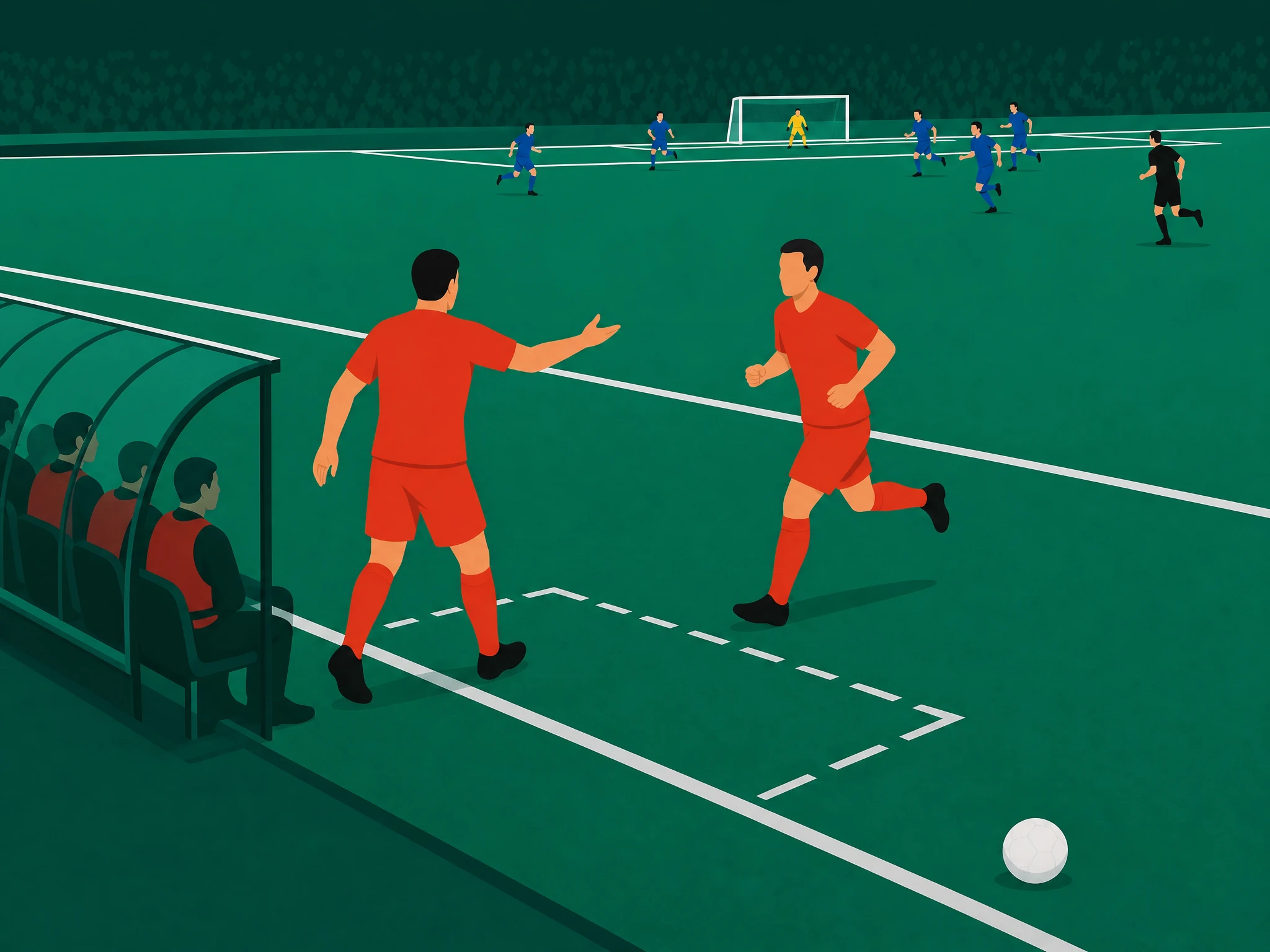
Being allowed five substitutes does not mean a manager can stop the game five separate times to make them. Competitions that permit five subs also cap the changes at three substitution opportunities during play. A substitution opportunity is one stoppage used to make a change, and Law 3 confirms that swapping more than one player during the same stoppage still only counts as one opportunity, so a triple change made together uses up just one of the three.
On top of those three, there is a separate opportunity at half time that does not count against the limit. In practice, a team can make changes at up to four separate moments across a normal 90 minutes: three windows during play, plus the interval. Extra time adds further scope. Any substitutes or substitution opportunities a team has not used in normal time carry over into extra time, and where a competition allows one additional substitute for extra time, each team also gets one additional substitution opportunity to use it. The break between full time and extra time, and half time within extra time itself, both allow further changes without touching the opportunity count, the same way normal half time does.
Who can be substituted, and whether they can come back
Any outfield player or the goalkeeper can be substituted at any point, as long as the team still has an unused substitution opportunity and an unused substitute available. Once a player is withdrawn, the law is direct about what happens next: they go to the technical area or the dressing room and take no further part in the match. There is no rule letting a normally substituted player return during that same match.
The one exception is deliberately narrow. IFAB permits return substitutions, where a withdrawn player can come back on later in the same match, but only in youth, veterans, disability and grassroots football, and only where the relevant national association, confederation or FIFA has agreed to it for that competition. Senior professional football does not use return substitutions.
One extra change for a suspected concussion
The concussion substitute rule
The concussion substitute differs from an ordinary change on three points.
It is additional, not drawn from the normal pool. Each team gets a maximum of one concussion substitute per match, on top of whatever normal substitute limit the competition runs, three or five. It does not use up one of the team’s normal substitutes or substitution opportunities.
The player coming off cannot return, at all, including in a penalty shootout, under IFAB’s concussion substitution protocol.
The opposing team gets a matching option. When a team makes a concussion substitution, the opposing team is offered its own additional substitute and additional substitution opportunity. That additional substitute can only be used for this purpose, not folded into a normal change elsewhere in the match.
One detail worth flagging for squads with a small bench: where a competition names exactly as many substitutes as its normal limit allows, the concussion substitute can be a player who has already been substituted earlier in the same match. That is the one case where a withdrawn player effectively re-enters the matchday picture, through the concussion protocol rather than the normal substitution rule.
Why the timing of a substitution matters for props
A player coming off ends their contribution to any prop market tied to their own output, shots, shots on target, cards, fouls, tackles, for the rest of that game, unless a specific bookmaker offer intervenes. Because a normal substitution is permanent under the law, the moment a manager makes the change is the moment that player’s stat line for the match is finished.
That is exactly the situation several bookmakers built a promotional mechanic around, rolling a prop bet from the departing player onto the substitute who replaces them, at the same stake and odds, instead of letting it settle early as a loss. FootyMetrics has a separate page on the super sub offer and its many names, covering how each bookmaker brands that mechanic, which markets and competitions it covers, and the edge cases like red cards and extra time. This page is about the underlying law. That one is about what bookmakers do with it.
Substitution rules FAQs
Is five substitutes the rule in every league?
No. IFAB's Law 3 sets five as the maximum a competition may choose to permit. It is the option adopted by the Premier League, the Champions League and the rest of Europe's major leagues, but a lower-level league, domestic cup or grassroots competition can run a different limit, commonly three.
How many times can a team stop play to make substitutions?
Where a competition permits five substitutes, each team gets a maximum of three substitution opportunities during play, plus a separate opportunity at half time that does not count against that limit. Swapping several players in the same stoppage still only uses one opportunity.
Can a substituted player come back on later in the same match?
No, not in senior football. Once withdrawn, a player must go to the technical area or the dressing room and takes no further part in the match. Return substitutions exist only in youth, veterans, disability and grassroots football, where the relevant association has agreed to allow them.
What is a concussion substitute?
An additional, permanent substitution a team can make for a player with a suspected concussion. It was approved by IFAB in March 2024 and has applied since 1 July 2024, in competitions that choose to adopt it.
Does a concussion substitute count as one of the team's normal substitutes?
No. Each team gets a maximum of one concussion substitute per match, separate from its normal substitute count and separate from its normal substitution opportunities.
Can the opposing team respond when a concussion substitution is made?
Yes. IFAB's protocol gives the opposing team the option of an additional substitute and a matching additional substitution opportunity, which can only be used for that additional substitute, not folded into a normal change.
Do unused substitutions carry over into extra time?
Yes. Any substitutes or substitution opportunities not used in normal time carry over into extra time. Where a competition allows one additional substitute for extra time, each team also gets one additional substitution opportunity to use it, and the breaks before and during extra time allow changes without using up an opportunity.
Can a player who was already substituted come on as a concussion substitute?
In one case, yes. Where a competition names exactly as many substitutes as its normal limit allows, the concussion substitute can be a player who was substituted off earlier in the same match. It is the only route back onto the pitch for a withdrawn player in senior football.