Aerial duels won: what counts
An aerial duel is logged when two players from opposing sides challenge for the same ball in the air, and it's won by the player who wins the ball. Every contest produces two entries, an aerial won for one player and an aerial lost for the other. A free header with nobody challenging isn't an aerial duel at all.
Team FootyMetrics
Updated Jul 2026 · 7 min read
- An aerial duel needs two opposing players challenging for the same airborne ball. One contest always produces an aerial won and a matching aerial lost.
- Opta's public definition credits the win to the player who wins the ball. Wyscout settles it on first touch, whatever happens to the ball afterwards.
- An uncontested header is not an aerial duel. A free header at a corner logs as a shot or a pass, and adds nothing to the aerials column.
- When three or more players go up, Opta gives the single loss to the player closest to the winner. Wyscout records a duel for every opposing player involved, which is one reason totals differ between sites.
What counts as an aerial duel
Opta’s public event definitions describe an aerial as a contest where two players challenge in the air against each other, with the player that wins the ball deemed to have won the duel. Two things have to be true: the ball is in the air, and there are opposing players actually contesting it. A defender jumping alone to head a long ball clear is heading, but he isn’t duelling.
The same page adds a rule for crowded situations. When more than two players are involved, the player closest to the duel winner is given the aerial duel lost. So a three-man challenge under a goal kick still resolves to one won and one lost in Opta’s framework, with the third player getting nothing.
Aerials are one half of the wider duels family. Opta’s page defines a duel as a 50-50 contest between two players of opposing sides, and the ground side of that family, tackles, take-ons and fouls, has its own rules covered on duels won explained. This page stays in the air.
How “won” is judged
Opta’s wording is that the player who wins the ball wins the duel. In practice that means the player who gets to the ball and directs it, usually the first meaningful contact. What the public page doesn’t spell out is the follow-up question: does a defender who heads it first but sends it straight to an opponent still win the aerial?
Wyscout answers that question explicitly, and differently. Its data glossary states an aerial duel is considered won in favour of the player who touches the ball first, no matter what happens next. On Wyscout numbers, first contact settles it even if the header lands at an opponent’s feet. Opta’s public page commits to winning the ball and leaves the messy in-between cases to its analysts, so we’d hedge on exactly where that line sits in any one match.
One quirk worth knowing from Opta’s own touches definition: an aerial lost doesn’t count as a touch. Lose a header and you were never credited with touching the ball, which is technically accurate and still feels harsh on the defender who got a faint top of the head to it.
An uncontested header is not an aerial duel
This is the single biggest gap between what a match looks like and what the aerials column says. A striker who meets a free header from six yards, a centre-back who deals with a long punt with the nearest opponent five yards away, a full-back nodding a looping ball back to his keeper: none of those are aerial duels. They log as a shot, a clearance or a pass, and the aerials count doesn’t move.
The consequence for anyone reading player stats is that aerial duel counts measure contested headers only. A target man can win eight headers in a match and post two aerial duels won, because only two of them had an opponent up with him. If you’re pricing an aerials line off memory of a player winning everything in the air, check how many of those wins were actually contested.
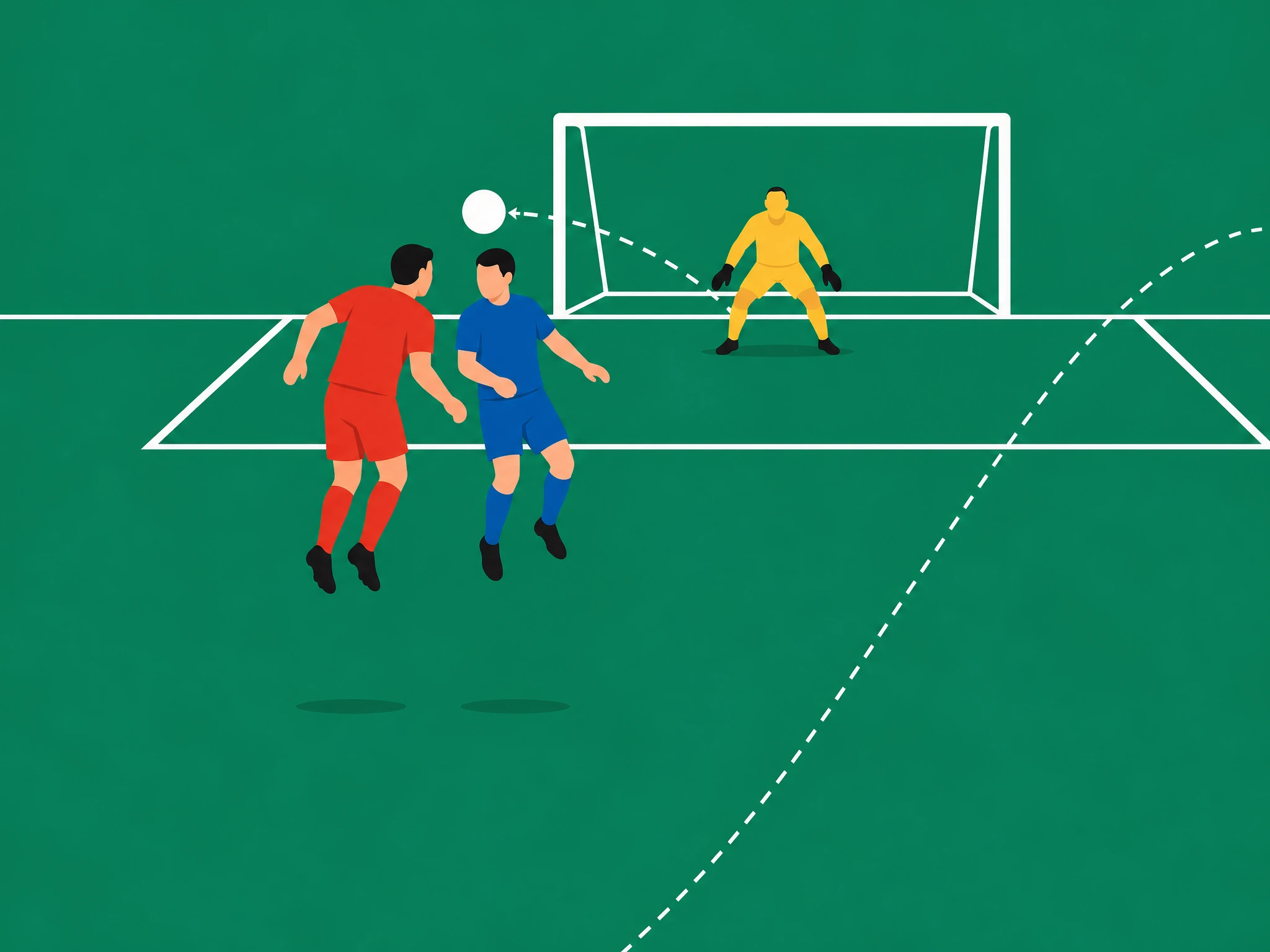
Two opponents up for the same ball. One aerial won, one aerial lost.
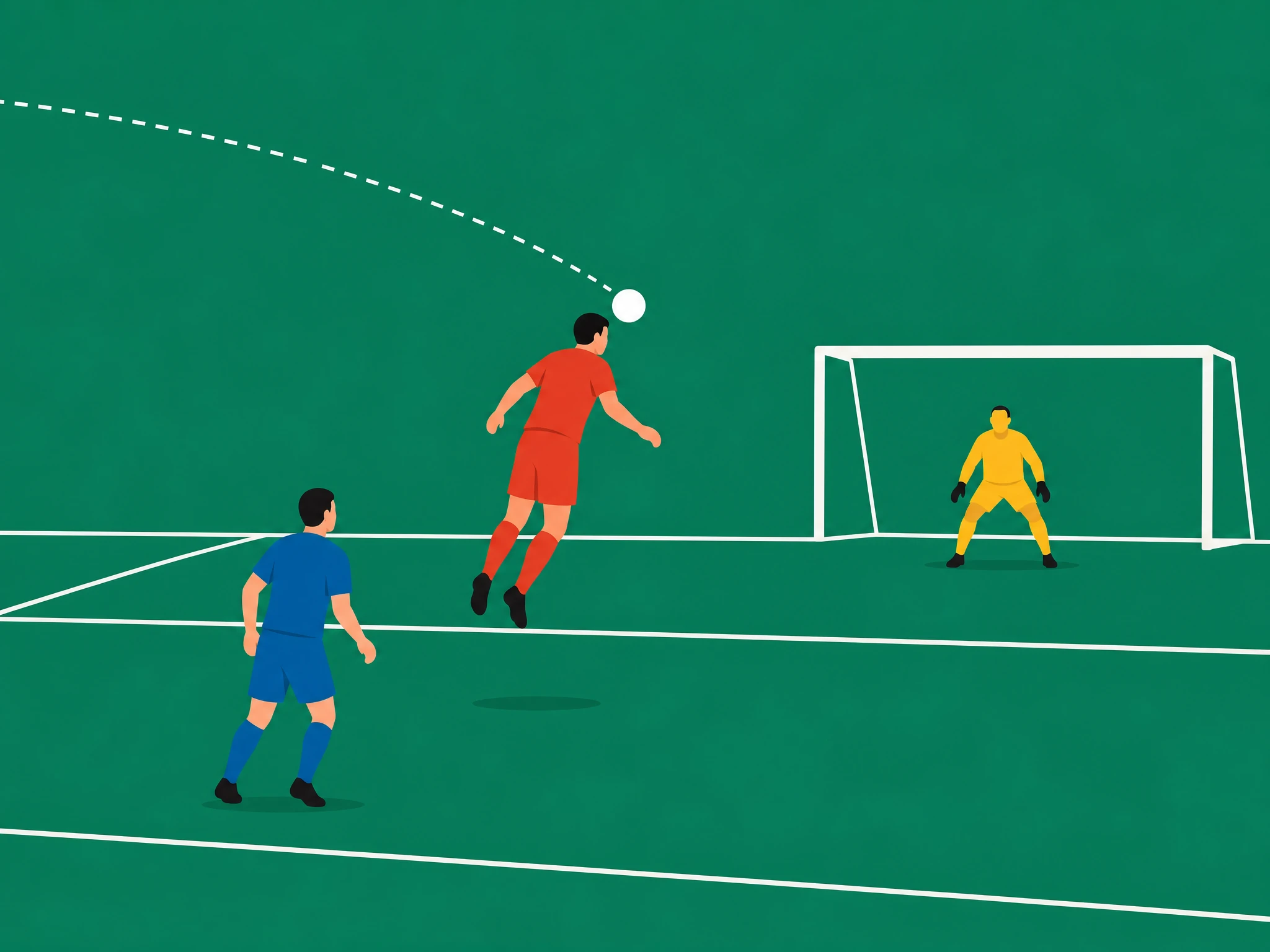
A free header. Logged as a shot, pass or clearance, never an aerial duel.
Flick-ons, keeper punches and fouls in the air
These three cases produce most of the arguments about a player’s aerial numbers.
Flick-ons. Opta defines a flick-on as a glancing pass with head or foot onto a teammate, where the ball is helped on in the same general direction. When a striker flicks a long goal kick on with a defender challenging at his back, the striker has won the ball in the air, so the contest reads as an aerial won alongside the flick-on pass event. Opta’s public page defines the two events separately and doesn’t spell out the pairing, so treat that read as how the definitions fit together, not a quoted rule. An unchallenged near-post flick is just a pass. No duel, because nobody duelled.
Goalkeeper punches. Opta’s punch definition covers a high ball punched clear with a clenched fist, where the keeper is clearing rather than claiming. A keeper who comes through a crowd and punches under a challenge has plainly won the high ball, but the public definitions page lists the punch among goalkeeper events and doesn’t say whether the keeper is also credited with an aerial duel won. Keepers do post aerial numbers on some stats sites and not others, which tells you providers make different calls here.
Fouls in the air. The shirt-pull, the climb on the back, the early jump into the man. Opta’s duels framework handles a foul as its own duel pairing: the player winning the foul is deemed to have won the duel and the player committing it has lost the duel, and the events only exist once the referee actually gives the free kick or penalty. Wyscout goes further and states outright that an aerial duel ending in a foul is won by the fouled player. Either way, a striker who draws fouls under high balls is picking up duel wins without ever touching the ball, and the defender picks up a foul conceded on top of the lost duel. How fouls are credited on each side is covered on fouls committed vs won.
Why totals differ between providers
Put the definitions above side by side and the mismatch stops being mysterious.
Opta resolves a crowded aerial contest to exactly one won and one lost, with the loss going to the player closest to the winner. Wyscout records a duel for every opposing player who competed, so the same goalmouth scramble can produce one duel entry per player at one provider and a single pair at another. Wyscout settles the win on first touch regardless of outcome; Opta’s public wording is winning the ball. Wyscout counts a foul in the air as an aerial won for the fouled player; on Opta’s page the foul is its own duel type. Stack a season of those small differences and two sites will publish different aerials totals, and different win percentages, for the same player.
None of this makes one provider wrong. They’re counting different things and both publish what they count. It does mean an aerial duels won number is meaningless without knowing whose definition produced it, and that comparing a player’s aerials on one site against a line settled on another provider’s feed is comparing two different stats.
Aerial duels as a betting prop
Aerials won lines mostly show up inside bet builders and same-game player markets rather than as headline props, typically as over/under lines on a named player’s aerial duels won. Bookmakers settle player stat markets on their official data supplier’s count, which for most major books is Opta or Stats Perform data, so the definitions on this page are the ones your bet settles on: contested in the air, won by the player who wins the ball, free headers excluded.
Check the settlement rules before backing a line
The matchup matters more for aerials than for most props. A target man only posts big aerial numbers when the opposition contests headers with him and his own team puts the ball in the air, so a short full-back marking a tall winger, or a team that goes long from goal kicks, moves these lines more than general form does.
Find a priced aerial edge
Search player prop lines and compare them against each player's actual match-by-match numbers before you back one.
Aerial duels FAQs
What counts as an aerial duel in football stats?
A contest where two players from opposing sides challenge for the same ball in the air. Opta's public definition credits the aerial duel won to the player who wins the ball, and the other player is given an aerial duel lost.
Does an uncontested header count as an aerial duel?
No. A free header with no opponent challenging logs as whatever the header produced, a shot, a pass or a clearance, and adds nothing to either player's aerial duel count.
Who wins the aerial duel if more than two players jump for the ball?
On Opta's definitions the player who wins the ball takes the aerial won, and the loss goes to the opposing player closest to the winner. Wyscout instead records a duel for every opposing player involved in the contest.
Does a goalkeeper punch count as an aerial duel won?
Opta's public page defines a punch as its own goalkeeper event, a high ball cleared with a clenched fist, and doesn't state whether it also credits the keeper with an aerial duel won. Providers handle keeper aerials differently, so check how the source you're using counts them.
Does a foul in the air count as an aerial duel won?
In Opta's duels framework a foul is its own duel pairing: the fouled player is deemed to have won the duel and the fouler to have lost it, once the referee gives the free kick. Wyscout explicitly counts an aerial duel ending in a foul as won by the fouled player.
Why does a player's aerial duels won differ between stats sites?
Because providers define the contest differently. They disagree on first touch versus winning the ball, on how many players get logged in a crowded challenge, and on how fouls in the air are credited, so season totals and win percentages don't line up across sources.