Duels won in football explained
A duel is a 50-50 contest for the ball between two players on opposing sides. The player who comes out of it with the ball, or who wins a foul during the contest, is credited with a duel won, and the other player is given a duel lost.
Team FootyMetrics
Updated Jul 2026 · 6 min read
- A duel is a 50-50 contest between two players of opposing sides. That's Opta's own framing, and it means every duel won in the data has a corresponding duel lost against another player.
- A duel isn't a single logged action. Duel totals are built from pairs of events that already exist: a tackle against a dispossessed, a completed take-on against a challenge lost, an aerial won against an aerial lost.
- Being fouled counts. The player who wins a foul is deemed to have won the duel, and the fouler to have lost it, provided the referee gives the free kick or penalty.
- Duels split into ground and aerial contests. In the air, the player who wins the ball wins the duel. The aerial side has its own judgement calls, covered on the aerial duels page.
What counts as a duel
A duel needs two opponents committed to the same ball at the same moment. Opta’s public event definitions page describes a duel as a 50-50 contest between two players of opposing sides, and that short line does most of the work. If only one player is genuinely competing for the ball, there’s no duel, however physical the moment looks. A defender shepherding a ball out of play unchallenged hasn’t won anything; a defender doing it with a striker leaning on their back has.
The part that catches people out is that a duel isn’t really a single logged action. You won’t find a standalone “duel” event in a match feed the way you’d find a shot or a corner. Duel numbers are assembled from pairs of events that already exist in the data. When a player wins a tackle, the opponent is logged as dispossessed, or as failing a take-on if they were trying to beat the tackler. When a dribbler beats their man, the beaten defender picks up a challenge lost. Each pair is one duel, with one winner and one loser.
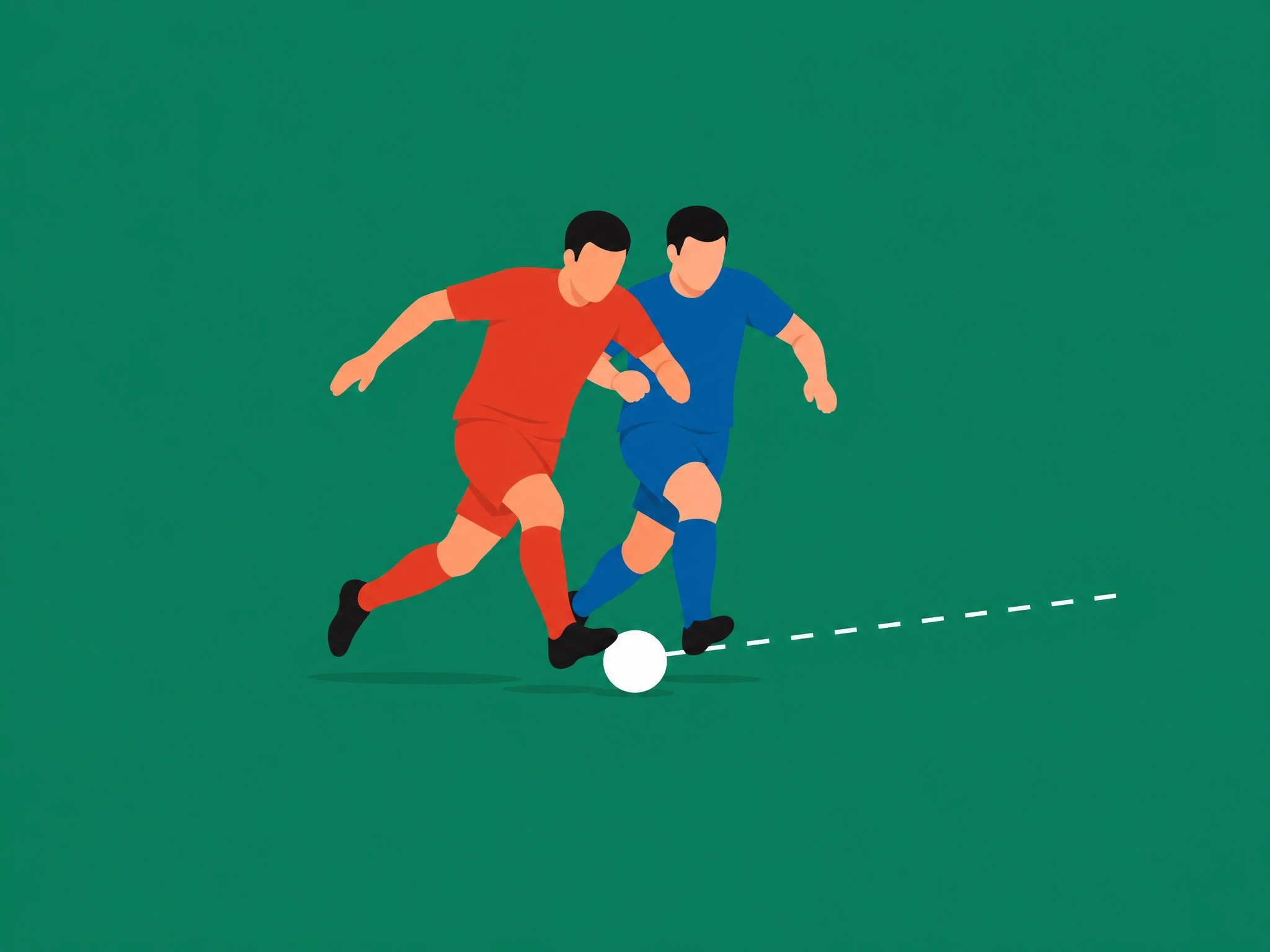
How a duel won is decided
The convention is strict: for every duel won there is a corresponding duel lost, depending on the outcome of the contest. That’s the wording on Opta’s page, and it makes duels a zero-sum stat. Nobody wins a duel into empty space. Someone on the other side always takes the loss.
The pairings on Opta’s public page cover the ways a contest can end. A tackle is awarded when a player wins the ball from an opponent in possession; that opponent is logged with an unsuccessful take-on if they were trying to beat the tackler, or as dispossessed if they weren’t. The deeper detail, including why a foul wipes a tackle out, is on how tackles are counted. A successful take-on pairs with a challenge lost for the defender who was beaten, the flip side of the stat covered on dribbles and take-ons explained. An aerial challenge won pairs with an aerial challenge lost, and a foul won pairs with a foul conceded. There’s even a goalkeeper version: a keeper who claims the ball at a forward’s feet and holds onto it gets a smother, and the forward gets an unsuccessful take-on. So even the keeper can win a duel.
- A tackle, taking the ball off an opponent in possession.
- A successful take-on, beating a defender with the ball.
- An aerial challenge won, winning the ball in the air.
- A foul won, drawing a free kick or penalty in the contest.
- A smother, for a keeper claiming the ball at a forward's feet.
- Dispossessed, or an unsuccessful take-on against the tackler.
- A challenge lost, for the defender who was beaten.
- An aerial challenge lost.
- A foul conceded.
Ground duels vs aerial duels
Most stat sites, FootyMetrics included, present duels in two buckets. Ground duels are contests with the ball at or near feet: tackles, take-ons, shoulder-to-shoulder races onto a loose ball, fouls given during a contest for possession. Aerial duels are contests where two players challenge for the ball in the air, usually with their heads.
In the air the rule is simple on paper: the player who wins the ball is deemed to have won the duel. Opta’s page adds one detail worth knowing for when a crowd goes up together: if more than two players contest the same ball, the aerial duel lost goes to the opponent closest to the winner. Everyone else in the crowd gets nothing either way.
One honest caveat. Opta’s public definitions page lists the aerial pairing explicitly but never actually uses the label “ground duel”. The ground and aerial buckets are how providers and stats sites group the underlying events for presentation, and exactly which contests land in which bucket can differ slightly from one site to the next. It’s one reason the same player can show slightly different duel totals on two different platforms.
What the simple aerial rule hides is a stack of judgement calls: what happens when only one player jumps, how flick-ons are read, whether a keeper punching clear is in a duel at all. That’s the whole subject of aerial duels explained, so we’ll leave it there.
Where fouls fit
This is the piece that changes how you read the stat. The player winning a foul is deemed to have won the duel, and the player committing it to have lost it. The two foul events only enter the data when the referee awards a free kick or a penalty; whether the kick is ever taken doesn’t matter.
Follow that through and you get a slightly odd but consistent result: a player can win duels all afternoon without ever coming away with the ball. A forward who shields possession, invites contact and draws four fouls has won four duels. A defender who keeps diving into challenges and fouling has lost four, on top of the free kicks conceded. The fouls committed vs fouls won page covers that pairing from the fouls side.
One thing the public page doesn’t spell out is what happens when the referee plays an advantage instead of awarding the kick, so we won’t claim a rule for that here.
Winning a foul is winning a duel
Why scouts read duels won
For midfielders and defenders, duels won compresses every type of ball-winning into one column: tackles, headers, shoulder-to-shoulder contests, fouls drawn. A holding midfielder’s defensive shift shows up there in a way no single event stat captures, which is why it’s a staple of midfield and centre-back scouting shortlists.
There are two ways to read the number and they answer different questions. Duel volume tells you how often a player is involved in contests, which is partly a function of role and of how much defending their team has to do. Duel win rate tells you how often they come out on top, but it isn’t comparable across different duel mixes: a centre-back’s duels lean heavily aerial, a full-back’s lean ground, and a winger’s are mostly take-ons. There’s no single win percentage that means “good” across all of those. Compare within a role, and look at the ground and aerial splits separately before drawing a conclusion.
FootyMetrics tracks duels, duels won and duels lost per match for every player across 115+ leagues, with the aerial numbers alongside.
The betting angle: duels props
Duels won lines exist, but they’re rare next to tackles props. You’ll find a tackles line on most big televised matches; a duels line tends to show up only from a handful of bookmakers on the biggest games, if at all. That’s partly the settlement problem: as this page shows, a duel total is assembled from several event types, including fouls, so it’s a harder number to eyeball than how many tackles a player made.
Where a duels line is offered, the same logic applies as any player prop. Bookmakers typically settle player props on official data feeds, usually Opta or Stats Perform data, and the definitions above are what those feeds apply. But grouping conventions matter more here than for most stats, because different stats sites bundle duels differently. Before betting one, check which data source the bookmaker names in its settlement rules, and read the player’s numbers on a site that matches it. Rules differ by bookmaker, so the settlement rules page is the final word, not any stats site.
Check the numbers before the line
Duels lines are rare, but the same homework applies to tackles, fouls and shots props. Run a player's recent numbers against the line before you back it.
Duels won FAQs
What counts as a duel in football stats?
A 50-50 contest between two players of opposing sides. It isn't a single logged event: duel totals are built from paired events such as a tackle against a dispossessed, a completed take-on against a challenge lost, or an aerial challenge won against an aerial challenge lost.
How is winning a duel decided?
The player who comes out of the contest with the ball wins the duel, and for every duel won a corresponding duel lost is recorded against the opponent. Winning a foul during the contest also counts as winning the duel.
Does being fouled count as a duel won?
Yes. The player winning the foul is deemed to have won the duel and the fouler to have lost it, provided the referee awards a free kick or penalty. Whether the kick is actually taken doesn't matter.
What is the difference between ground duels and aerial duels?
Ground duels are contests with the ball at or near feet, such as tackles, take-ons and loose-ball races. Aerial duels are contests in the air, won by the player who wins the ball. Opta's public page defines the aerial pairing but doesn't use the label ground duel, so the exact split is a presentation convention that can vary slightly by site.
Do bookmakers offer duels won props?
Rarely compared with tackles props. Where they exist, they're usually limited to the biggest matches. Settlement typically runs on official data feeds such as Opta or Stats Perform data, but rules differ by bookmaker, so check the named data source in the settlement rules.
Why do defensive midfielders and centre-backs top duels won charts?
Their roles put them in the most contests: tackles and loose balls in midfield, headers from long balls and set pieces at the back. Duels won adds all of that together, including fouls drawn, so high-contact defensive roles dominate the leaderboard.