Ball recoveries explained
A ball recovery is credited when a player wins the ball in open play at a moment when neither team has it under control, usually by being first to a loose ball. Opta's definition adds one condition that decides most edge cases: full control must be established, and the recovery goes to the player with the first controlled action.
Team FootyMetrics
Updated Jul 2026 · 6 min read
- A recovery is winning a loose ball. Opta collects the event when possession changes from one team to another in open play, and the player deemed to have the first controlled action gets the credit.
- An interception is a different event: cutting out a pass that was on its way to a specific opponent. A tackle needs the opponent to already have the ball under control. A recovery needs neither.
- Deep midfielders and centre-backs post the biggest recovery counts because second balls, half-clearances and blocked shots mostly drop in central areas in front of the defence.
- Recoveries count towards FPL defensive contribution points for midfielders and forwards (12 combined actions for two points). Bookmaker recoveries lines are rare, and there's no single settlement convention, so read the rules per book.
What counts as a ball recovery
Opta’s public event definitions say a Ball Recovery event is collected when possession changes from one team to another in an open play situation. Full control must be established, and the player deemed to have the first controlled action is awarded the event.
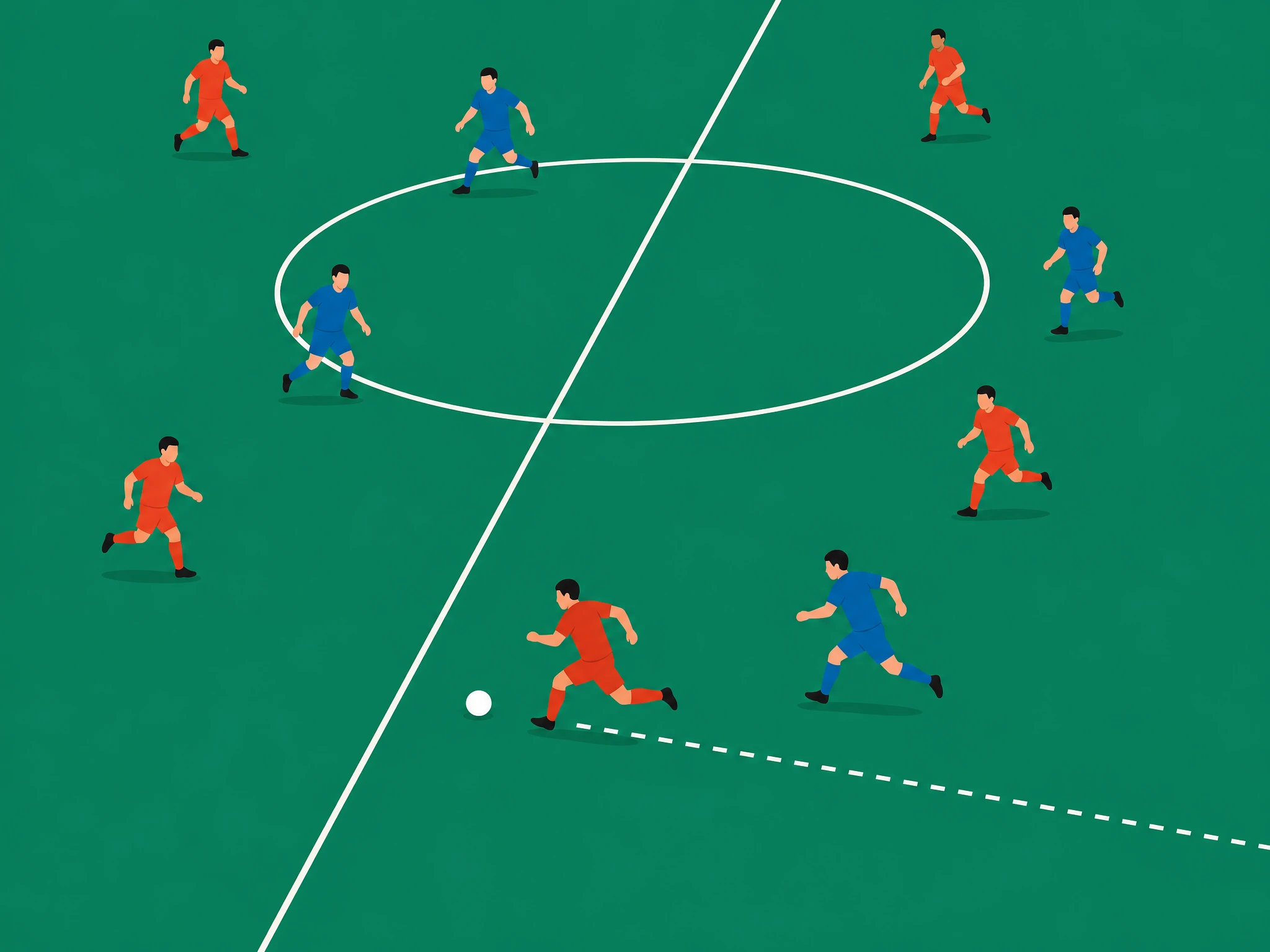
Unpack that and the practical picture is a loose ball. A shot gets blocked and ricochets into midfield, or a clearance drops between the lines. For a beat, the ball belongs to nobody. Whoever arrives first and gets a controlled touch on it, a touch that actually keeps the ball for their team, wins the recovery. A toe-poke that squirts straight to an opponent doesn’t establish control, so it doesn’t count.
The open play condition matters too. The definition is about the run of play, so a recovery isn’t something you win at a restart.
Goalkeepers get their own version. Opta’s page logs a goalkeeper picking the ball up while their side regains possession as a separate event, which it describes as similar to a recovery except that the keeper picks the ball up.
One honest note on the limits of the public page: it gives the definition above and stops there. It doesn’t publish the sub-cases, so where a stats site splits recoveries by pitch zone or bundles them with other ball-winning events, that’s the site’s own layering on top of the raw event.
Recovery vs interception vs tackle
This boundary is the whole reason the stat exists as a separate column, so it’s worth being precise.
An interception, on the same Opta page, is where a player reads an opponent’s pass and intercepts the ball by moving into the line of the intended pass. The ball had an owner and an address: one opponent played it, another was waiting for it, and the defender got in the way. A tackle is stricter again. The tackled player must be in controlled possession before the challenge, which is covered in full on how tackles are counted.
A recovery needs neither of those preconditions. Nobody was in controlled possession and the ball wasn’t travelling to a specific target. It was simply loose, and someone claimed it. If you want a quick test for any ball-winning moment: was the ball at an opponent’s feet (tackle), on its way to one (interception), or nobody’s (recovery)? The first two have their own boundary, covered on interceptions vs tackles vs blocks.
- A blocked shot ricochets into midfield and a player collects it.
- A half-cleared corner drops and someone gets it under control.
- An overhit pass runs loose and a defender mops it up.
- Cutting out a pass aimed at a specific opponent: an interception.
- Winning the ball off a player who has it under control: a tackle.
- Heading a dangerous ball away with no attempt to keep it: a clearance.
One thing we can’t settle from the public page: whether a tackle or interception that wins the ball also produces a recovery event in the same feed. Opta defines the three separately and doesn’t say how they stack. Some stats platforms present recoveries as a broad umbrella over every ball-winning action, others keep it narrow, and that layering is usually the explanation when a player’s recovery count looks different on two sites.
Commentary rarely says the word
Why deep midfielders and centre-backs top the charts
Loose balls don’t scatter evenly across the pitch. Long kicks get flicked on and drop ten yards behind the duel. Half-cleared corners fall to the edge of the box, blocked shots roll out to the D. Almost all of that lands in the central third and in the pocket just in front of the back line, which is exactly where holding midfielders and centre-backs spend their afternoons. They rack up recoveries because they’re stationed where the game spits the ball out.
The Premier League’s own explainer for the 2025/26 fantasy rules makes the point with a named example: Moises Caicedo logged 12 defensive contributions in a match against Arsenal, eight of them recoveries. A screening midfielder’s shift is mostly this, arriving first on balls nobody owns, and the recovery column is the only place that work shows up.
Read the number with game state in mind, though. A team that defends deep and concedes territory all match hands its defenders a steady supply of loose balls to sweep up, so a big recovery count can describe the match a player was in as much as the player. High volume tells you about role and circumstance before it tells you about quality. The same applies to clearances, which measure a close cousin of the same defensive workload.
Recoveries and pressing
Where a recovery happens says more than the fact it happened. Win the ball back 30 yards from the opponent’s goal and you’ve turned a press into a chance-building position with the defence unset. Win it on the edge of your own box and you were fire-fighting. Same event in the data, very different football.
That’s why analysts split recoveries by zone, and why average recovery position gets used as shorthand for how high a team defends. A side whose recoveries cluster in the opponent’s half is winning the ball where its press forces mistakes. PPDA measures the same pressing story from the other direction, how many passes you let the opponent play per defensive action, and the two are read together: PPDA for how hard a team presses, recovery position for where the ball actually comes back.
The betting and fantasy angle
Recoveries went mainstream as a fantasy stat before a betting one. Since 2025/26, Fantasy Premier League awards two points for defensive contributions: a defender needs 10 combined clearances, blocks, interceptions and tackles in a match, while midfielders and forwards need 12, with ball recoveries added to their pool of qualifying actions. The Premier League’s explainer describes those recoveries as actions defensive midfielders are particularly good at, like being first to a loose ball, and notes that what the player does after securing it is taken into account, with credit for starting a counter-attack or securing stable possession. The points are capped at two per match however far past the threshold a player goes.
On the sportsbook side, player recoveries lines are rare. Tackles, shots and fouls props are on most big televised matches; a recoveries line shows up from the odd bookmaker on the odd game, if at all. Where one exists, expect it to work like any other defensive prop: an over/under on the player’s final count, settled on the bookmaker’s chosen data feed at full time, with the standard caveat that data providers can review and amend statistics after the match. What we can’t give you is a universal settlement rule, because too few bookmakers publish one for this market. The layering question above, whether tackles and interceptions sit inside the recovery count, is exactly the kind of thing that varies, so if you find a recoveries line, read that book’s settlement rules before assuming the definition on this page is the one they’re using.
The homework is the same as for any defensive prop: check the player’s recent counts against the line, and check them on a stats source that matches the bookmaker’s feed.
Scan the props that do get priced
Recoveries lines are scarce, but tackles, fouls and shots props price off the same defensive workload. Run a player's recent numbers against the line before you back anything.
Ball recoveries FAQs
What is a ball recovery in football?
It's winning the ball in open play at a moment when neither team has it under control, usually by being first to a loose ball. Opta's definition requires full control to be established, and the player with the first controlled action is awarded the recovery.
Is a ball recovery the same as an interception?
No. An interception cuts out a pass that was travelling to a specific opponent: the defender reads it and moves into its line. A recovery has no intended receiver involved, the ball is loose and belongs to nobody until a player establishes control of it.
Do tackles count as ball recoveries?
It depends on the platform. Opta's public page defines tackles, interceptions and recoveries as separate events and doesn't say whether they stack, and stats sites layer them differently. Some present recoveries as a broad total covering other ball-winning actions, others keep it narrow, which is why counts can differ between sites.
Do ball recoveries earn fantasy points?
In Fantasy Premier League they do, from 2025/26, for midfielders and forwards. Recoveries count towards their defensive contribution total, and reaching 12 qualifying actions in a match earns two points. Defenders need 10, but recoveries aren't in their pool, only clearances, blocks, interceptions and tackles.
Can you bet on player ball recoveries?
Rarely. A few bookmakers list recoveries props on big matches, but the market is far less common than tackles or shots props, and there's no single settlement convention across the industry. If you find one, check which data source the bookmaker names in its settlement rules before betting it.
Why do defensive midfielders make so many recoveries?
Because loose balls concentrate where they play. Second balls from long kicks, half-cleared set pieces and blocked shots mostly drop in central midfield and just in front of the defence, so the players stationed there collect the most of them.