How offsides are recorded for betting
An offside is logged as a stat against the attacking player who was flagged, the moment the referee stops play and awards the free kick. It does not matter whether that player touched the ball. A team's offside total for the match is the sum of every player offside given against that team.
Team FootyMetrics
Updated Jul 2026 · 6 min read
- The offside stat goes to the attacker penalised the instant the free kick is awarded, not to whoever eventually gets the ball back.
- A flag for interference with no touch, such as blocking the goalkeeper's view, still logs as one offside against that player.
- If two or more attackers are in an offside position on the same pass, only the player judged most actively involved has it credited to them.
- A team's offside count is the sum of the individual player offsides given against that team, not a separate figure.
The law itself, including offside position, when a position becomes an offence, and the throw-in, goal kick and corner exemptions, is covered in what is offside in football.
How an offside gets logged
Under Opta’s event definitions, an offside is “an event attributed to the player deemed to be in an offside position when a free kick is awarded.” That is the entire mechanism most offside markets sit on top of. No flag and no stopped play means no logged event. A raised flag that gets waved off, or a phase that plays out under advantage until it dies naturally, does not produce an offside stat, because no free kick was ever awarded for it.
The credit goes to the attacker in the illegal position, not to whoever the ball ends up with. If a through ball is played for a striker standing offside and a team-mate gets to it first instead, or the ball never reaches anyone before the whistle goes, the offside is still logged against the player who was in the offside position and judged to be interfering with play. Whoever eventually touches the ball, or doesn’t, has no bearing on who the stat is credited to.
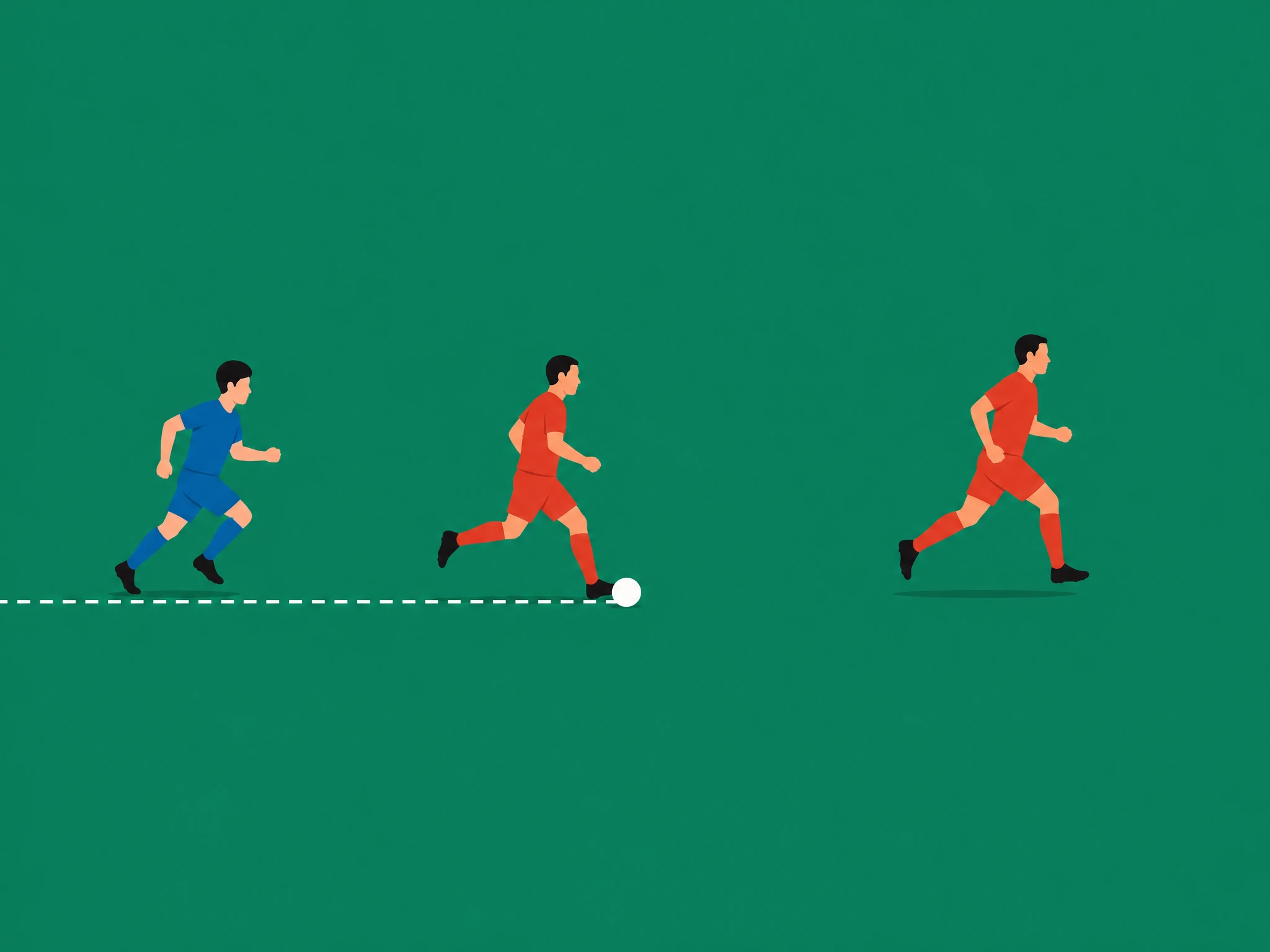
Opta’s definitions also cover the case of two attackers both straying offside on the same pass: “If two or more players are in an offside position when the ball is played, the player considered to be most actively involved is given offside.” So a striker and a winger can both be beyond the last defender on the same ball, but only one offside gets recorded, against whichever of them the referee judges to be the one actually interfering with play. There is also a separate, related stat called “Offside Provoked”, credited to the deepest defender in the line when an offside is given against the attacking side. That is a defensive stat, not an attacking one, and it is not what betting markets are built on, but it turns up in data exports so it is worth knowing it exists.
Does a no-touch offside still count as a stat
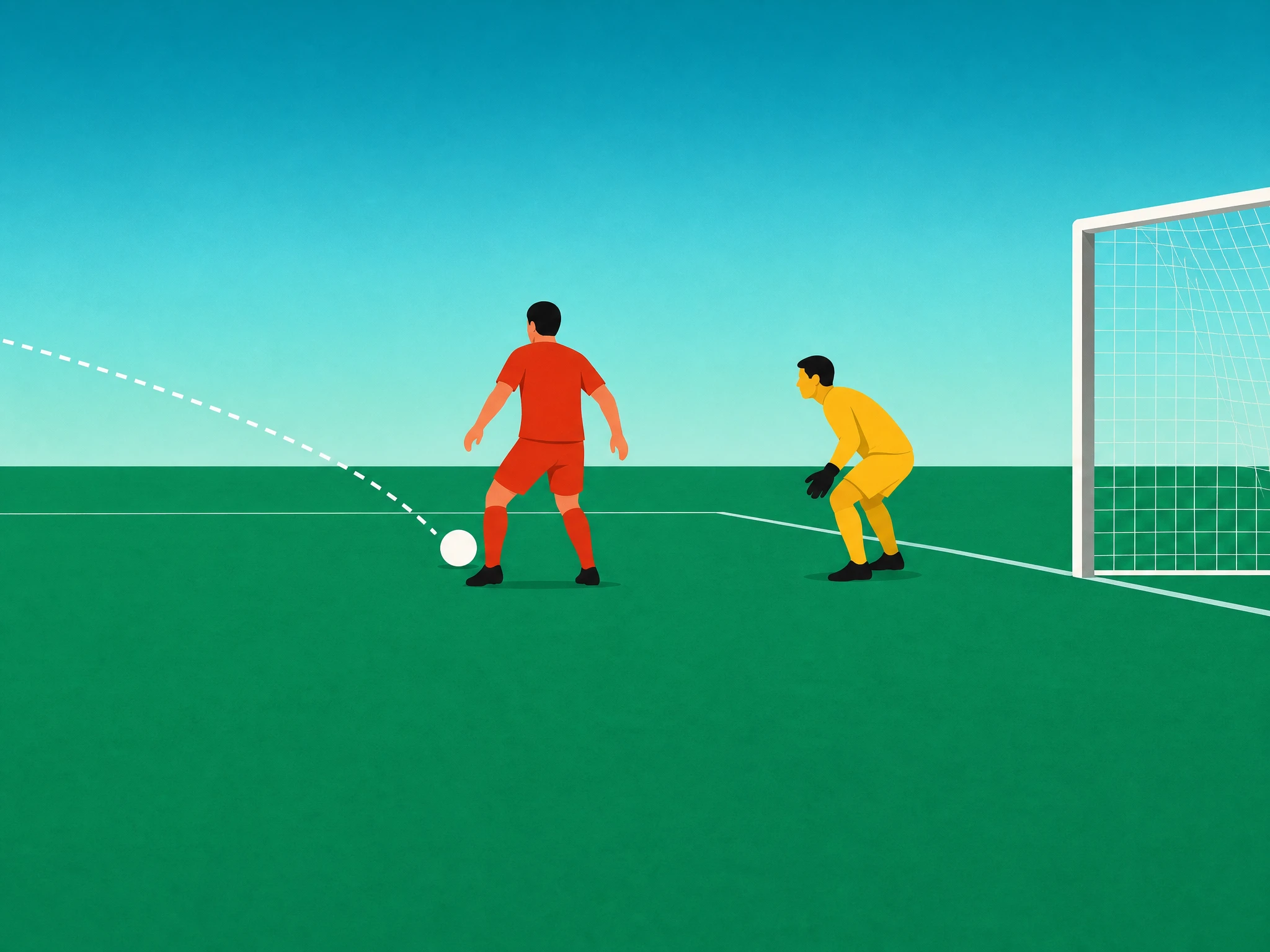
Yes. The law already allows an offside to be given without the flagged player touching the ball at all, for example by clearly blocking an opponent’s line of sight or challenging for the ball. Because the Opta definition is built around the free kick being awarded rather than a touch being made, an offside given on those no-touch grounds is logged exactly the same way as any other offside, against the same player. There is no separate “no-touch offside” category in the data. A striker who never gets near the ball but is flagged for blocking the goalkeeper picks up an offside on their season stats in the same way as one who is played through and caught square.
Team offsides as a sum of player offsides
A team’s offside total in a match is not tracked as its own separate figure. It is the sum of every individual player offside given against that team’s players in that game. In a match where a striker is caught offside twice and a winger once, the team offside total for that side is three, built from those three individual events. A player offsides bet on the striker settles at two, the winger’s at one, and the team line at three, all from the same three flags.
A team offsides market and the underlying player offsides markets pull from the same event stream, so there is no scenario where the team total and the sum of the individual player counts disagree. The team number is built from the player numbers, not measured on its own.
Team and player markets, same data
Why offside is a neutral stat
A high offside count is not automatically a bad sign, and a low one is not automatically good. It tracks how a team plays more than how well it plays. A side that presses high and springs an offside trap will rack up offsides given away by the opposition. A side that plays quick balls in behind a high defensive line will rack up offsides of its own, some of which are just a striker’s run timed a fraction early rather than anything to worry about.
Player and team offside trends
See who gets caught offside most, and which defences push the highest line, across 115+ leagues.
The same pattern holds on team offside trends: the number reflects tactics and pace of play, not quality.
Settling an offsides prop
Sportsbooks settle offsides markets, both team totals and individual player totals, against the official match data. The rule that recurs across sportsbook settlement pages is that only offsides where play is actually stopped and a free kick is awarded count toward the total. That lines up with how the stat is generated in the first place: no awarded free kick means no logged offside, so there is nothing for a settlement rule to disagree with.
Beyond that, exact wording on edge cases, an abandoned match, or a player prop when that player is substituted before full time, varies by bookmaker. Sky Bet, for example, publishes market-by-market settlement wording on its football rules hub, and that is the kind of page to check before betting an offsides line with any bookmaker.
Offside stats FAQs
Who gets an offside credited to them, the player flagged or the player who touches the ball?
The player flagged. Opta's event definition attributes the offside to the player deemed to be in the offside position when the free kick is awarded, not to whoever the ball ends up with.
Does an offside without a touch on the ball still count as a stat?
Yes. An offside given for interference, such as clearly blocking the goalkeeper's view, is logged the same way as any other offside, because the stat is tied to the free kick being awarded, not to a touch being made.
How is a team's offside total worked out?
It is the sum of every individual player offside given against that team in the match. There is no separate team-level count, the total is built from the player events.
What happens if two attackers are both in an offside position on the same pass?
Only one offside is recorded, against whichever of them the referee judges to be most actively involved in play. The other player in an offside position that phase does not get an offside logged against them.
Does an offside still count if VAR disallows the goal for something else?
No. The stat follows the reason play is stopped. If VAR rules a goal out for handball or a foul, the free kick is awarded for that offence, so no offside is logged even if an attacker was in an offside position during the move. If VAR disallows the goal for offside, the offside is recorded against the attacker penalised, exactly as if the flag had gone up straight away.
Is a high offside count a sign a team is playing badly?
No. Offsides mostly reflect tactics, a high defensive line or quick passes in behind, rather than quality. A well organised, attacking team can rack up plenty of them.