Key passes vs assists: the difference
A key pass is the final pass that sets up a team-mate's shot, and it counts whether that shot scores, is saved or is blocked. An assist is the final pass that sets up a goal specifically. Opta counts them as two separate categories, not one nested inside the other: a pass that ends in a goal is scored as an assist, and a pass that ends in any other kind of attempt is scored as a key pass instead.
Team FootyMetrics
Updated Jul 2026 · 6 min read
- A key pass needs a shot. An assist needs a goal. Opta treats them as two separate counting categories that add up to "chances created", not one stat containing the other.
- A blocked shot or a shot saved by the goalkeeper still counts as a key pass for the passer, since a key pass only needs an attempt at goal.
- A key passes prop can settle in a goalless draw. An assists prop cannot, since it needs the move to actually finish.
- A secondary assist (Opta's "second assist") is the pass before the assist-maker's pass, a separate and less commonly tracked stat.
That distinction is where a lot of props confusion starts, because the two stats don’t overlap the way people often assume.
Key pass needs a shot, assist needs a goal
A key pass needs a shot. An assist needs a goal. That single distinction is the difference between the two markets.
What counts as a key pass
FootyMetrics settles key passes and assists the way Opta defines them, the industry-standard definitions for both stats. Opta’s wording for a key pass is precise: the final pass from a player to their team-mate who then makes an attempt on goal without scoring. The “without scoring” part matters, because it is what keeps key passes and assists as separate, non-overlapping events. A pass that leads to a shot that does not go in is logged as a key pass. A pass that leads to a shot that does go in is logged as an assist, not as a key pass as well.
Opta calls the combined total of the two “chances created”, assists plus key passes together. That is the number to check if you want a single measure of a player’s overall creative output, since it does not care whether the shot at the end went in. The full rules for that combined stat are on chances created explained.
The detail that catches people out on a key passes market is that the shot does not need to be any good. Opta’s rule only asks for an attempt on goal, and a blocked shot and a shot saved by the goalkeeper both count as attempts on goal. A pass that sets up a team-mate whose shot is charged down by a defender, or hit straight at the goalkeeper and saved, still counts as a key pass for the passer. What happens to the shot afterwards, scored, saved, blocked or off target, does not change whether the pass itself was a key pass, as long as an attempt was actually made.
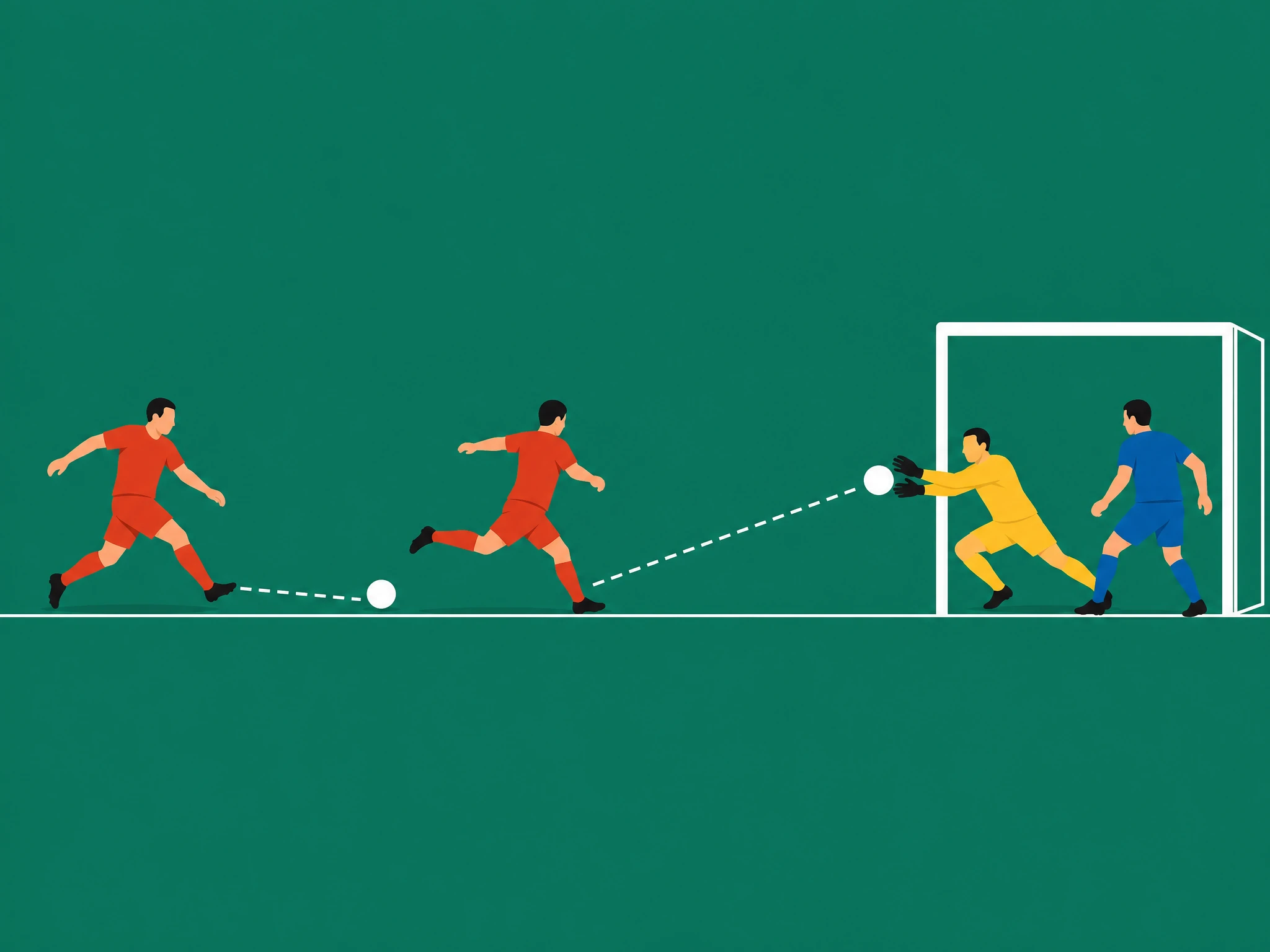
Shot saved. Still a key pass, no assist.
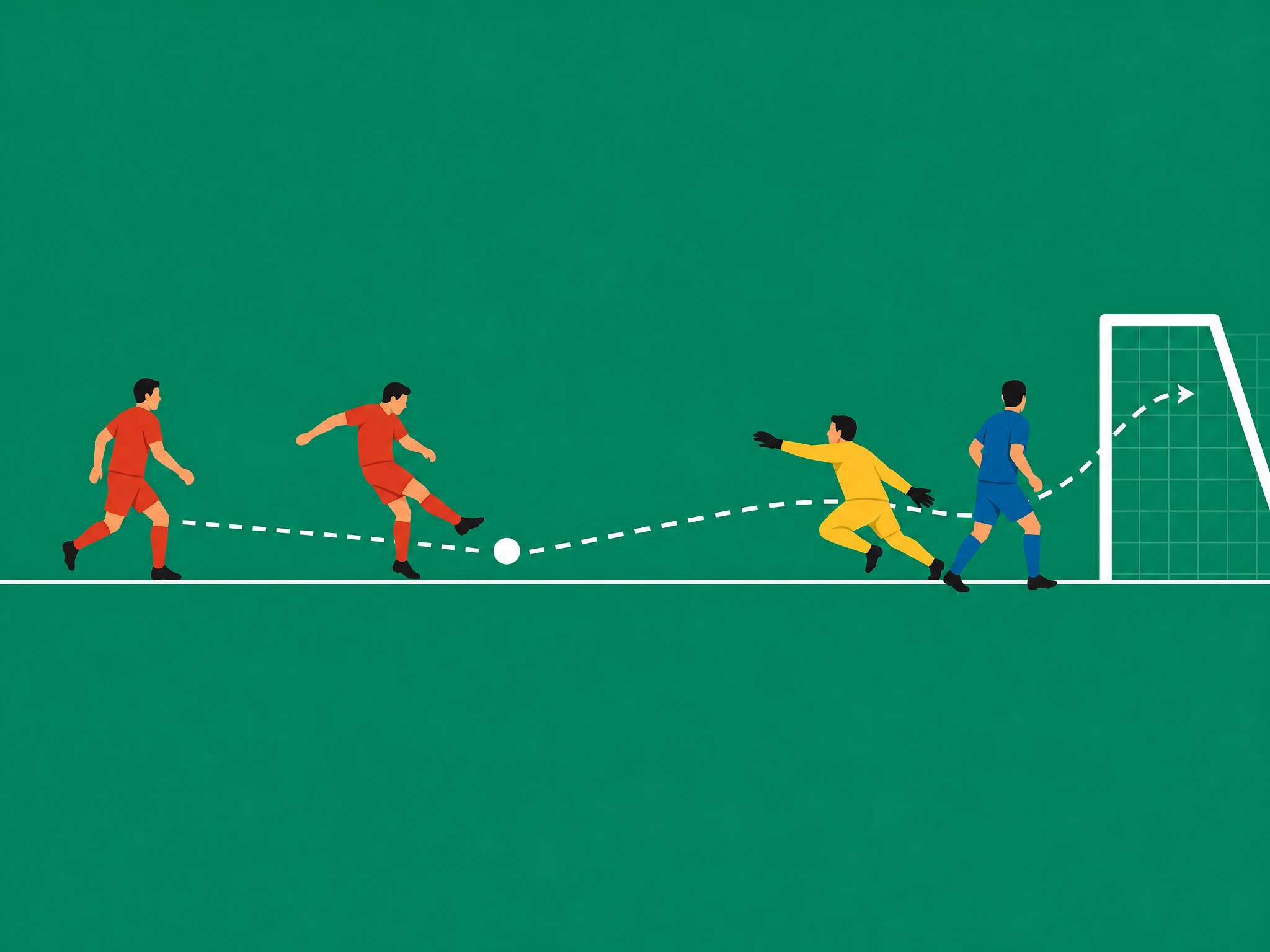
Same delivery, but it's a goal. Recorded as an assist, not a key pass.
Why a pass to a goal isn’t double-counted
A pass that leads directly to a goal is recorded as an assist only. It is not also logged as a key pass on top of that. Opta keeps the two categories separate rather than nesting one inside the other, so a player’s assists and key passes numbers do not overlap. If you want the full creative picture for a player, including their assists, that is what chances created is for, not the key passes column on its own.
- The final pass sets up a team-mate's attempt on goal.
- The shot is saved by the goalkeeper.
- The shot is blocked by a defender.
- The shot misses the target entirely.
- The pass leads directly to a goal. That's recorded as an assist instead.
- There is a defensive touch on the ball before it reaches the team-mate.
- The team-mate does not attempt a shot at all.
Why this matters for props specifically
The practical effect of “a key pass only needs a shot” is that a key passes prop and an assists prop can behave very differently even in the same match. A team can dominate territory, force a string of saves and blocks off good passes, and finish the game 0-0. Every one of those passes still counts toward a key passes total. An assists prop needs an actual goal at the end of the move, so it has no way to settle in a game where nobody scores, no matter how much creative play led up to those chances.
That is the core reason a key passes total tends to build up more reliably across a match, and across a season, than an assists total for the same player. Key passes only depend on the passer doing their job, picking out a team-mate in a position to shoot. Assists additionally depend on someone else finishing the chance, which is out of the passer’s hands. A player can rack up a healthy key passes number from a run of matches where their strikers are simply off form in front of goal, while their assists column stays flat.
Same passer, different volatility
Secondary assists
There is a third related stat worth knowing about: the secondary assist, which Opta refers to as a “second assist”. Opta’s definition covers a pass or cross that is instrumental in creating the goal-scoring chance one step further back, for example a short corner or free-kick played to a team-mate who then delivers the actual assist, or a through ball into a dangerous area that leads to the assist rather than the goal itself. It is a separate stat from both key passes and assists, tracked less widely across data providers and rarely offered as its own betting market, but it is useful context for a player’s full involvement in a goal beyond the final ball. A winger who plays a short corner square to a team-mate, whose cross is then headed in, is credited with a second assist; the team-mate who delivered the cross gets the assist itself.
Key passes as a betting stat
FootyMetrics tracks assists for every player across 115+ leagues.
Player assist trends
Check a player's assist history before backing a line, filtered by home, away and opponent.
Key passes sit alongside shots, passes and the rest of a player’s creative numbers on the player stats hub, if you want the full breakdown before comparing it with their assists total.
Key passes vs assists FAQs
Does a blocked or saved shot still count as a key pass?
Yes. Opta's definition only requires the team-mate to make an attempt on goal, not for the shot to be any good. A shot that is saved by the goalkeeper or blocked by a defender still counts as an attempt, so the pass that created it is still a key pass.
Is a pass that leads to a goal both a key pass and an assist?
No. Opta's key pass definition specifically requires the shot to happen "without scoring". A pass that leads directly to a goal is recorded as an assist only, not as a key pass as well. The two stats are separate categories that add up to "chances created", not one stat nested inside the other.
What is a secondary assist?
Opta calls it a "second assist": a pass or cross that is instrumental in creating the goal-scoring chance one step further back, for example a short corner played to a team-mate who then delivers the actual assist. It is tracked separately from both key passes and assists, and less widely available as a stat or a market.
Does a secondary assist ever settle a betting market?
Rarely. Second assists are hardly ever offered as their own settleable line, and no major UK bookmaker lists them as a standard player prop. They are mostly useful as context for how involved a player is in their team's goals beyond the final ball, rather than something you can back directly.
Can a key passes prop hit in a 0-0 draw?
Yes, and that's the main practical difference from an assists prop. A key pass only needs the team-mate to shoot, not to score, so a player can rack up a healthy key passes total in a match that finishes goalless. An assists prop cannot settle without an actual goal.
Why do creative players usually have more key passes than assists?
Because a key pass depends only on the passer picking out a team-mate in a shooting position, while an assist additionally depends on that team-mate finishing the chance. A player can create the same quality of chance match after match and still see their assists total swing with a team-mate's finishing form, while their key passes total keeps building.