Progressive passes and carries explained
A progressive pass moves the ball meaningfully closer to the opponent's goal, and a progressive carry is the same idea with the ball at a player's feet. How much closer counts as meaningful is a threshold each data provider sets for itself, which is why the same player can show different progressive numbers on different sites.
Team FootyMetrics
Updated Jul 2026 · 6 min read
- A pass or carry is progressive when it moves the ball a set distance closer to the opponent's goal. Distance towards goal is the test, so a short forward nudge or a long sideways switch doesn't qualify.
- The threshold is a provider convention. FBref, built on Opta data, requires roughly 10 yards of progress or any completed pass into the penalty area. Wyscout uses 30, 15 or 10 metre bands. StatsBomb analysts have used 25% of the remaining distance to goal.
- Carries are the on-ball equivalent: the same distance test applied to a player running with the ball instead of releasing it.
- Progressive passers tend to complete a lower share of their passes, because moving the ball towards goal means passing into contested space.
What makes a pass or carry progressive
A pass can go forward without going anywhere useful. A centre-back knocking the ball five yards up the line to a full-back has technically played it forward, and a forty-yard switch from one flank to the other covers plenty of grass without bringing the ball a metre nearer the opponent’s goal. Neither tells you the team is actually building towards a chance.
Progressive passes exist to filter those out. The test is how much closer to the opponent’s goal the ball ends up compared with where it started, and only passes that clear a set distance count. The same test applied to a player running with the ball gives you progressive carries. Together the two stats answer one question: who is responsible for moving this team up the pitch?
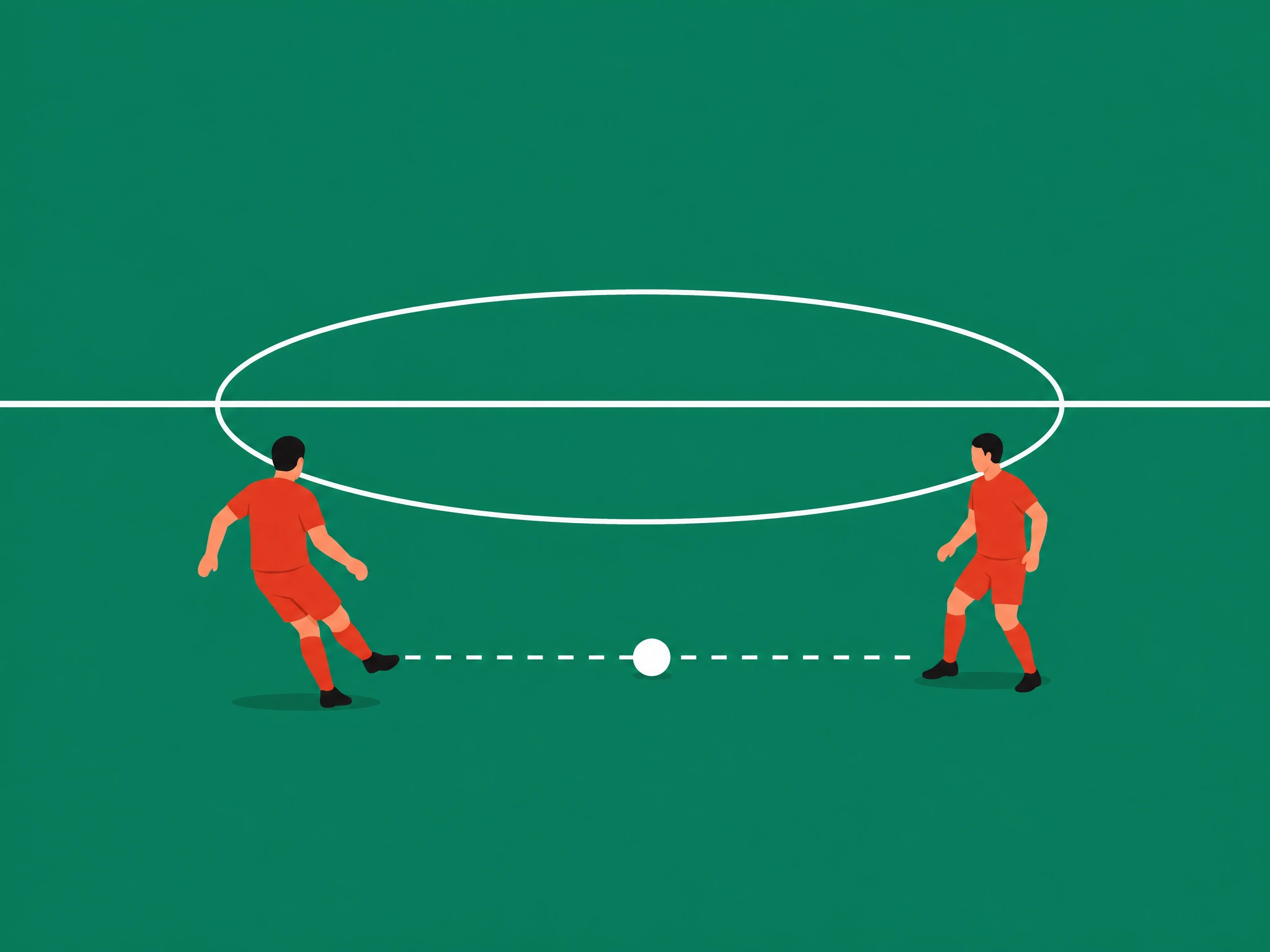
Sideways, no ground gained towards goal. Not progressive.
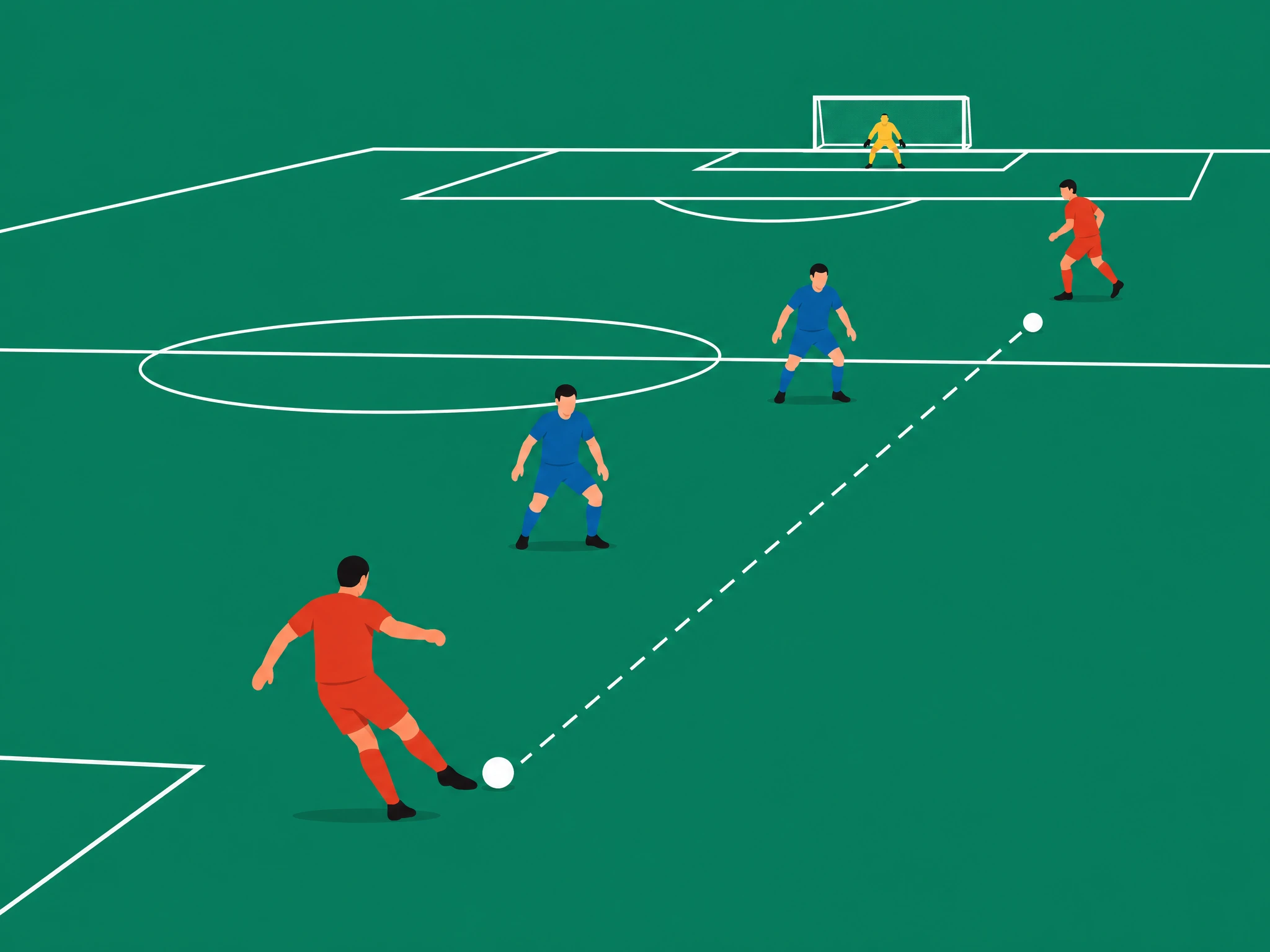
Forward, past two defenders, well closer to goal. Progressive.
Each provider draws the line somewhere different
There’s no law of the game and no single industry rule that says how many yards a pass must gain to be progressive. Progressive passes don’t appear in Opta’s public event definitions at all. They’re derived afterwards from the start and end coordinates of each pass, and every site that publishes them picks its own cut-off.
FBref, which builds its stats on Opta event data, defines a progressive pass as a completed pass that moves the ball towards the opponent’s goal line at least 10 yards beyond its furthest point in the last six passes, or any completed pass into the penalty area, with passes from the defending 40% of the pitch excluded. That “furthest point in the last six passes” clause matters. It stops a team earning progressive credit twice by passing backwards and then forwards over the same ground: the ball has to beat the furthest point it reached in that spell by a full 10 yards.
Wyscout draws the line by zone instead. Its glossary counts a pass as progressive if it finishes at least 30 metres closer to the opponent’s goal when it starts and ends in the passer’s own half, at least 15 metres when it crosses halfway, and at least 10 metres when it starts and ends in the opponent’s half.
StatsBomb analysts have used a proportional rule instead of fixed distances. In a 2023 StatsBomb piece on ball progression, a pass or carry counted as progressive if it moved the ball at least 25% of the remaining distance towards the centre of the goal. Near the box that can be a short pass; inside your own half it takes a much longer one.
All three lean the same way, making progression harder to earn deep in your own half and easier near goal, but through different mechanisms. So the same ninety minutes produces three different progressive-pass counts depending on whose numbers you’re reading, and providers have also revised these definitions over time. None of them is wrong. They’re measuring the same idea with different rulers.
Compare within one provider only
Carries: the same test with the ball at your feet
A carry is what happens between touches: a player controls the ball and moves with it before passing, shooting or losing it. Apply the progressive test to that movement and you get progressive carries. FBref’s carry rule mirrors its pass rule, 10 yards of progress on the ball’s recent furthest point or any carry into the penalty area, and excludes carries that end in the defending half of the pitch. Wyscout tracks the same idea under a different name, the progressive run, with the same 30, 15 and 10 metre bands as its passing version.
A progressive carry isn’t the same thing as a dribble or take-on. A take-on requires an opponent to be beaten. A carry just requires ground to be covered, so a midfielder driving forward into space nobody closes down can rack up progressive carries without attempting a single take-on. That’s the point of the stat: running into space the opposition has conceded is a real form of progression, and take-on counts miss it completely.
Why these became the standard progression stats
Raw passing numbers flatter the wrong players. Total passes reward whoever touches the ball most, and pass completion rewards whoever risks least. Neither tells you who actually gets the team up the pitch, which is the thing managers, scouts and increasingly bettors want to know. Progressive passes and carries answer that directly, and they separate two jobs that used to be lumped together: the deep midfielder who progresses by passing and the centre-back or winger who progresses by carrying.
The split matters for how a team plays. Two players can move the ball the same distance towards goal per match with completely different methods, one hitting line-breaking passes from deep, the other carrying it thirty yards before releasing a simple ball. Progression stats are also usually quoted per 90 minutes so that starters and substitutes can be compared on the same footing.
Progression is also a different job from creation. A progressive pass gets the ball into the final third; whether a chance follows is what key passes and assists measure. Plenty of elite progressors create little themselves. They deliver the ball to the players who do.
Progressive passers complete less
Passing the ball towards goal means passing into space defenders are paid to protect. A ball between the lines can be cut out, a runner can be beaten to a through ball, and the margin on a long diagonal is small. So the players who attempt the most progressive passes tend to sit lower on pass completion percentage than team-mates who recycle possession sideways. That’s not a flaw in either stat. Completion tells you how often a player’s passes come off, progression tells you what those passes were trying to do, and you need both to read a passing profile honestly.
FootyMetrics doesn’t currently track progressive passes or carries. For passing profiles it tracks attempted and completed passes, key passes and chances created for every player across 115+ leagues, which covers the volume, risk and creation sides of the same picture.
Player passing stats
Passes, key passes and chances created for every player across 115+ leagues.
Progressive passes and carries FAQs
What is a progressive pass in football?
A progressive pass is a completed pass that moves the ball meaningfully closer to the opponent's goal. Each data provider sets its own distance threshold, so the exact definition varies: FBref requires around 10 yards of progress on the ball's recent furthest point or a pass into the penalty area, while Wyscout uses 30, 15 or 10 metre bands depending on pitch position.
What is a progressive carry?
A progressive carry applies the same test to a player moving with the ball at their feet. If the carry ends a set distance closer to the opponent's goal than it started, it counts as progressive. No opponent needs to be beaten, which is what separates a carry from a dribble or take-on.
How far does a pass have to travel to be progressive?
It depends whose numbers you're reading. FBref counts completed passes that move the ball at least 10 yards towards the opponent's goal line beyond its furthest point in the last six passes, or any completed pass into the box. Wyscout requires 30 metres of progress inside your own half, 15 metres across halfway and 10 metres in the opponent's half. StatsBomb analysts have used 25% of the remaining distance to goal.
Are progressive passes an official Opta stat?
No. Progressive passes don't appear in Opta's public event definitions. They're derived from the start and end coordinates of passes that data providers collect, and each site that publishes progressive counts applies its own threshold to that raw data.
Why do different sites show different progressive pass numbers for the same player?
Because each site sets its own threshold. There's no shared industry standard, so a pass that gains 12 metres inside the opponent's half can be progressive on one definition and miss the cut on another. Compare progressive stats within one provider only.
Do players with lots of progressive passes have worse pass completion?
Usually, yes. Progressive passes go into contested areas, so more of them fail. A player with a high progressive volume and a completion rate in the 70s is often taking on harder passes than a team-mate on 92% who plays it sideways, and the lower percentage reflects that difficulty.