Touches and touches in the box explained
A touch is any contact a player makes with the ball, successful or not. A touch in the box is the same event, filtered to those that happen while the ball is inside the opponent's penalty area at the moment of contact.
Team FootyMetrics
Updated Jul 2026 · 6 min read
- A touch is any contact with the ball, including a mis-controlled or failed one. Opta's own definition covers every event where a player touches the ball, and a poor touch still counts.
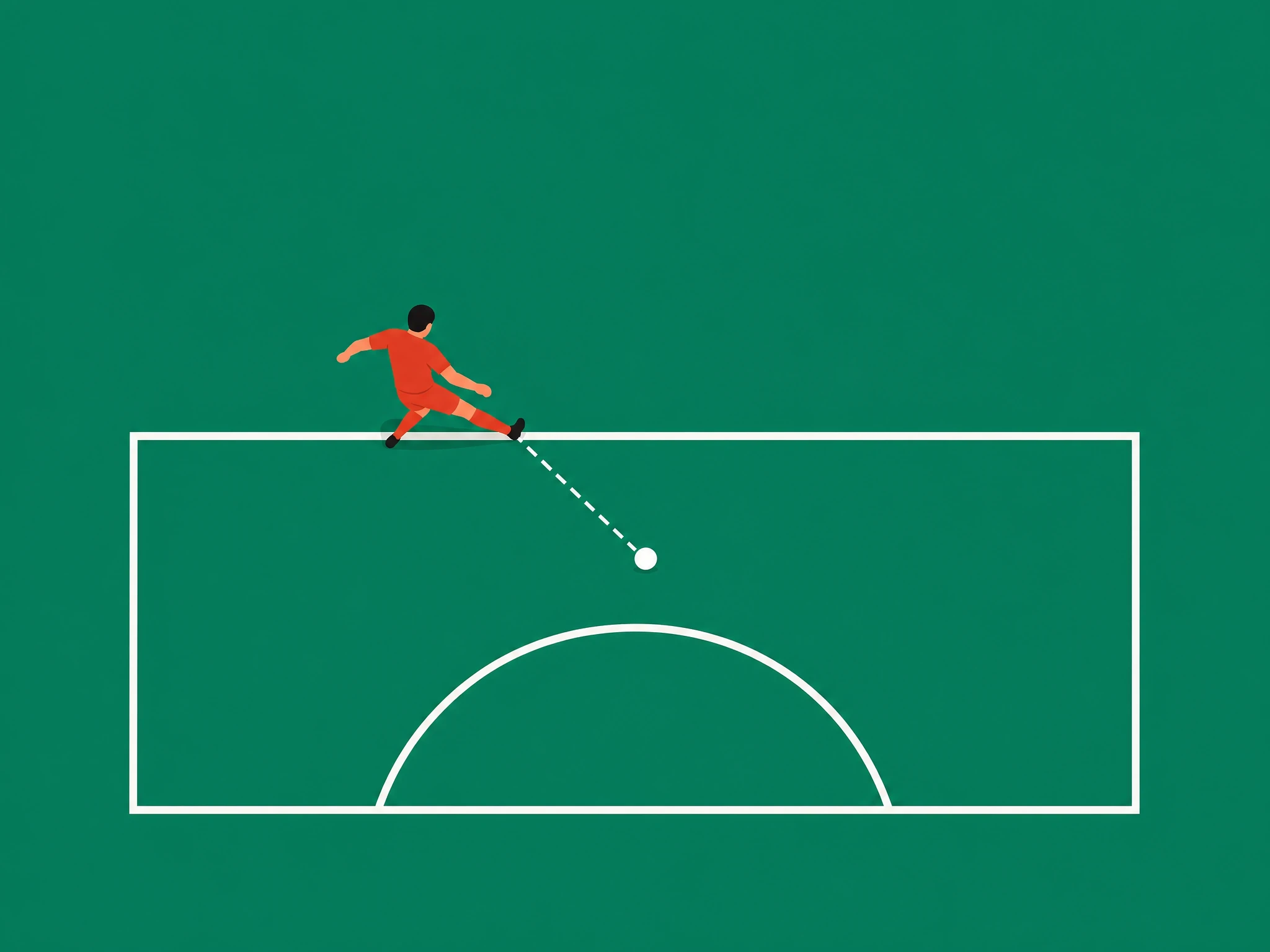
- A touch in the box is judged by the ball's position, not the player's, at the moment of contact. A player stretching outside the area to reach a ball still inside it has made a touch in the box.
- It's used as a proxy for attacking threat because it catches every kind of involvement near goal, a pass, a knock-down, a headed touch, without requiring a shot.
- It's a volume indicator, not a quality one. A striker who drops deep to link play can post fewer box touches than a poacher who stays central, without being any less effective.
What is a touch?
Opta's definition, from its own event definitions page, is "a sum of all events where a player touches the ball," which excludes things like an aerial duel lost or a challenge lost where the player never actually gets contact on the ball. The touch does not need to be a good one. Opta is explicit that when a player mis-controls the ball with a poor touch, it still gets awarded as an unsuccessful touch. A heavy first touch that runs away from a player counts. A stretching challenge that gets the faintest contact on the ball counts. The only requirement is contact with the ball by any part of the body allowed under the laws of the game.
- A mis-controlled first touch that runs away from the player.
- A stretching block or intercept that gets the faintest contact on the ball.
- A header, whether it finds a team-mate or not.
- An aerial duel lost where the player never gets contact on the ball.
- A tackle attempt that misses the ball entirely.
That is a wide net by design. A player receiving a pass, taking two touches to bring it under control and a third to play it on, has three touches on the sheet, regardless of how clean or scrappy each one looked.
Touches in the box
A touch in the box is the same event, a touch, filtered down to only those that happen while the ball is inside the penalty area. It is the ball's position at the moment of contact that decides whether a touch counts as being in the box, not where the player is standing.
Ball location is logged for every event on the pitch, using the same convention across stats. FootyMetrics' own guide to shots outside the box covers this rule directly for shots: a shot struck from outside the area still counts as a shot from outside the box even if the player's run carries them inside it a moment later, because the ball was outside the box at the point of contact. The same logic applies to touches.
It's the ball, not the body
Why it's used as a proxy for attacking threat
Touches in the box gets used as a shorthand for how involved a player is in the most dangerous part of the pitch. The closer to goal a player is repeatedly getting on the ball, the more chances that team is generating for that player to do something with it. Opta Analyst's own coverage of penalty-box touch leaders treats a high touches-in-the-box count as a sign of a player who is a heavy part of a team's route to goal, separate from whether they end up being the one who finishes the move.
It's deliberately a wider net than shots or goals. A player racking up box touches without scoring is not necessarily wasting chances, they might be the one repeatedly getting the team into the area in the first place, with someone else finishing what they start. The contrast between striker types makes the point. Erling Haaland stays central and lives on service into the area, so his box-touch count runs high even in quiet games, while Harry Kane has spent whole seasons dropping into midfield to link play, posting far fewer box touches without being any less involved in how his team scores.
Touches vs shots and big chances
A touch in the box does not require a shot at all. It could be a pass out to a team-mate, a knock-down from a corner, a headed touch that sets up someone else, or a dribble that never produces an attempt at goal. That is what makes it useful alongside shot counts rather than instead of them: it catches attacking involvement that a shots tally misses entirely.
It is a different measurement from a big chance, too. A big chance is a judgement call on a specific situation, whether the player should be expected to score. A touch in the box carries no judgement about quality at all, it simply counts that the ball was touched inside the area. A player can have a heavy touch in the box that a defender clears, register as a touch, and never come close to a big chance or a shot on target.
Volume, not quality
Touches in the box says how often a player got on the ball in a dangerous area. It says nothing about what happened next, and it says nothing about a player's overall attacking output if their game does not revolve around getting on the ball inside the box in the first place.
The clearest example is a striker who drops deep to link play, coming short to receive the ball outside the area and turning attacks around rather than staying on the shoulder of the last defender. That player can be genuinely effective, creating chances and dragging defenders out of position, while posting a lower touches-in-the-box count than a poacher who does little else but stay central and wait for service. The Football Analyst's own coverage of the stat makes the same point from the other side: a team can rack up a high box-touch count from a scrambled, low-quality passage of play without it reflecting real chance creation, and some direct, counter-attacking styles produce fewer box touches but more efficient ones. Read touches in the box next to shots, chances created and where a player actually spends the game, not as a standalone verdict on their attacking value.
How does a touches in the box prop settle?
Where a bookmaker offers a touches or touches-in-the-box market, it settles on the official match data provider’s touch count, the same event definitions described above, not on anything counted by the trader watching the game. The counting rules on this page are the settlement rules.
Exact market wording still varies by bookmaker, on whether the line covers all touches or box touches only, and on edge cases like abandonment or an early substitution. Sky Bet, for example, publishes its football settlement rules market by market on a rules hub, and that is the page to read before taking a touches line with any bookmaker.
Touches leaderboard
Live touches per game across 115+ leagues, part of the full possession and distribution picture FootyMetrics tracks for every player.
Touches in the box FAQs
Does a bad touch still count as a touch?
Yes. Opta's own definition covers any contact with the ball, and it explicitly awards a touch when a player mis-controls the ball with a poor touch. The touch does not need to be good, or even intentional, to count.
Is a touch in the box based on where the player is standing?
No. It's based on where the ball is at the moment of contact, the same convention used for shots outside the box. A player stretching outside the area to reach a ball that is still inside it has still made a touch in the box.
Does a touch in the box require a shot?
No. A pass, a knock-down, a headed lay-off or a dribble inside the box all count as touches in the box, whether or not a shot follows.
Why do some effective strikers have a low touches in the box count?
Because it's a volume stat. A striker who drops deep to link play and turn attacks around can be genuinely effective while touching the ball inside the box less often than a poacher who stays central and waits for service.
Does a touch in the box settle the same way across all bookmakers?
The underlying count comes from the same official match data, but market wording varies. One bookmaker's line may cover all touches while another's covers box touches only, and rules on abandonment or early substitution differ too. Check the specific sportsbook's football rules page before betting a touches line.
Does an aerial duel lost count as a touch?
Not unless the player actually got contact on the ball. A duel or challenge lost with no contact is excluded from the touch count, while the faintest genuine contact, even from a failed challenge, is logged as a touch.
Is touches in the box the same as big chances or shots on target?
No. It's a broader, separate involvement stat that catches passes and knock-downs as well as shooting attempts. A player can rack up plenty of box touches in a game without a single shot on target.