First team to score and race-to markets explained
First team to score is a bet on which side scores first, with 'no goal' usually its own settleable outcome if the match finishes goalless. A race-to market works the same way for a running tally, such as race to 2 goals or race to 3 corners, settling on whichever side gets there first.
Team FootyMetrics
Updated Jul 2026 · 6 min read
- First team to score settles on which side scores first. If the match ends 0-0, most bookmakers settle 'no goal' as its own winning selection rather than voiding the bet.
- A race-to market (race to 2 goals, race to 3 corners) settles on whichever side reaches the target tally first, whatever the final score ends up being.
- If neither side gets there, that is usually its own 'neither' selection, though a specific book could void it instead.
- An own goal counts toward the team that benefits from it on these team-level markets, the opposite of the player-level first goalscorer rule.
Both markets ask a narrower question than the final result. First team to score cares only about who gets the opening goal. A race-to market cares only about who reaches a set tally first, whether that is goals, corners or another running count.
What first team to score and race-to markets are
First team to score is a bet on which of the two teams scores the first goal of the match, whoever it comes from and however long it takes. It settles the moment either side scores, so a narrow 1-0 win and a wild 4-3 win settle identically if the same team got the opener.
A race-to market takes the same idea and applies it to a specific tally rather than just the first goal. Race to 2 goals settles on whichever team reaches 2 goals first, not on who wins the match or what the final score is. A team can lose the race and still win the game: if the away side goes 2-0 up early and the home side fights back to win 3-2, the away side still won the race to 2 goals, because they got there first.
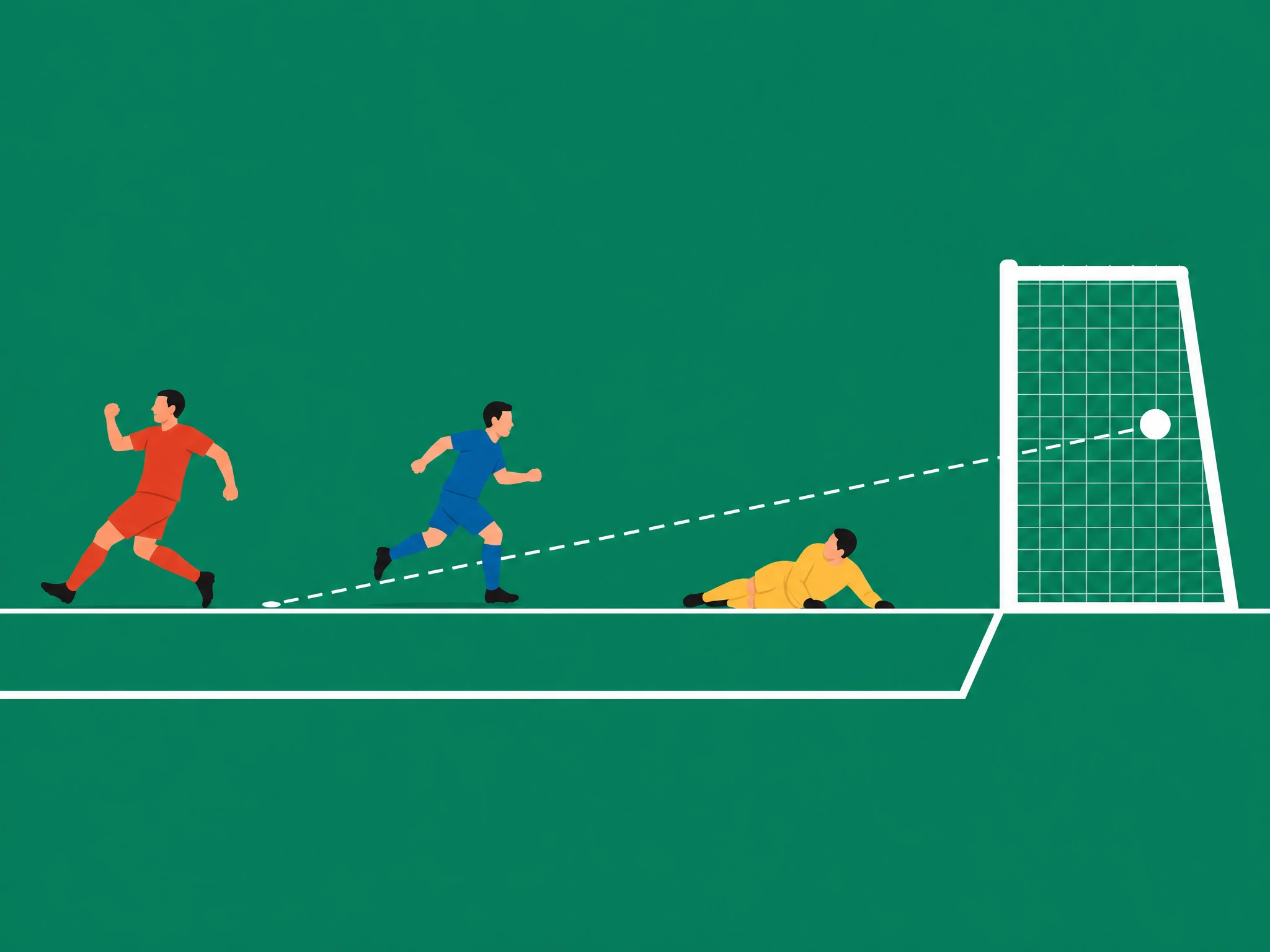
What happens if the match ends 0-0?
It is easy to assume a goalless draw leaves the bet without an outcome. It does not. Sky Bet's football rules describe the Team to Score First market as a bet on "which of the teams will be the first to score a goal in the match", and list 'No Goal' as an available selection within that market. So a 0-0 settles 'no goal' as the winning outcome, the same way 'no goalscorer' is a real settleable result on the individual first goalscorer market.
Race-to markets follow the same shape. If neither team reaches the target number before full time, the standard structure lists a third selection alongside the two teams: 'neither'. As the target rises, the 'neither' price shortens, since fewer matches produce enough goals or corners to get there. Always read your own bookmaker's market rules before assuming which structure applies, since a smaller book could word a race-to market as a void instead of offering a 'neither' selection.
- First team to score, when either side scores at any point in the match.
- First team to score on a 0-0, settled as 'no goal' the winning selection.
- A race-to market where one team reaches the target tally first.
- A race-to market where neither side reaches the target, settled as 'neither' where that selection is offered.
- Whether your specific bookmaker lists 'no goal' or 'neither' as a selection, rather than voiding the bet.
- Whether extra time or a shootout counts, since most of these markets settle on 90 minutes plus stoppage time only.
Do own goals count for first team to score?
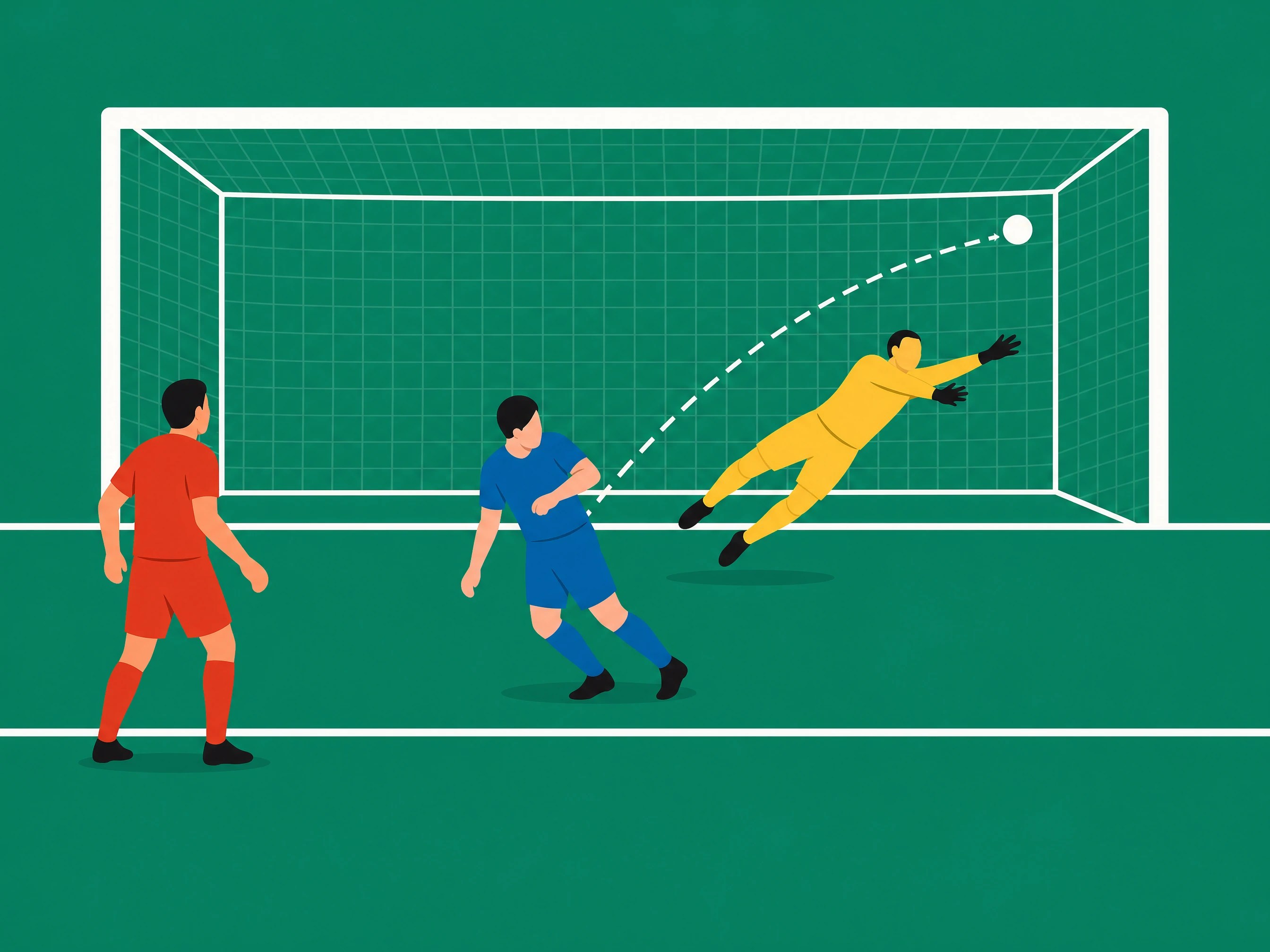
Yes, for the team they benefit, and that runs the opposite way to the individual goalscorer market. On a first goalscorer bet, an own goal is ignored entirely. If a defender turns the ball into their own net, settlement rolls forward to whoever scores the next goal, and the own goal itself never counts as anyone's first goal for that market.
Team-level markets work differently. bet365's team markets rules state that own goals count to the side credited with the goal. In plain terms: if a defender for Team A puts the ball into their own net, that goal counts for Team B on a first-team-to-score or race-to-goals market, because it is Team B's tally that benefits on the scoreboard, even though no Team B player touched it last. The same principle holds for general team goal markets such as total goals and both teams to score, where own goals count toward the final score rather than being wiped from it.
One own goal, two different rules
Race-to markets beyond goals: corners and cards
Race-to markets are not limited to goals. Corners are the most common extension, and it is a genuinely active market rather than a niche one. Race to 3 corners, race to 5 corners, race to 7 corners and race to 9 corners are all commonly listed, again with a team A, team B, neither structure. The settlement logic is identical: in race to 3 corners, if Team A takes two corners in the first ten minutes and Team B has had none, Team A only needs one more to win the race outright, regardless of what the full-time corner count ends up being. A less common version applies the same idea to cards, though it is offered far less widely than the corners version.
For any race-to-corners market, the same basics that apply to a normal corners count apply here too: a corner only counts once it is actually taken, not just when it is awarded. How corners are awarded and settled covers exactly when a corner is awarded, what happens if it is awarded but never kicked, and how a retaken corner is counted, all of which carries over directly to a race-to-corners bet.
Where to find the data
FootyMetrics tracks team goals and team corners by match across 115+ leagues, so you can check how often a side scores first or reaches an early corners tally before backing one of these markets.
Team goal trends
How often a team scores first, and how often they concede the opener, home and away.
The full corners statistics page covers match totals and hit rates for common corner lines, useful background before a race-to-corners bet.
First team to score and race-to markets FAQs
What happens if a match ends 0-0 on a first team to score bet?
Standard bookmaker rules settle 'no goal' as its own winning selection rather than voiding the bet. Sky Bet's football rules list 'No Goal' as an available selection in the Team to Score First market.
Does an own goal count for a first team to score bet?
Yes, for the team it benefits. bet365's team markets rules state own goals count to the side credited with the goal. That is the opposite of the individual first goalscorer market, where an own goal is ignored and the bet rolls on to the next goal.
What happens if neither team reaches the target in a race-to market?
The common structure offers a 'neither' selection alongside the two teams, so the bet still settles rather than being left without an outcome. A specific bookmaker could word it as a void instead, so check that book's own market rules before betting.
Can you bet on a race to a number of corners?
Yes. Race to 3, 5, 7 and 9 corners are commonly offered markets, priced with the same team, team, neither structure as a race-to-goals market.
Does a race-to market settle before full time?
Yes. A race-to bet settles the moment either side reaches the target tally, which can be twenty minutes into the match. Whatever happens after that point, including the other team overtaking the total, does not change the result.
Does extra time count for a first team to score bet?
Usually not. These markets are normally settled on 90 minutes plus stoppage time only, so a cup tie that goes to extra time settles on the regulation-time outcome. Check your bookmaker's rules, as extra-time versions of the market are listed separately where offered.
Is winning the race to 2 goals the same as winning the match?
No. A race-to market settles the moment the target is reached, whatever happens after. A team can go 2-0 up first, get pegged back, and still lose the match 3-2, while the race to 2 goals bet on that team already won.