How goals are attributed: deflections, own goals and last touch
A goal goes to the last attacking player to get a meaningful touch on the ball before it crosses the line. If a defender's touch is the one that changes the ball's path into the net, it becomes an own goal, credited to that defender instead of the original shooter.
Team FootyMetrics
Updated Jul 2026 · 6 min read
- A goal goes to the shooter if their effort was already on target, even with a slight deflection on the way in.
- If the original effort was not on target and a defender's touch is what sends it in, that's an own goal, credited to the defender.
- An own goal doesn't count as a goal or a shot on target for the attacking side, only as a goal conceded for the defending side.
- VAR doesn't re-adjudicate who gets the goal. It only checks whether a goal should stand at all.
Anytime goalscorer bets settle on official attribution, not on how a finish looked on a replay. Two deflected efforts can look almost identical in a highlights clip and settle in opposite directions, one as a goal for the shooter, one as an own goal for a defender.
The plain rule
A goal is attributed to the last attacking player to touch the ball before it goes in, unless a defender's touch is the one that actually changes its direction into the net. Opta's own definition of a goal is direct on this: “attributing a goal to the goal scoring player, or in the case of an own goal, to the defending player.” In practice, that comes down to one question: was the original effort already going in?
How much deflection changes the scorer
The distinction turns on whether the shot was on target before the touch. If a shot is already on target and a defender gets a slight touch on the way through, that does not change who scored. The goal still belongs to the shooter, deflection and all. If the shot was not on target, going wide or over, and a defender's touch is what turns it back on target and into the net, that is an own goal credited to the defender.
This mirrors how Opta treats a deflected assist: if the assist is deflected by an opposition player, it must be deemed as travelling to the goalscorer irrespective of the deflection, as long as the pass was already going to reach that player. The same logic runs the other way for shots. A marginal touch on a shot that was already on target does not hand the goal to the defender. A touch that changes an off-target effort into an on-target one does.
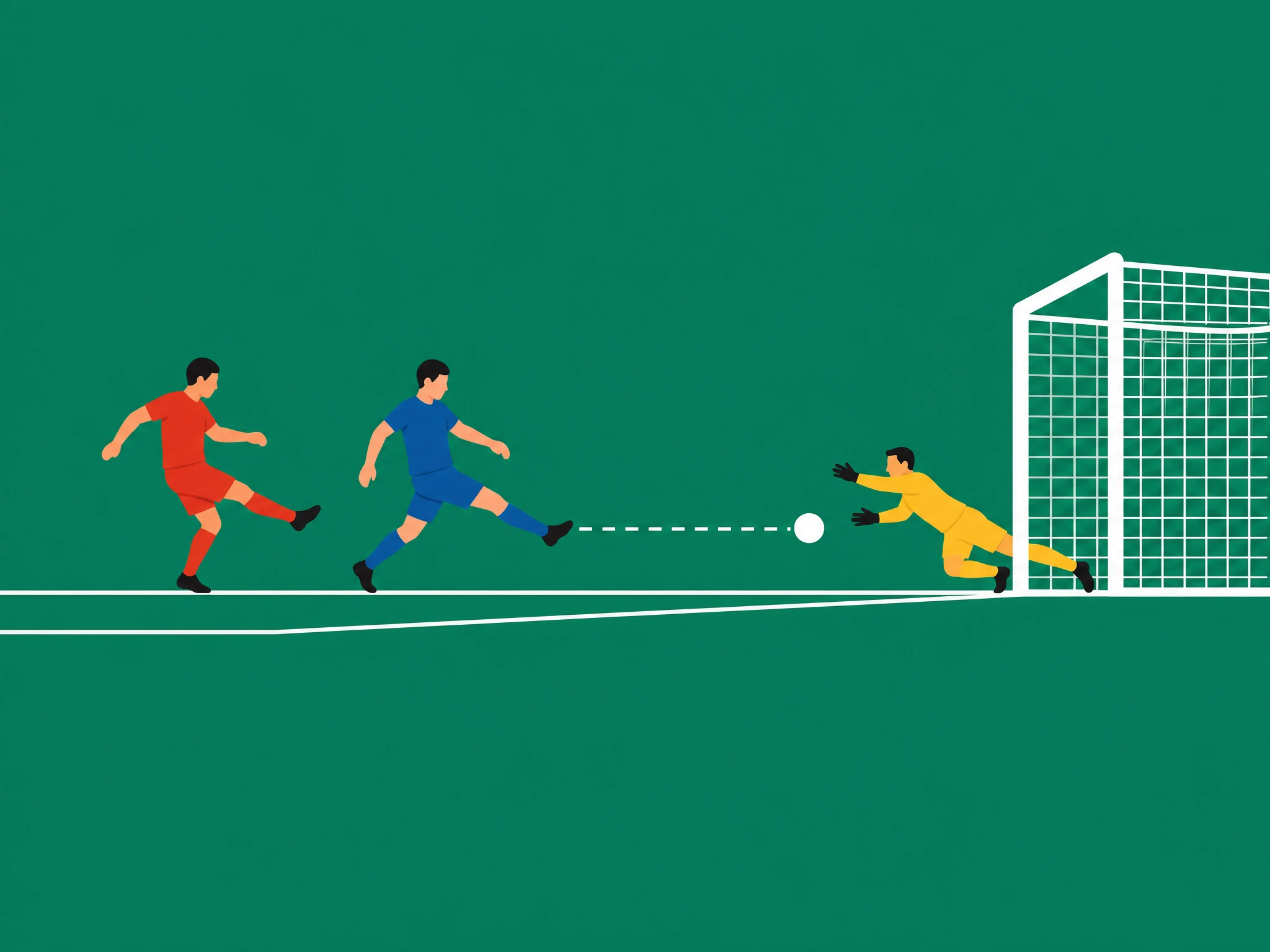
Shot was already on target. A marginal touch doesn't change the goal.
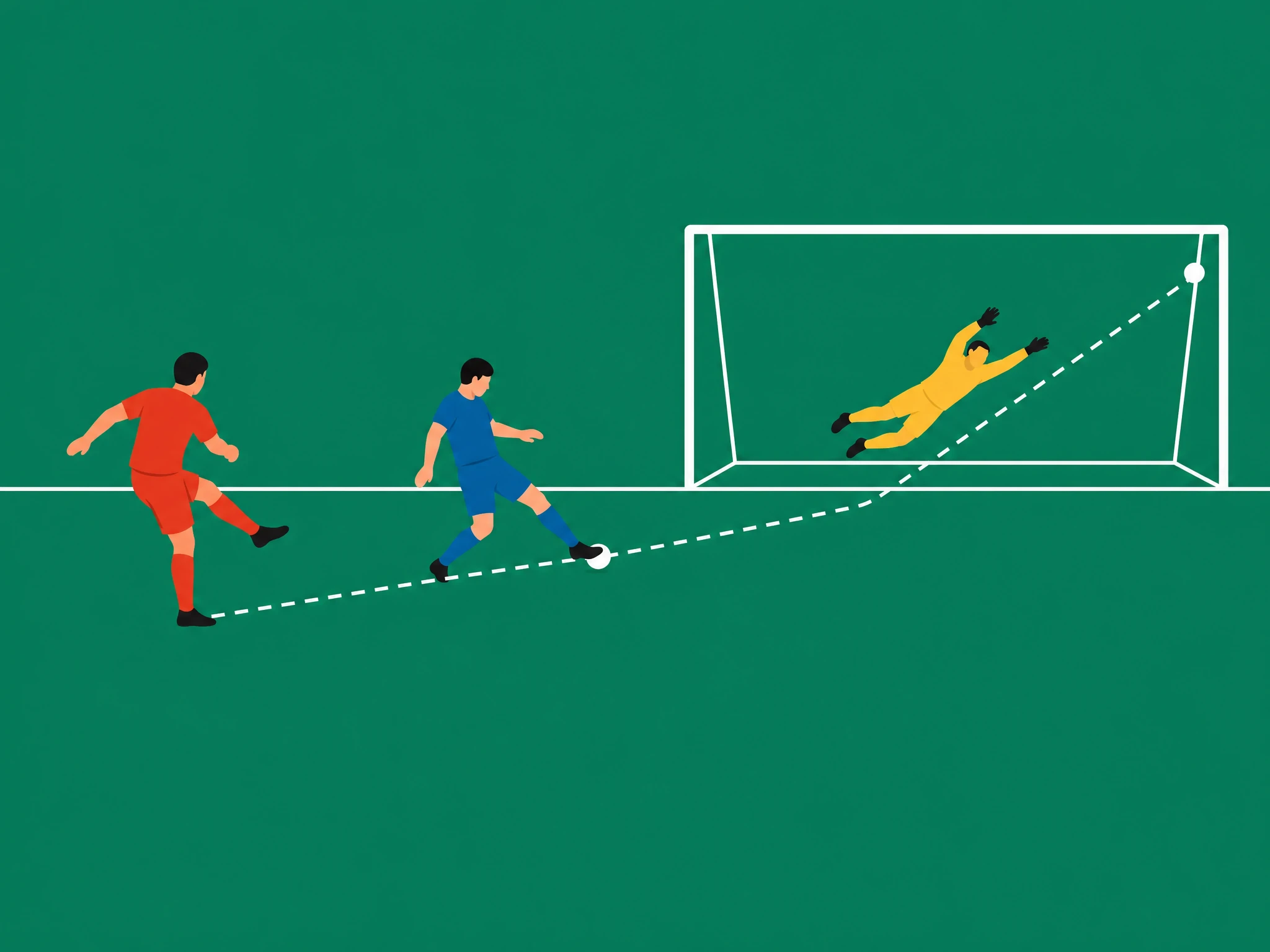
Shot was heading wide. The defender's touch is what sends it in.
Where this wording comes from
Own goals explained
An own goal is a goal credited to a defending player whose action, usually a touch, header, deflection or clearance, puts the ball into their own net. It is recorded as a goal conceded for the defending team, but it is not a goal or a shot on target for the attacking side. See what counts as a shot on target and how a clean sheet is settled for the related logic: an anytime goalscorer bet on the attacker whose shot forced the own goal does not win, and a clean sheet is only broken for the team that actually put the ball into its own net. Team-level goals and own goals stats show how often each side’s goals actually arrive this way.
Woodwork and goalkeeper fumbles
A shot that hits the post or bar is off target by definition, since the ball has not gone in on its own. If it then comes back off a defender and over the line, that is an own goal for the defender. If it comes back off the attacking side instead, including the original shooter, and goes in, the goal is credited to whichever attacking player last touched it in.
If a goalkeeper gets a hand or body to a shot, fails to hold it, and the ball then goes in off that touch, this is recorded as an own goal against the goalkeeper, not a goal for the original shooter, because the keeper's touch is what actually put it in the net.
Not a confirmed Opta quote
Why this matters for betting
Anytime and first goalscorer markets settle on official goal attribution, not on how a finish looked on a replay. A striker whose shot is well saved, only for the rebound to cannon in off a defender, does not get the goal if the original effort was going wide before the touch, that is an own goal. A striker whose shot was already goalbound and just clips a defender on the way through keeps the goal. The difference between those two situations can be the difference between a winning and a losing anytime scorer bet, even though both can look similar in a highlights clip. FootyMetrics logs shots on target and goal attribution separately for every player across 115+ leagues, so you can check whether a player’s recent goals came from clean strikes or deflected efforts before backing them again.
Check goal and shot data before backing a scorer market
FootyMetrics tracks goals, shots on target and shot locations for every player across 115+ leagues.
VAR's limited role here
VAR does not re-adjudicate who a goal is credited to. Its job is narrower: checking whether a goal should stand at all, and only for a small set of reasons, such as offside in the build-up, a foul before the goal, the ball having gone out of play, or mistaken identity over a card. See how VAR works for the full list of what it can and cannot review. Attribution of the goal itself, whether it is a goal for the shooter or an own goal for a defender, is a matter for the match officials and the data providers on the day, not something VAR checks or changes.
- The original shot was already on target before any touch.
- A defender's touch only marginally changes the ball's path.
- The ball hits the woodwork and an attacking player, including the original shooter, puts the rebound in.
- A goalkeeper gets a hand to a shot but the save stands, no goal is scored from that touch.
- The original effort was off target, and a defender's touch is what sends it in.
- A defender's clearance, header or attempted block goes into their own net.
- The ball comes off the woodwork and a defender's touch sends it in.
- A goalkeeper fumbles the ball and their own touch is what puts it over the line.
Goal attribution FAQs
Does the shooter still get the goal if a defender deflects the shot in?
Yes, if the shot was already on target before the deflection. The goal only moves to the defender as an own goal if the original effort was off target and the defender's touch is what sent it in.
Is an own goal recorded as a shot on target?
No. An own goal does not count as a shot on target, or a shot at all, for the attacking side. It is recorded purely as a goal conceded for the defending team.
Who gets the goal if a shot hits the post and goes in off a defender?
That is an own goal for the defender. Hitting the woodwork means the original shot was off target, since the ball did not go in on its own, so whoever's touch actually sends it over the line gets the credit, or the blame.
What happens if the goalkeeper fumbles a shot and it trickles in?
It is recorded as an own goal against the goalkeeper, because their touch is what put the ball into the net, not the original shot.
If the ball hits the post and the same attacker knocks in the rebound, who gets the goal?
The attacking side keeps it. A rebound off the woodwork that is put in by an attacking player, including the original shooter, is credited to whichever attacking player last touched it over the line. It only becomes an own goal if a defender's touch is what sends it in.
Can VAR change who a goal is credited to?
No. VAR checks whether a goal should stand at all, for reasons like offside, a foul in the build-up, or the ball being out of play. It does not decide whether a goal counts for the shooter or becomes an own goal for a defender.