How goalkeeper saves are settled
A save is a goalkeeper stopping an on-target shot from going in, using any part of their body. It only counts against a shot that was already going in, so a miss, a block by an outfield defender, or a shot off the woodwork with no keeper touch is not a save.
Team FootyMetrics
Updated Jul 2026 · 6 min read
- A save only happens on a shot that was on target. If the shot was never going in, there is nothing for the keeper to save.
- A shot blocked by an outfield player is a blocked shot for that player, not a save for the goalkeeper, even if the keeper was behind them.
- A shot that hits the post or bar and the keeper never touches counts as hitting the woodwork, not a save.
- A routine catch counts exactly the same as a diving stop. Difficulty does not change whether it is a save.
- A penalty save counts as both a save for the keeper and a shot on target against the attacking side.
That is the rule in full. The part people get wrong is the boundary cases: a defender getting a foot in front of the keeper, a shot cannoning off the post untouched, or a penalty going one way in the stats and another in the highlights. A keeper's save total also tells you as much about their defence as it does about them.
What is a goalkeeper save?
A save is the goalkeeper stopping the ball from going into the goal with any part of their body, against a shot that was genuinely on its way in. Opta defines it as a goalkeeper preventing the ball from entering the goal with any part of their body when facing an intentional attempt from an opposition player.
Match data also typically logs how a save happens, hands, feet or body, and whether it was caught, collected, parried away from danger, parried back into danger, fumbled, or a fingertip. That detail is useful for style of play, but for the purposes of a save count, none of it changes whether the event is logged as a save in the first place.
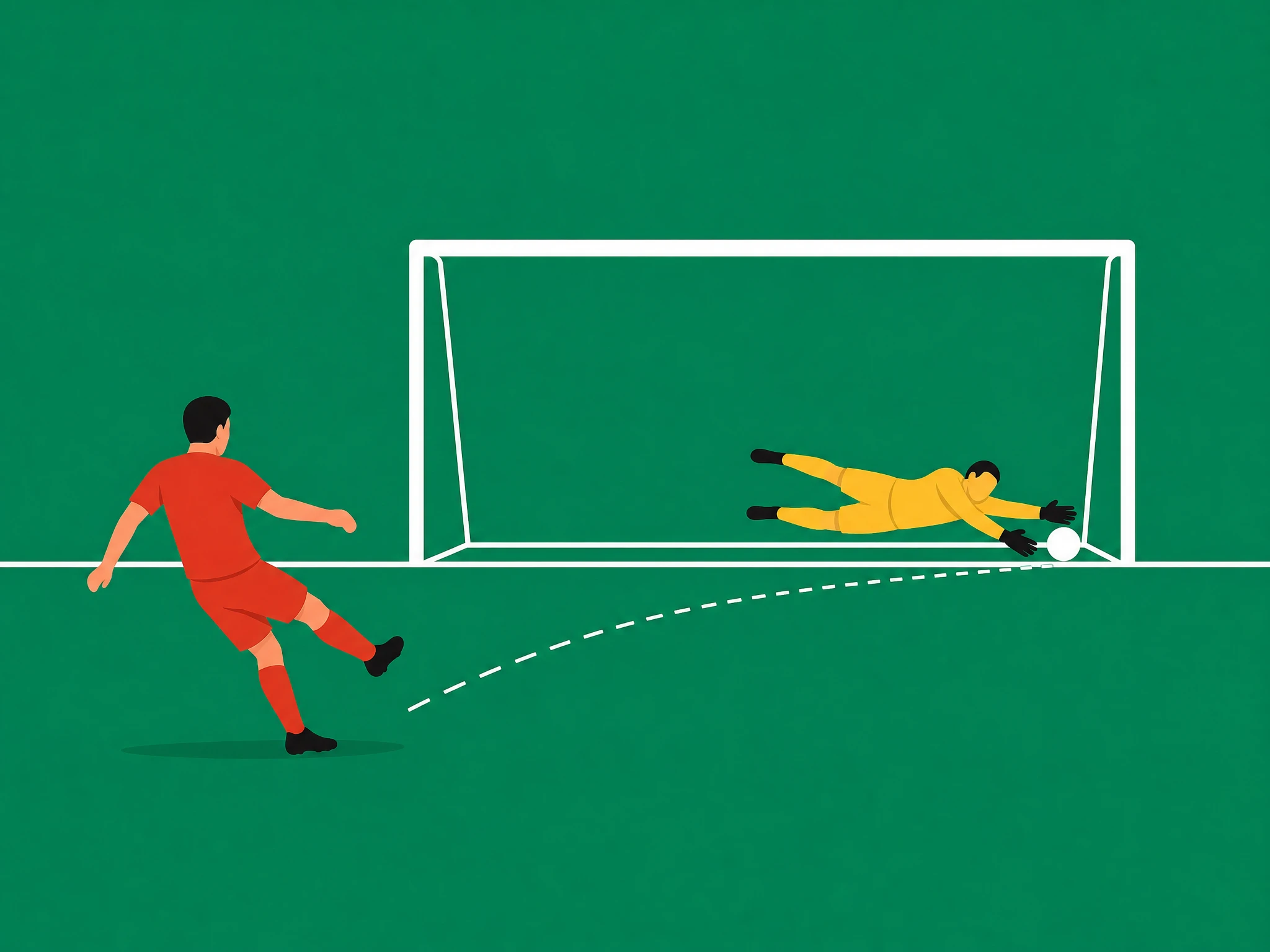
Why a save needs the shot to be on target first
A save can only happen on a shot that was already a shot on target. Opta's own shot on target definition says as much directly: it includes every goal scored and every shot on target saved by the goalkeeper. In other words, a save is one of the two ways a shot on target ends, either it goes in as a goal, or the keeper stops it. If the effort was never going in, wide, over, or blocked with cover still behind the blocker, there is nothing for the keeper to save, and none of it touches their save count.
The shot on target guide covers the goal, own goal and last-man block cases in detail. What follows is the keeper's side only: what does and does not get logged against the goalkeeper once a shot is genuinely on target.
Blocks and woodwork: what doesn't count as a save
Three situations cause most of the confusion.
- The goalkeeper stops an on-target shot with any part of their body, however comfortable it looks.
- A penalty stopped by the keeper, diving or standing.
- A fingertip touch that turns the ball behind for a corner.
- An outfield defender blocks the shot before it reaches the keeper.
- A shot hits the post or bar and stays out without the keeper touching it.
- Any shot that was already missing the target before anyone got near it.
A shot blocked by an outfield defender. If a defender gets across to block the shot before it reaches the goalkeeper, Opta logs a blocked shot credited to that defender, not a save for the keeper. The definitions are explicit that this is separate from a goalkeeper's own stop. There is one wrinkle worth knowing: if the last man clears the ball off the goal-line with the keeper already beaten, Opta actually classifies that clearance as a shot on target rather than a blocked shot, since the full shot on target guide covers in detail. Either way, the keeper made no stop themselves, so no save goes on their total.
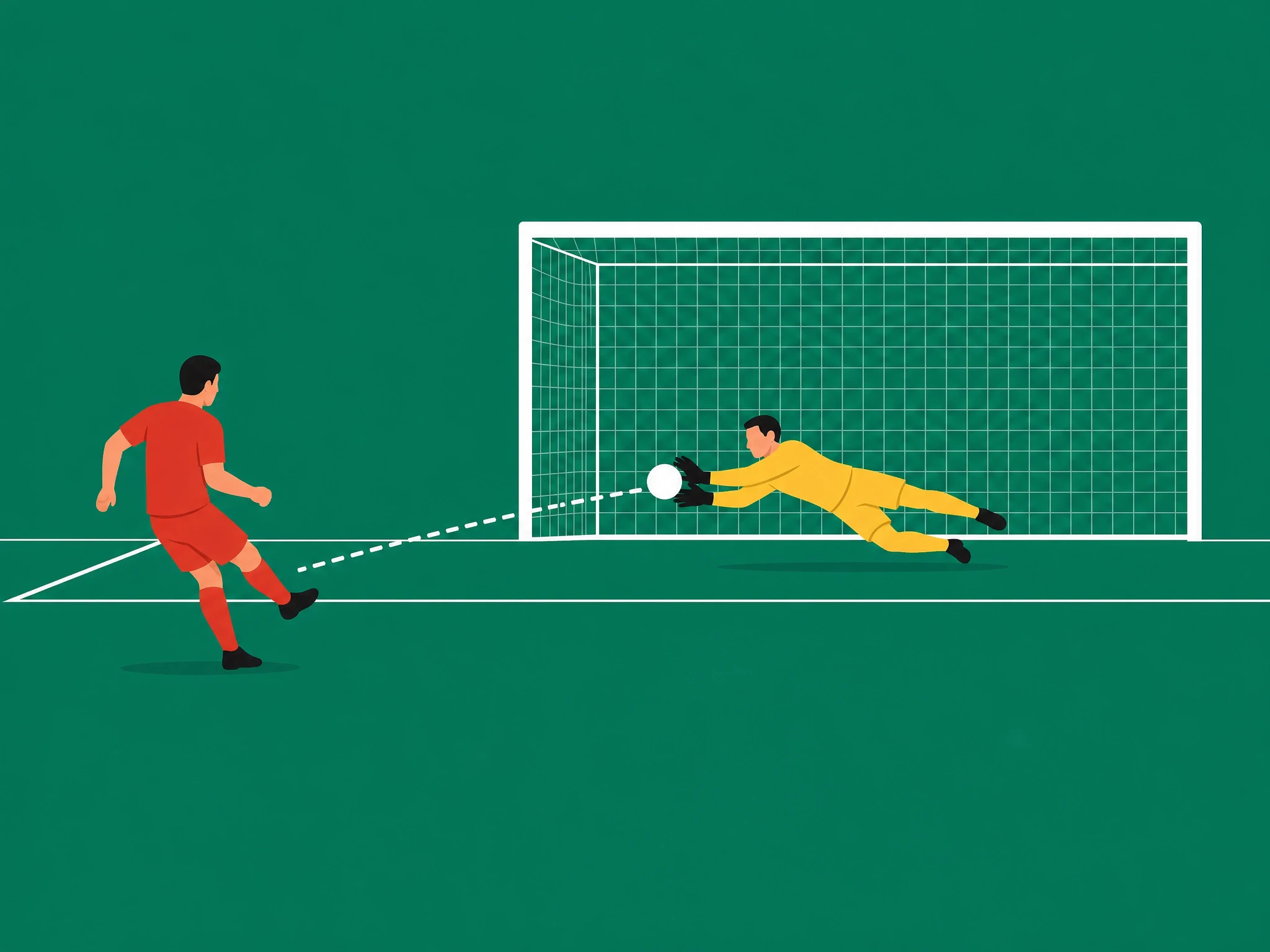
The keeper's own body stops the shot. A save.
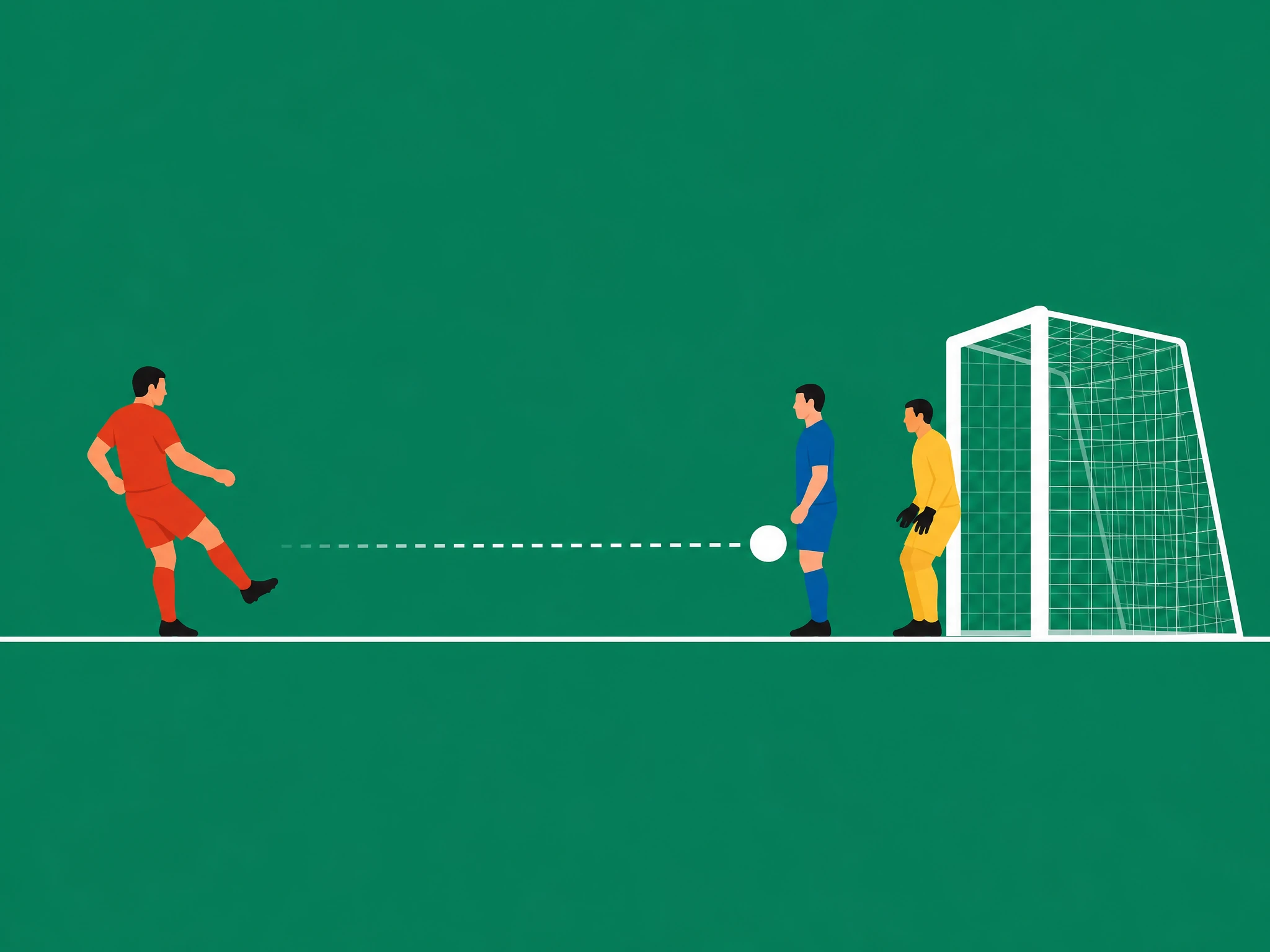
A defender blocks it before it reaches the keeper. A blocked shot for the defender.
A shot off the woodwork with no keeper touch. This is not a save. Opta's rule states that a shot hitting the post or crossbar is logged as off target unless it rebounds straight into the net. If the goalkeeper never gets near it, there is no save to record, since nothing about the keeper actually stopped the ball.
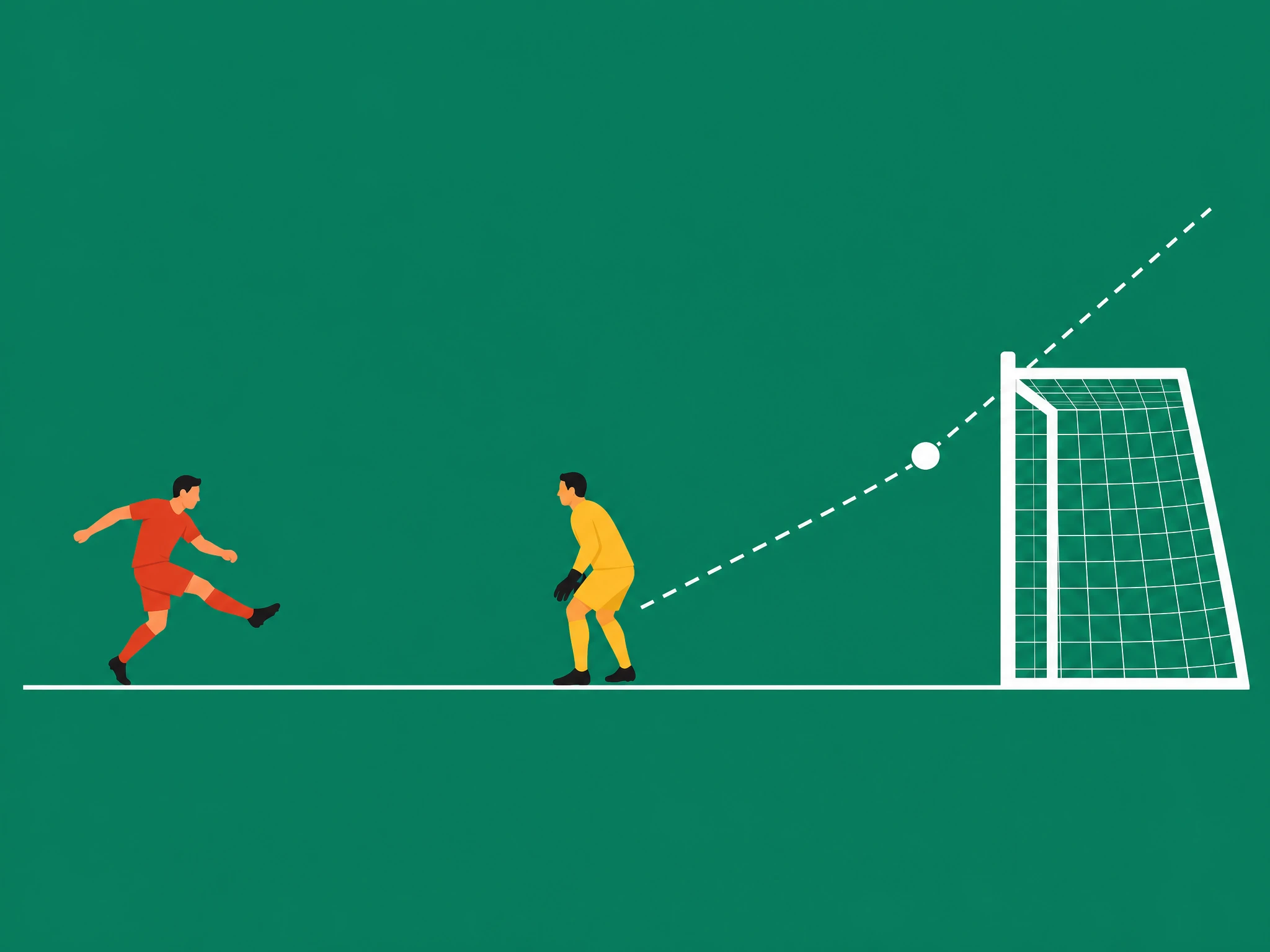
A routine catch straight at the keeper. This does count. There is no difficulty threshold built into how a save is recorded. A comfortable catch of a tame shot and a full-stretch stop in the top corner are logged the same way, as a save, because both are an on-target attempt that the keeper's body stopped from going in.
What actually decides a save
Penalty saves
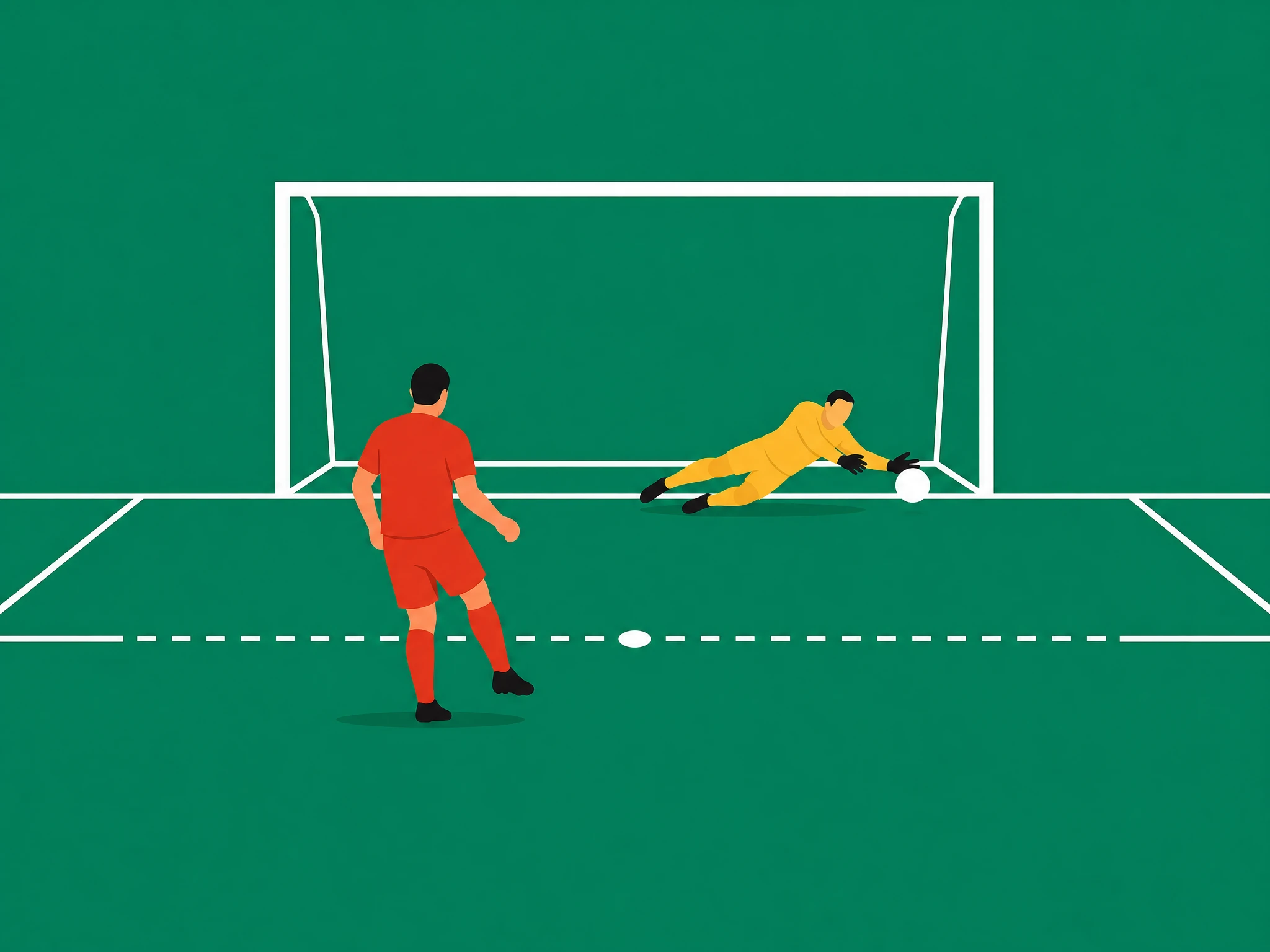
A penalty save is counted the same way as any other save, with one extra layer. Opta records a penalty faced as its own event, tracking the goalkeeper's movement, diving left, diving right or staying central, alongside the outcome: scored, saved, hit the woodwork, passed, or missed. When the outcome is saved, it goes down as a save for the goalkeeper. Because a penalty is by its nature heading for goal until someone stops it, a saved penalty also adds to the shot on target tally for the side that took it, exactly like any other on-target effort the keeper stops.
Why saves is a popular prop market
Saves is one of the most backed goalkeeper markets, mostly because it rewards a busy match rather than just a good one. A keeper's save total depends heavily on how many shots on target they actually face. A goalkeeper behind a defence that sits deep and absorbs pressure gets tested far more often than one whose team dominates possession and squeezes the opposition into very few efforts on goal, so the busier keeper racks up saves even in matches their side is losing.
Settlement follows the same rules as the save count itself. A keeper who faces six shots on target and stops four of them settles a “goalkeeper 3+ saves” line as a winner regardless of the final score. Sky Bet’s general football rules state that match statistic markets are settled using the information published by Opta whenever possible, so the save definition on this page is the one your bet actually settles on.
That is worth reading alongside clean sheets. A clean sheet and a high save count tend to pull in opposite directions, since a keeper who faces almost nothing has fewer chances to make a save at all, while a keeper under constant pressure can rack up a big save number in a game their team still loses. Line up the two stats together rather than judging a saves prop on the keeper's reputation alone.
Goalkeeper saves trends
How often a keeper is called into action and beats a save line, filtered by home, away and opponent, across 115+ leagues.
Team totals work the same way on team saves trends, and the full save numbers for every keeper and team are on the goalkeeper saves stats hub.
Goalkeeper saves FAQs
What counts as a goalkeeper save?
A save is the goalkeeper stopping the ball from going into the goal with any part of their body, against a shot that was genuinely on its way in. Opta's own wording is a goalkeeper preventing the ball from entering the goal with any part of their body when facing an intentional attempt from an opposition player.
Does a blocked shot count as a goalkeeper save?
No. If an outfield defender gets in the way of the shot before it reaches the keeper, that is a blocked shot credited to the defender, not a save for the goalkeeper. The keeper made no stop, so nothing goes on their save total.
Does hitting the post or bar count as a save?
Not if the keeper never touches it. A shot that hits the post or crossbar and stays out without the goalkeeper making contact is recorded as hitting the woodwork, not as a save. The keeper only gets a save if their body actually stops the ball.
Does an easy catch count as a save the same as a diving stop?
Yes. There is no difficulty threshold in how a save is recorded. A comfortable catch straight at the goalkeeper and a full-stretch tip over the bar are both an on-target shot stopped by the keeper, so both count as a save.
Does a penalty save count as a shot on target too?
Yes, both. When a goalkeeper saves a penalty, it counts as a save for the keeper. Because the penalty was heading in before the save, it also adds to the shot on target tally for the side that took it, the same as any other saved shot.
Does a goal-line clearance by a defender count as a save?
Not for the goalkeeper. If the last man clears the ball off the goal-line with the keeper already beaten, Opta classifies the attempt as a shot on target, but no save is recorded because the keeper's body is not what stopped it.
How does a goalkeeper 3+ saves bet settle?
It wins if the keeper is credited with three or more saves in 90 minutes plus stoppage time, whatever the result. A keeper who faces six shots on target and stops four settles the line as a winner even if their team loses. Bookmakers such as Sky Bet settle these markets on Opta's published save count.
Why do some goalkeepers have far more saves than others?
How many shots on target they face matters more than how good they are. A goalkeeper behind a defence that sits deep and absorbs pressure sees more shots on target, and so gets more chances to make a save, than a goalkeeper whose team dominates games and restricts the opposition to very little.