What is a foul throw? Throw-in rules explained
A throw-in restarts play after the whole ball crosses a touchline. The thrower must have part of each foot on the touchline or on the ground outside it, face the field of play, and deliver the ball with both hands from behind and over the head. Any deviation from that is a foul throw, and the throw-in passes to the other team.
Team FootyMetrics
Updated Jul 2026 · 5 min read
- A legal throw-in needs both feet on the ground, on or behind the touchline, facing the pitch, ball delivered with both hands from behind and over the head.
- The most common foul throw is a foot lifting off the ground during delivery. Feet in front of the line, a one-handed throw and a ball not delivered from behind the head are the others.
- You cannot score directly from a throw-in either way. Straight into the opponents' goal is a goal kick to them. Straight into the thrower's own goal is a corner to the opponents.
- Any player on the team can take a throw-in, there is no restriction to a specific position.
The detail that trips people up is what exactly counts as a foul throw, what happens if a throw somehow ends up in a net, and how the offside exemption on a throw-in lines up with the one already covered for corners.
The correct technique
IFAB’s Law 15 sets out exactly what the thrower has to do at the moment the ball is released:
- Stand facing the field of play.
- Have part of each foot either on the touchline or on the ground outside the touchline. Standing on the line itself is fine, feet past it are not.
- Use both hands to deliver the ball.
- Deliver the ball from behind and over the head.
- Throw from the point where the ball left the field of play.
Get all five right and the throw is legal, whatever height, spin or distance the thrower puts on it.
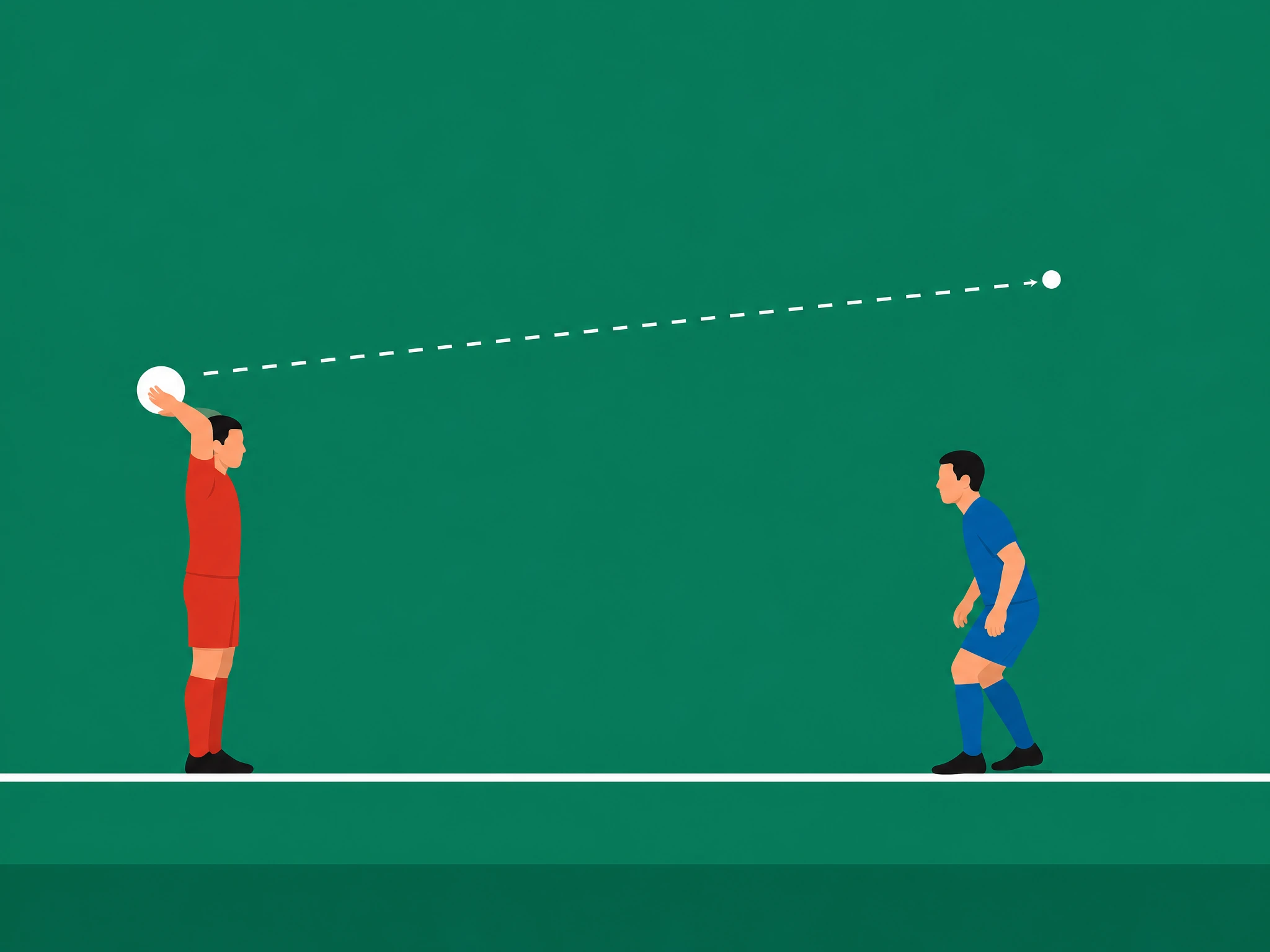
Both feet down on the line, ball delivered with both hands from behind and over the head.
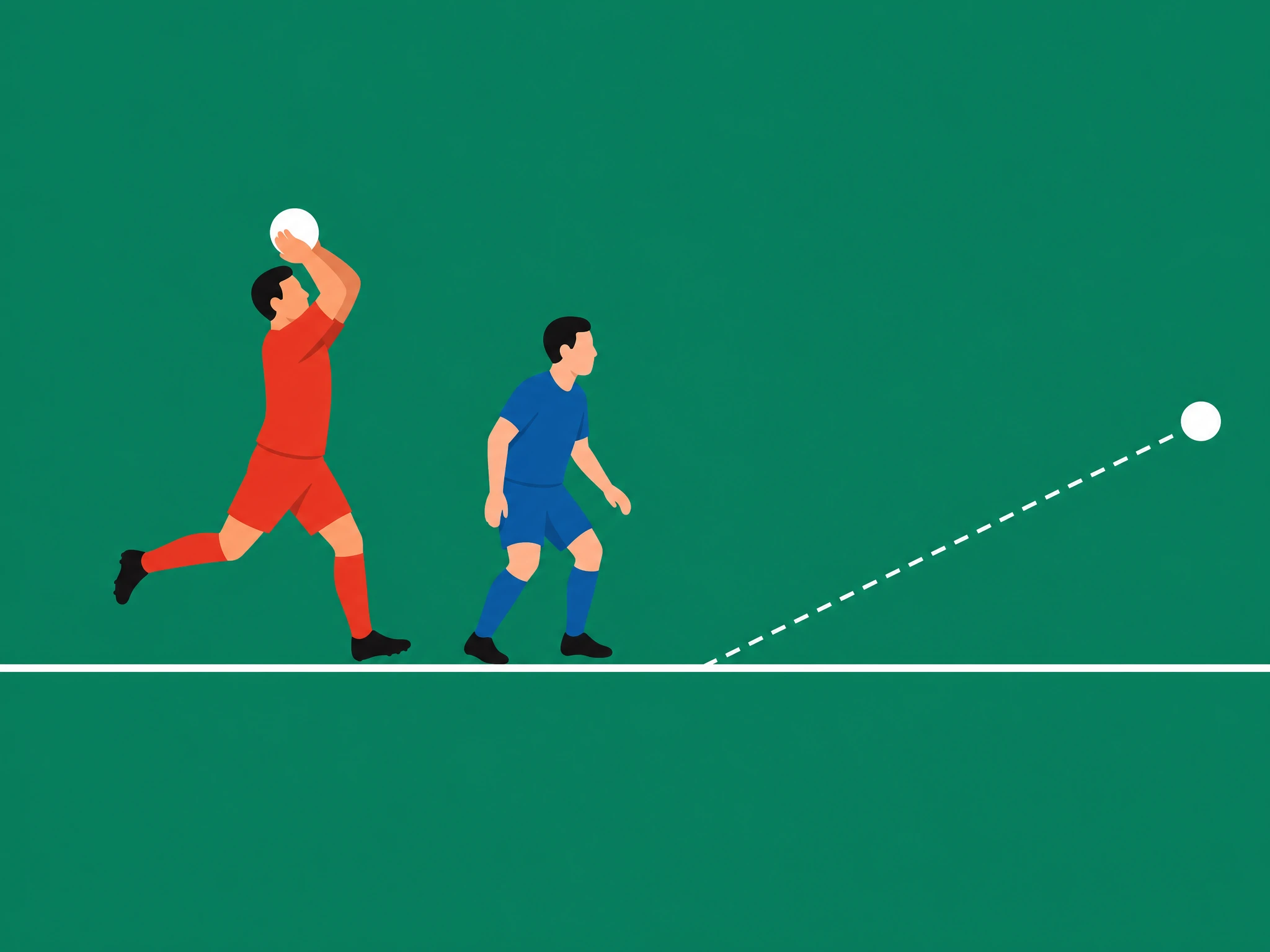
One foot lifts off the ground during delivery. Foul throw.
Common foul-throw mistakes
A foul throw is any delivery that breaks the technique above. In practice, the mistakes referees actually give are the same handful every time.
- Both feet stay in contact with the ground or touchline through the release.
- Feet on the line or behind it, not past it.
- Both hands used together, from behind and over the head.
- Thrower facing the field of play.
- A foot lifts off the ground during the delivery, the single most common foul throw.
- Feet step in front of the touchline before release.
- One-handed throw, or hands not starting together behind the head.
- Ball not delivered from behind and over the head, for example a low sling from the side.
A foul throw is a turnover, not a card
Scoring direct from a throw-in
Neither direction produces a goal straight from a throw-in. Under Law 15, if the ball goes directly into the opponents’ goal from a throw-in, without touching another player, the restart is a goal kick to the defending team, not a goal. If the ball somehow goes directly into the thrower’s own goal, the restart is a corner kick to the opponents instead.
Offside from a throw-in
FootyMetrics covers the full offside test on what is offside, and the short version for a throw-in is the same exemption already explained there for corners and goal kicks: there is no offside offence for a player who receives the ball directly from a throw-in. A player can stand in an offside position and take the throw-in itself without being flagged, since it is the receiving player’s position off the direct throw that the exemption covers.
The nuance worth repeating, because it mirrors the corner-kick logic on that page, is that the exemption only covers the ball received directly from the throw. The moment the ball is played a second time, for example a short throw square to a team-mate who then knocks it forward, the exemption is gone and normal offside rules apply to that next pass.
Who can take a throw-in
Any player on the team can take a throw-in. Law 15 places no restriction on position, so a striker, a defender or a goalkeeper can all legally take one. In practice it is usually whichever player reaches the ball first.
Long throws as a tactic
A long, well-drilled throw-in aimed into the box works tactically much like a corner: a direct delivery at team-mates in the penalty area, defended with the same zonal or man-marking setups clubs use for corners. FootyMetrics does not track a dedicated long-throw stat, but the same lens used for how corners are settled applies here too: what matters for betting and stats purposes is whether the delivery actually produces a shot or a chance, not just that the throw was awarded. A team that consistently launches long throws into the box is worth checking against team corners trends and team shots trends, since the throw itself feeds the same shot and corner counts a set-piece corner would.
Team corners trends
Long throws feeding the box are a minor contributor to corner and shot counts for teams known for the tactic. Check the pattern before backing a corners or shots line.
Throw-in FAQs
What is a foul throw?
Any throw-in that breaks the Law 15 technique, most often a foot lifting off the ground during delivery, feet stepping in front of the touchline, a one-handed throw, or the ball not coming from behind and over the head. The throw-in is then awarded to the other team from the same spot.
Can you score directly from a throw-in?
No. A throw that goes straight into the opponents' goal results in a goal kick to them, not a goal. A throw that goes straight into the thrower's own goal results in a corner kick to the opponents.
Can you be offside from a throw-in?
Not from the ball received directly off the throw itself. That exemption works the same way as the corner and goal kick exemption covered on FootyMetrics' offside page, and it ends the moment the ball is played a second time.
Who is allowed to take a throw-in?
Any player on the team. There is no restriction to a specific position, it is usually whichever player reaches the ball first.
What happens if a throw-in is taken incorrectly?
The referee gives the throw-in to the opposing team from the same spot. It is not retaken by the same thrower.
Can a quick throw-in be taken without the referee's permission?
Yes. A throw-in does not need a signal from the referee the way a free kick or goal kick restart does. The moment the ball is out of play and the thrower has part of each foot on or behind the line, they can take it straight away, which is exactly why quick throw-ins catch defences flat-footed.