When is a penalty retaken?
A penalty is retaken if the goalkeeper stops it while off their line, or if an attacking or defending team-mate's encroachment clearly affects the outcome. A goal stands after most minor encroachment, and the kicker touching the ball twice is never a retake, it's an indirect free kick to the other side.
Team FootyMetrics
Updated Jul 2026 · 6 min read
- The goalkeeper must have at least part of one foot on, or behind, the goal line when the kick is taken. Coming off the line early only matters if the goalkeeper then stops the ball, which forces a retake.
- Team-mate encroachment, attacking or defending, is only punished if it clearly impacted the goalkeeper or kicker, or the encroaching player gets involved in the ball and that leads to a goal, a shot or a chance. Minor encroachment with no effect is ignored.
- A defender's team-mate encroaching only leads to a retake if the goal isn't scored. If it goes in anyway, the goal stands.
- The kicker touching the ball twice before anyone else does is never a retake. It's an indirect free kick to the opponents.
Most fans treat a penalty retake as the referee’s catch-all for anything odd at the spot. It isn’t. IFAB sets out a short list of specific offences, and only one of them, a goalkeeper who has strayed off the line and then stops the ball, leads automatically to a retake. Everything else depends on whether the offence actually changed what happened, and one common case isn’t a retake at all.
The goalkeeper’s position on the line
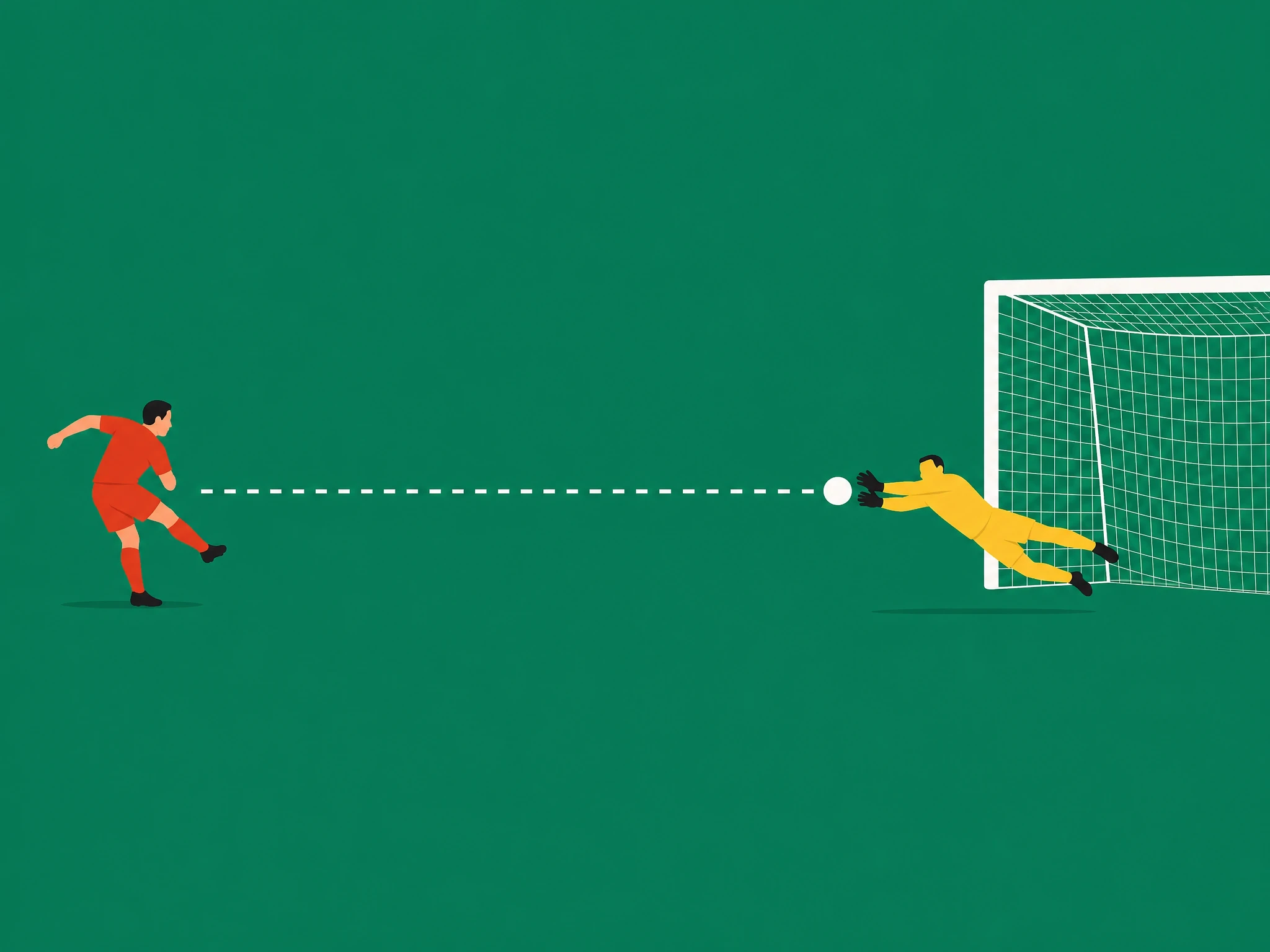
The rule that gets misquoted most is the goalkeeper’s positioning. It used to require both feet on the line. That changed in 2019. The current wording, from IFAB’s Law 14, is direct: “When the ball is kicked, the defending goalkeeper must have at least part of one foot touching, in line with, or behind, the goal line.” One foot, touching or behind the line, is enough. The goalkeeper can stand anywhere across the goal and shuffle or lean in any direction, as long as part of one foot stays on or behind that line at the moment of the kick.
If the goalkeeper is off the line when the kick is taken, what happens next depends entirely on the outcome. If the ball goes in anyway, the goal is awarded and the goalkeeper’s positioning is irrelevant. If the goalkeeper saves it, or otherwise keeps it out, the kick is retaken every time, the one scenario where a retake is automatic. If the ball misses the goal or comes back off the frame without the goalkeeper touching it, the kick is only retaken if the early movement “clearly impacted on the kicker.” A goalkeeper edging half a step off the line before a shot that was always heading over the bar doesn’t get a retake.
A goalkeeper who repeats the offence gets carded for it separately from any retake: a warning for the first infringement in the match, then a caution for any further one.
Attacking encroachment: not an automatic penalty
Every other player, on both sides, has to stay outside the penalty area and at least 9.15 metres from the penalty mark until the ball is kicked. For years referees treated any encroachment into that space as worth flagging on its own. That is no longer the standard.
A team-mate of the kicker “is penalised for encroachment only if: the encroachment clearly impacted on the goalkeeper; or the encroaching player plays the ball or challenges an opponent for the ball and then scores, attempts to score or creates a goal-scoring opportunity.” In practice, a striker edging a yard into the box early, with no bearing on the goalkeeper and no involvement in the phase that follows, is left alone completely. It only matters if it actually did something, either putting the goalkeeper off, or the encroaching player getting involved in the rebound.
Even when it is penalised, it still isn’t a retake. The restart is an indirect free kick to the defending team, taken from where the attacker entered the box, with no card for the encroachment itself.
Defending encroachment: the goal-scored split matters
The same “did it actually matter” test applies to a defender other than the goalkeeper stepping into the box, or inside 9.15 metres, early. A team-mate of the goalkeeper “is penalised for encroachment only if: the encroachment clearly impacted on the kicker; or the encroaching player plays the ball or challenges an opponent for the ball and this prevents the opponents from scoring, attempting to score or creating a goal-scoring opportunity.”
Here the outcome does split on whether a goal goes in, unlike the attacking side’s version. If the goal is scored, it stands regardless, the defending side gets nothing back from having encroached, since the attack still got what it wanted. If the goal isn’t scored and the encroachment mattered, the kick is retaken.
So a defender jogging in half a second early while the penalty flies over the bar changes nothing, no impact, no retake. The same defender crowding the kicker’s run-up in a way that puts them off, on a shot that is saved or missed, gets the kick retaken.
- Goalkeeper off the line saves or otherwise keeps the ball out.
- Goalkeeper off the line, ball misses or comes back off the frame, and the movement clearly impacted the kicker.
- Defending team-mate's encroachment clearly impacts the kicker or prevents a chance, and the goal isn't scored.
- Any encroachment, by either side, that doesn't actually affect the kick.
- Attacking team-mate's encroachment that has an impact, that's an indirect free kick to the defence, not a retake.
- Any goal that goes in, whichever side encroached, the goal stands.
- The kicker touching the ball twice, that's an indirect free kick to the opponents.
The double touch: not a retake at all
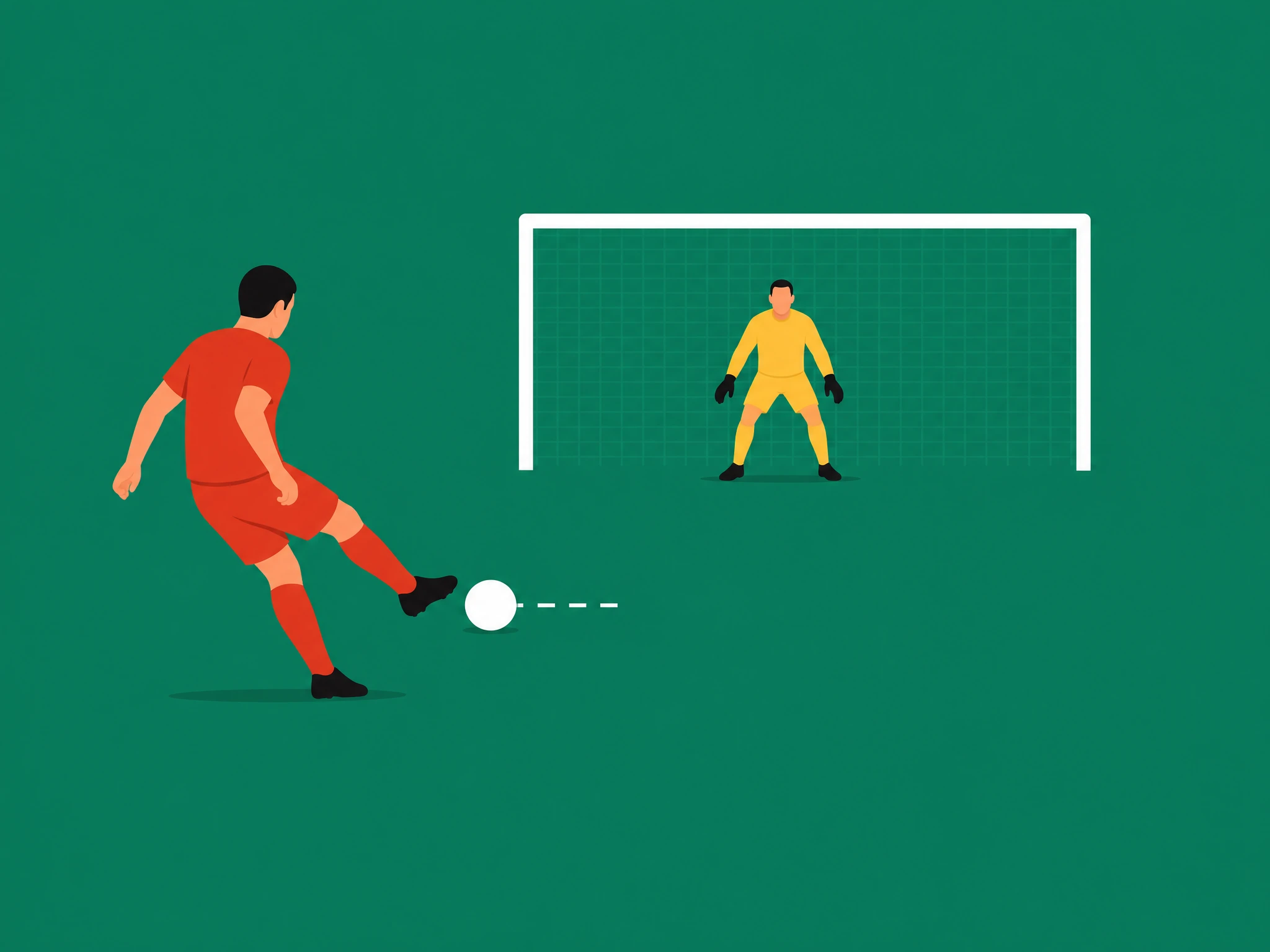
This is the case people mix up with a retake most often. The kicker is not allowed to play the ball a second time until it has touched another player, which includes the goalkeeper, the crossbar or a post. Toe-poking the ball forward and following through with a second touch before anyone else reaches it is not treated as an encroachment issue at all, and it does not get replayed as a penalty.
Law 14 states plainly: “The kicker must not play the ball again until it has touched another player.” Break that and the restart is “an indirect free kick (or direct free kick for a handball offence)” to the opposing team, from the spot of the second touch. It is a separate offence from anything covered by the encroachment rules, and it is never a retake.
Two different questions, two different answers
What leads to what
| Situation | Goal scored | Goal not scored |
|---|---|---|
| Goalkeeper off the line, no impact | Goal stands | Not retaken |
| Goalkeeper off the line, stops the ball | Not applicable | Kick retaken |
| Goalkeeper off the line, miss or rebound with clear impact | Goal stands | Kick retaken |
| Attacking team-mate encroaches, no real impact | Goal stands | Not retaken |
| Attacking team-mate encroaches with impact or gets involved | Indirect free kick to defence | Indirect free kick to defence |
| Defending team-mate encroaches, no real impact | Goal stands | Not retaken |
| Defending team-mate encroaches with impact | Goal stands | Kick retaken |
| Kicker touches the ball twice before anyone else | Not a retake either way | Indirect free kick to opponents |
The full VAR review process for penalties, including how encroachment and goalkeeper positioning get checked, is covered in how does VAR work.
Penalty retake FAQs
Is a penalty always retaken if the goalkeeper moves off the line early?
No. It's only an automatic retake if the goalkeeper is off the line and then stops the ball going in. If the shot misses or comes back off the frame without a save, it's only retaken when that early movement clearly affected the kicker. If the ball goes in anyway, the goal stands regardless of where the goalkeeper was standing.
Does the goalkeeper still need both feet on the line?
No, IFAB changed that in 2019. The current rule only needs at least part of one foot touching, in line with, or behind the goal line at the moment the ball is kicked.
If a striker steps into the box early and the penalty is scored, does the goal get disallowed?
Not on its own. Attacking encroachment is only punished if it clearly impacted the goalkeeper, or the encroaching player played the ball or challenged for it in a way that led to a goal, a shot or a chance. Where that happens the restart is an indirect free kick to the defence, not a disallowed goal and not a retake.
What if a defender encroaches and the penalty is saved?
If the encroachment actually affected the kicker or the phase of play, the kick is retaken. If it didn't, play just continues from the save or whatever happens next.
Is touching the penalty twice the same as a retake?
No, and this is the one people get wrong most. A kicker who plays the ball a second time before anyone else touches it gives away an indirect free kick to the opposing team. It's never replayed as a penalty.
Does VAR review penalty encroachment automatically?
No. VAR only intervenes when there is a clear and obvious error in the referee's original decision, such as an encroaching player directly involved in the outcome. It does not re-referee every penalty for minor encroachment. The full review process is covered on our how does VAR work guide.
Does the goalkeeper get booked for coming off the line early?
Not the first time. A goalkeeper who infringes gets a warning for the first offence in the match, then a caution for any further one. The card question is separate from whether the kick is retaken.